



Qualcomm’s Snapdragon 802 processor is a 4K powerhouse for your TV

With 4K TVs (and content, hopefully) promising to be one of CES 2014′s biggest trends, it makes sense that Qualcomm would introduce a processor tailored to handle heavy-duty streaming. The new Snapdragon 802 is just that: a TV-specific quad-core SoC that shares many features with Qualcomm’s Snapdragon 800 and its “Ultra HD” 805 for mobile video.
According to Qualcomm’s VP of Marketing Tim McDonough, the Snapdragon 802 brings the best of smartphones to your smart TV. So, in addition to powering 4K content on your living-room set, the processor will enable a much-improved app experience (read: programs that run at an actually usable pace) on your big screen. Of course, it can also handle multitasking, from browsing online while streaming a movie to simultaneously playing up to four HD videos on one TV. And thanks to Hollywood Quality Video, a video-processing engine, 1080p content can be upconverted to a level “approaching Ultra HD.”
As for where the processor itself will live, that’s up to the OEMs. The Snapdragon 802 can be built into both TVs and set-top boxes. The processor won’t turn up in devices until late 2014, but we could have a few demoes in store for us at CES this week. If you’re looking for more nitty-gritty details, head past the break for some additional specs.
- Quad-core Krait 1.8 GHz CPU
- Adreno 330 GPU
- Two-stream, dual-band 802.11ac
- AllJoyn integration
- Snapdragon Studio Access content protection
Filed under: Home Entertainment, HD

With the Snapdragon 602A, Qualcomm looks to improve the connected car

In addition to announcing a version of its Snapdragon 800 processor tweaked for your home theater, Qualcomm is introducing a chip made specifically for in-car entertainment. The Snapdragon 602A, unsurprisingly, shares several specs with the Snapdragon 600 chip seen in mobile devices, but it’s made to meet the automotive industry’s requirements for temperature, longevity and more. It also packs in plenty of additional tech, which we’ll get to in a minute.
Qualcomm’s been involved in the connected-car space for about a decade, with 3G and 4G modules to show for it. Though it offers Gobix 9×15 3G/4G LTE modules along with WiFi and Bluetooth, the 602A is ambitious on more than just the connectivity front: The chip will initially power infotainment — serving multiple video streams to numerous screens in your car, for instance — but will pave the way for more advanced connectivity and safety features. For example, facial-recognition support could let you start the car by looking in a camera, and gesture recognition could enable a smarter backup cam.
As with the Snapdragon 802, the goal behind the 602A is to bring the dynamic app experience of smartphones and tablets to a different environment. This means improved 3D navigation, cloud-based software and integration with mobile devices, among many other things. Support for both Android and QNX gives carmakers options for building their own infotainment systems that comply with the automotive industry’s requirements, as well. Qualcomm hasn’t mentioned a timeframe at this point, but we have it on good authority that such an announcement is coming this week.
Filed under: Transportation

EnerPlex Jumpr Slate is the thinnest lithium polymer battery money can buy

You know what you don’t want? A fat external battery. Sure, you want one with plenty of juice to recharge your myriad mobile devices, but power packs with slim profiles are preferred. And EnerPlex has just the thing you need in the 6.7mm-thick Jumpr Slate. It’s got two full-size and one micro-USB output ports, four LEDs to let you know how much (or how little) juice you have left, and it comes in 10,000 and 5,500mAh sizes pushing 2.4 amps. Both Jumpr Slates land at the end of the month, with the big boy costing $99 while the smaller version costs $59.
Filed under: Peripherals, Mobile
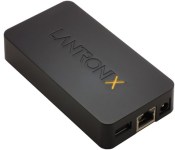
Lantronix xPrintServer Cloud Print Edition offers Chrome wireless printing, arrives next month for $150

Back in 2011, Lantronix served up its first gadget for making wireless printing from an iOS device quite easy. With a Home Edition and Office Edition under its belt as well, the outfit has taken aim at the Chrome faithful with the xPrintServer Cloud Print Edition. Taking on a similar stature as its predecessors, this smartphone-sized black box also allows for printing via any networked or USB printer and carries the same simplified setup as its elder siblings, too. Once tethered to a network, the accessory automatically discovers printers and links all the hardware together without the need for a driver install. The add-on is certified by the folks in Mountain View to support Cloud Print tech and can be used by any device running Android, Chrome OS (2.2 or later) or the Chrome browser. As you might expect, compatibility includes Google’s suite of apps — such as Drive. If your stable of tech meets those requirements, the Cloud Print Edition will ship in February for $150.
Filed under: Misc, Peripherals
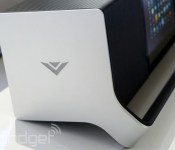
Vizio’s Portable Smart Audio players run Android, play from built-in streaming apps

Don’t call it a wireless speaker. Though Vizio’s new Portable Smart Audio players are capable of streaming music over WiFi and Bluetooth, that’s not how they were meant to be used. Rather, these guys have Android KitKat built in, along with a quad-core processor, allowing you to play music and video off any app you choose. Basically, then, you can bypass the streaming altogether — a setup that’s potentially easier to use, and maybe more reliable, too. And because both players have access to the Google Play store, you don’t have to worry about whether Pandora, Netflix, et cetera come pre-loaded.
Available with 7- and 4.7-inch screens, the little guy is obviously more portable (think: 3.6 pounds versus 8.8). To be fair, the bigger model does have a built-in handlebar, making it easier to carry, but you’ll still probably want to put it in the backseat the next time you’re on your way to a beach party. At the same time, the 7-inch model brings bigger drivers and a bigger set of passive radiators, allowing the player to get down to a lower frequency of 60Hz. Believe us when we say the difference is noticeable — the larger version definitely has a thumpier sound than the 4.7-incher, which goes down to 80Hz. No word on pricing (or battery life, for that matter), but we imagine all will be revealed before these go on sale — whenever that happens.
Filed under: Portable Audio/Video

Blue Microphones looks to tackle headphone hi-fi audio woes with Mo-Fi

Blue Microphones have long been the choice of podcasters and recording pros for capturing audio both in-studio and on the go. Now, the audio outfit is looking to tackle hi-fi mobile listening with an effort it’s calling Mo-Fi. The company says that “true mobile high fidelity” is what Mo-Fi brings to the table with a line of products coming in spring 2014. “The market is plenty crowded with lo-fi headphones for our mobile devices. But classic hi-fi headphones are too power-hungry for our mobile devices. We are ready for the next innovation in headphones and the market is ready now too,” said John Maier, CEO of Blue. Unfortunately, that’s about all the detail Blue is spilling at this point, so we’ll have to wait to hear more on the gadgets and the hi-fi… er, Mo-Fi tech that’ll power ‘em. There’s a teaser video after the break that flaunts what a appears to be a set of headphones, but that’s the only tidbit we have to go on right now. You can, however, click over to the source link below for product previews as they arrive.
Filed under: Portable Audio/Video
Source: Blue Microphones

Broadcom’s new WiFi chips aim to keep your video streams flowing

All that hardware strewn throughout your crib is only as good as the sum of its parts. Broadcom is one of the firms bent on evolving those parts, and today at CES the company’s introducing two new chips that’ll pervade the tech of 2014 (even though you likely won’t know it). First up is the BCM43569 (2×2 MIMO), which blends 5G WiFi, aka 802.11ac, and Bluetooth 4.1 standards with a USB 3.0 interface. The combo SoC is intended for the next-generation of smart TVs and set-top boxes, allowing simultaneous WiFi / BT connections to other devices and ensuring solid video streaming performance in your airwave-saturated home.
The BCM43602 (3×3 MIMO) 5G WiFi chip, which instead uses a PCI Express interface, is destined for future routers and set-top boxes. It, too, is slated to improve the reliability of video streaming over 802.11ac by assuming the brunt of wireless processing work usually executed by those products’ internal CPUs. Both new chips also support beamforming for maintaining stronger connections, and are available for OEMs to play with right now.
Filed under: Home Entertainment, Wireless, HD

Alcatel’s 4-inch Bluetooth e-reader will offer a more portable reading experience

Alcatel doesn’t just show up to trade shows with phones, it also likes to come with a handful of clever accessories (regardless of whether they’re final products or just prototypes) as well. At this year’s CES, the TCL-owned manufacturer showed off a 4-inch e-reader called the Magic Flip, which connects to your smartphone or tablet via Bluetooth. It’s incredibly small, thin and light, and is meant to be a companion to your daily driver — as long as it’s made by Alcatel, that is. The Magic Flip is exactly what you’d expect it to be: a pocket-friendly e-book reader capable of receiving notifications from your phone. The E Ink reader, company reps tell us, is supposed accept every standard e-book format, which theoretically should make it pretty easy to transfer books back and forth. In terms of hardware, it offers three capacitive buttons underneath the display, consisting of backwards, forwards and home buttons. Since the demo unit we played with did not feature final firmware and was prone to quite a few bugs, we weren’t able to navigate the user interface outside a basic demo page. Still, the Magic Flip makes its way to the market in the next few months, and even though it will likely appeal to only a small number of people, we appreciate a smartphone maker that’s at least thinking outside the box and taking risks.
Filed under: Cellphones, Wireless, Mobile

Broadcom’s audio SDK for the internet of things makes AirPlay easy

While many are content with the phrase “internet of things,” Broadcom prefers the equally vague slogan “Wireless Internet Connectivity for Embedded Devices” (WICED) to describe its platform for helping hardware speak the same language. The company’s revealed its latest efforts in this area today in the form of an SDK for implementing audio streaming over WiFi, which includes baked-in support for Apple’s Airplay standard, as well as good old DLNA. It also promises serious streaming range and tight synchronization for multi-room dance parties. Broadcom hopes OEMs will leverage the SDK to connect all manner of home entertainment gear to one another, and the internet. You know, for streaming stuff to things that are networked with other things, and stuff.
[Image credit: Wikimedia Commons]
Filed under: Home Entertainment, Wireless, HD, Apple

Vizio finally intros its first Haswell PCs, with Iris Pro graphics and 802.11ac WiFi

At this point, we wouldn’t be surprised if Intel used CES as an opportunity to talk up its next-generation laptop processors, due out later this year. That said, you’ll still find the rare company that’s just getting around to releasing models with Haswell. Vizio has belatedly refreshed both its 15.6-inch Thin + Light and its 24-inch all-in-one, both of which now come standard with fourth-generation, quad-core Core i7 processors, 1080p touchscreens, 802.11ac WiFi and Intel’s Iris Pro graphics — the same kind used in Apple’s latest iMacs.
Other than that, these have the same designs as the PCs Vizio showed off at least year’s CES, which is to say they have all-metal bodies and flat keyboards with closely arranged buttons. As always, too, these come with zero bloatware installed, just like if you bought it from Microsoft itself. No word yet on pricing or availability, but you should know this: 15.6 and 24 inches are it as far as screen sizes go. That’s right, the 14-inch laptop and 27-inch all-in-one are no más, so don’t bother waiting for any refreshes there.
 AIVAnet
