


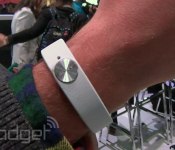
Sony’s Core isn’t a wearable, it’s a sensor (hands-on)

The Core is tiny. Thick as two sticks of gum, but twice as smart, this is Sony’s renewed effort for wearables and it really couldn’t look more different from the SmartWatch we saw in 2013. It’s a different device to begin with: an activity tracker with no screen. Sony’s still keeping it all pretty vague, but going on the details of the colorful, oddly appealing app, it’s more life logger than health monitor. The idea Sony is chasing is to collect what you do in your life, your movement, your photos, music listened to and your social network goings-on, and collate them into a sort of automated journal — a new LifeLogger app that will launch alongside the hardware.
You’ll need to hook the Core up with your smartphone (through Bluetooth) to see what’s happened activity-wise, and we’ve been told the battery should be good for up to five days on a single charge: it’s tiny but there’s no blinking lights or vibration to sap power. There’s a micro-USB port for recharging, but the whole thing is also waterproof. Sony promises to reveal all the details at MWC next month, but we did get a glimpse at one of the places the Core will reside and, in true CES 2014 style, it’s a wristband. We’ve got a quick video peek and a few more details after the break.
With a textured rubber band (and coming in a stack of colors and patterns) we were reminded of the Misfit Shine: the band is really just a stylized case for the Core. With the sensor stored inside, the SmartBand remained light and comfortable. Because it’s flexible and soft, it shouldn’t jar when you rest your arms on a desk or laptop, something the FuelBand fails on. There’s a machined aluminum Sony decal, while metal studs make sure to keep the band on. In short, details were hazy, but Sony’s at least got a plan where it wants the Core to go — somewhere that could play to the company’s strengths across entertainment, imaging and its mobile devices. Here’s hoping they can perfect the sales pitch at Barcelona.
Filed under: Cellphones, Wearables, Mobile, Sony
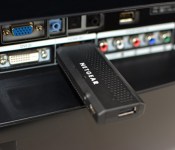
Netgear’s NeoMediacast is an Android-powered TV set-top on a stick

Most of the equipment we get from our telecom providers is nothing to get excited about, but we might make an exception for Netgear’s NeoMediacast. The Android-based HDMI dongle lets providers both offer their own services and support third-party apps without having to build their own set-top boxes or go the traditional TV route. Your cable company could let you stream your favorite shows on a bedroom TV, for instance, while making it easy to check social networks or play your local media library. The NeoMediacast is also relatively futureproof with 802.11ac WiFi, Miracast media sharing and support for both microSD and USB storage. Carriers and service operators can start using Netgear’s device in the first half of this year, although they’ll likely need to customize its software before it reaches your home.
Filed under: HD
Source: Netgear (1), (2)
CES 2014, Day 1: You won’t believe what happens next

The sun may be setting on the Las Vegas Convention Center, but that doesn’t mean Engadget’s gone dark. CES 2014′s first day was loaded with new TV announcements, celebrity walk-offs, convertible devices and so, so much more. It’s almost too much to handle, but don’t fret, we’ve got you covered. We’re going to filter out the buzz at the end of each day and leave you with five things you won’t want to go to bed without reading. This is CES, day one.
Curved, on demand

Can’t decide between a flat-panel TV and one of those new curved models? Now you won’t have to: Samsung and LG are both showcasing HDTVs that bend to your will, gently curving from a traditionally flat view to a more rounded one. It’s not the television revolution we expected, but maybe we should have, considering the noise both firms have been making with their flexible smartphones. If television hasn’t blown your mind since the invention of color, check out either or both: You’ll never look at your flatscreen the same way again.
Steam-powered

If you thought Sony’s and Microsoft’s latest hardware were the most powerful gaming machines on the market, think again. Valve’s Steam Machine initiative hit CES 2014 in full force today, introducing more than a dozen new gaming machines from some of the industry’s top PC builders. Unlike the traditional console gaming camp, not all of these devices are trying to one-up the others: Some are lower-powered consoles with meager, but respectable internals, while others are veritable PC gaming powerhouses. With only a scant few Steam Machines actually in the wild, it’s still a bit early to predict if Valve’s play for the living room pays off — but if Monday’s showing is any indication, there’s plenty of enthusiasm.
Intel’s push for wearables

What would CES be without an opening keynote? Bereft of Intel CEO Brian Krzanich’s ambitions for wearables, that’s what. Krzanich took the stage to wax enthusiastic about a future of connected devices, tiny computers and conflict-free microprocessors. The speech wasn’t wishful thinking, either: Intel revealed a homegrown smartwatch prototype during the keynote alongside a smart earpiece it calls Jarvis, and used the event to launch a “Make it Wearable” contest with $1.3 million in prizes.
Triple-Digit Television

It’ll never fit in your living room, but it’s still a sight to behold: Samsung’s 105-inch curved 4K television set. Sammy actually announced this beast late last month, but we couldn’t help taking a look in person. The behemoth is not only one of the largest TVs we’ve ever laid eyes on, but Samsung also claims its the “most curved.” Of course, practicality is a question, and not just because of the unit’s size: This set maintains a 21:9 aspect ratio, making it too wide for most of today’s TV content. Still, it’s just about right for viewing panoramic vistas from the comfort of your freakishly large (and entirely fictional) den.
Split Personality

Being locked into a specific tablet ecosystem can be frustrating, so why not split the difference? That’s the idea behind ASUS’ Transformer Book Duet, a tablet/laptop combination device that can switch between Android 4.2 and Windows 8.1 on the fly. It’s actually ASUS’ second device to ride the fence between operating systems, but the questions it raises are no less interesting for a second iteration: Is dual-booting becoming a standard for mobile devices? The proposition of being able to leap between mobile worlds is certainly appealing enough, though we’re still not sure how we feel about 13-inch tablets.
Filed under: Misc
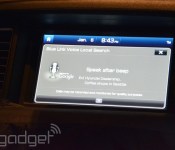
Hyundai’s second generation Blue Link tech runs custom Android, keeps you connected with Verizon

When Hyundai’s latest Genesis sedan launches later this Spring, it’ll have the latest version of Hyundai’s Blue Link tech: voice navigation, media management and remote tech. That means unlocking your car remotely, navigating to both specific locations and general search terms (think: flowers, sushi, etc.), and a whole mess of other “smart” functionality. Unlike the first-gen Blue Link currently available, all of that functionality is being brought to your new Genesis with a cell signal provided by Verizon.
Hyundai was part of the big Google news earlier today, and Blue Link’s second-gen is another piece in that puzzle. Consider it the latest in a series of cross-company explorations into how best to implement Android in cars — a Hyundai rep told us it’s also exploring iOS for cars, but won’t have more to share until some point “later this year.”
In the brief time we spent with Blue Link 2, we were impressed! It picked up on voice commands without a hitch, and was able to wirelessly connect to Google Places from within the confines of a Las Vegas hotel conference room. Sadly, navigation costs $100 annually, and it’s another $100 annually for remote services. Head past the break for a look at Blue Link 2 in action, and find out if it’s the Android you’re looking for.
Filed under: Misc, Transportation

Audi partners with AT&T to introduce in-car LTE in the US

Audi’s in-car LTE capability is finally arriving from across the Atlantic aboard the upcoming 2015 A3 sedans, thanks to the carmaker’s partnership with AT&T. When the vehicles, and hence the feature, become available in the US, AT&T’s wireless customers will have the option to share their smartphone or tablet data plans with their cars. Owners can use the connection for faster access to Google Earth, Google Street View and web radio stations, as well as to get social media alerts on the Audi connect navigation system. Up to eight passengers (if you can fit that many, anyway) can also take advantage of the long term evolution speeds by using Audi connect as a WiFi hotspot. While the feature’s limited to the 2015 A3 family for now, Audi plans to include it on the new and refreshed models bound to come out in the future.
Filed under: Transportation, Internet, AT&T
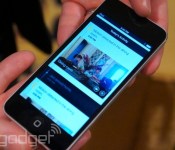
A first look at the app for Canary’s web-connected home security system

You may remember Canary, an all-seeing, all-knowing, net-connected home security system that obliterated its funding target to raise almost $2 million. Now, if we were the folks behind it, we’d be celebrating in Vegas, but instead they’re here at CES showing off their progress. While the team have brought final hardware along, it doesn’t look any different from the original proposition. Canary’s CEO Adam Sager tells us, however, that many of the internal components have been swapped out for better versions as development has ramped up, and Ethernet has been added (in addition to WiFi) due to backer demand.
What we were really interested in, though, was taking a look at the companion app Canary has been crafting. Sager demoed the iOS version, which takes many design cues from Apple’s latest mobile OS, on an iPod Touch. He showed us how the app handles alerts, including that HD video recordings and all other sensor metadata associated with that event, as well as the various ways you can immediately react. We also saw how live video feeds would be presented, the feed-like alert history, and how you can set up both user and trigger profiles. Considering this isn’t “fully functional,” as Sager put it, we would call it mighty slick for something deemed unfinished. Development is being steered, in part, by an ongoing internal beta, and backers who signed up for the open beta are due to recieve their hardware within the next month. Everything is on track, too, for the launch proper in May. Head past the break for a brief video walkthrough of the app, courtesy of Sager.
Edgar Alvarez contributed to this report.

Neato Robotics’ XV Essential vacuum brings affordable automation to Walmart

There’s something to be said for taking the easy way out. Neato Robotics figured out how to get the price down on its well reviewed, but slightly pricey XV Signature line of autonomous vacuums, by simply swapping in a cheaper brush and filter. Thus was was the XV Essential. Under the hood it’s the same exact machine as the $400 Signature model, but thanks to the plain plastic blade bush and flat filter, it comes in a cool $30 cheaper. That might not sound like much, but shoppers at Walmart (where the XV Essential will launch exclusively in March) are sure to appreciate the additional value. Otherwise you still get the impressive laser guidance system and smart charging function that tells the little sucker to return home when its battery is running low, then picks right back up where it left off once it’s fully juiced.
There are, of course, trade offs. The ridged filter in the Signature model is much better at capturing pet dander and dust, for one. Plus the purely plastic-bladed Essential is quite noisy on hardwood floors — it easily overpowered the din of Bluetooth speakers, overzealous PR reps and drunken bloggers at this evening’s Pepcom event. Before you go, check out the gallery below.
Filed under: Household

Intel outs smart earbuds that track your run and your heart rate

We’re here at the opening CES keynoted by Intel CEO Brian Krzanich, and the parade of wearables has just begun. The firms’ head honcho has just unveiled a pair of smart earbuds that can track your heart rate (and display it on a companion app), keep tabs on your running and get their power from your device’s headphone jack. There’s no word on price, but it’s set to arrive sometime this year.
Filed under: Intel
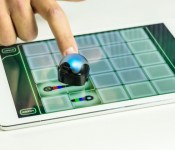
Ozobot is a tiny robot that lives your on tablet, wants you play with it

The good news is that we’ll be seeing Ozobot in action shortly. The bad news is that we’re not entirely sure what it does or why we should want one in the meantime. Here’s what we do know: It’s a 1-inch sized “intelligent game robot” that hangs out on smartphones, tablets and board games and recognizes codes, lights and other patterns. It also knows what surface it’s on. We know that it’s intended for gameplay. Beyond that, the press material is thus far filled with explainers like:
A pocket-sized robot with the ability to operate on physical and digital platforms, Ozobot melds the worlds of robotics and gaming into one, making it distinctly playful and uniquely creative.
There will be a Kickstarter launching this month, with retail availability aimed at the 2014 holiday season. And, um, more info to follow.
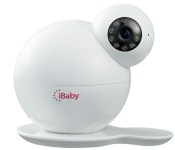
iBaby M6 baby monitor lets you and three family members keep eyes on junior remotely

iBaby Labs’ newest child monitor, the M6, with its 350-degree view and 170-degree tilt, is touted as being the most robust viewer in the market. Setup is a simple plug-and-play affair for both the device and the mobile app that allows control of the device and even some interaction with your sleepy beauty. When the M6 detects motion or sound from your offspring, it can send a notification and snap a pic with its 720p camera and then allow you to speak to your baby if you happen to be out by the pool. Unlimited users can be configured on the device and up to four users can get sent notification and images at any given time. Also on tap are sensors for temperature and humidity, a few different lullabies and LED lighting for night viewing — or is that night waking? The iBaby M6 is set to launch in spring 2014 for $249.
Filed under: Cameras
 AIVAnet