


Lenovo buying Motorola Mobility from Google for $2.91 billion
Numerous sources reported today about a potential acquisition of Motorola Mobility that comes not even three years after Google bought it for $12.5 billion, and Lenovo just made the news official.
The Chinese-manufacturer announced that it entered into “a definitive agreement” with Google to acquire the Motorola Mobility smartphone business in order to strengthen its own smartphone market, basically to give it a presence in the U.S.
The acquisition price is $2.91 billion, subject to certain adjustments, including $1.41 billion paid at close, comprised of $660 million in cash and $750 million in Lenovo ordinary shares. The remaining $1.5 billion will be paid in the form of a three-year promissory note.
Google will maintain ownership of the vast majority of the Motorola Mobility patent portfolio… Lenovo will receive a license to this rich portfolio of patents and other intellectual property. Additionally Lenovo will receive over 2,000 patent assets, as well as the Motorola Mobility brand and trademark portfolio.
Back in August 2011, when Google acquired Motorola Mobility, it had said it was mainly interested in its patent portfolio. After becoming “A Google Company,” we’ve seen successful devices like the Moto X and Moto G, but Google was still reportedly losing hundreds of millions each quarter since the purchase.
While Lenovo said that it will be acquiring the MOTOROLA brand and Motorola Mobility’s portfolio of smartphones, like the Moto X and Moto G and the DROID Ultra series, “Google will maintain ownership of the vast majority of the Motorola Mobility patent portfolio, including current patent applications and invention disclosures.”
Google will also be licensing the patents to Lenovo, who will be receiving over “2,000 patent assets.”
One other interesting thing to note is that Dennis Woodside, CEO of Motorola Mobility, said that the company has “tremendous momentum right now” with the launches of the Moto X and Moto G and that Lenovo’s hardware expertise and global reach should help accelerate that.
Google is supposed to be reporting its quarterly earnings tomorrow, so maybe we will have even more information then.
The post Lenovo buying Motorola Mobility from Google for $2.91 billion appeared first on AndroidGuys.
Google Tells Samsung to Stop Making Storage-Clogging Apps

The Galaxy S4 came out last year, and it ended up being one of the most purchased devices on the market. The phone is loaded with all kinds of apps and features not found in other phones. Features that improved the experience, and features that were useless and stupid. The drawback of having these bloated apps and features, is that very fact: bloated. This causes of course some lags, as well as battery drains; so why put such features or apps if not needed?
According to certain sources, Google met with the Sammy boys and told them to stop developing these storage-clogging apps and features. Instead, work on apps that are more pure to the Android experience. Thank you Google. Yes, the Galaxy line are nice devices with some nifty features, but there are many features and apps that no one will ever use. But Google also told them to stop doing this simply because they want more control of their Android system. They are hating that Chinese manufacturers are running Android on their devices, but using their own UI’s and not placing the Google core apps into those devices.
Not only will Samsung consider dumping or altering the Magazine UX interface in future devices, but, more importantly, new Samsung devices will spotlight Google’s suite of apps to get movies, music and other content at the expense of its in-house developed software, which was once a proud showcase of Samsung’s evolution as a mobile industry leader.
The source was also quoted in saying that, which is a very good thing, because that Magazine UX was pretty laggy when we tried it at CES. Wasn’t appealing to us as well, so we will see what happens with future Samsung devices. Let us know your thoughts about this.
Lenovo Close to $3 Billion Deal to Acquire Motorola from Google [Update 2]
 Well this is certainly something we didn’t ever expect to see. According to Reuters, China’s Lenovo group is nearing the final stages of chatter to close a $3 billion dollar deal to pick up Motorola’s handset division from Google. That was not a miss type at all. The deal is set to not only pick up the company, but of course their patent holdings as well.
Of course the information is coming from sources that are close to the matter, while Google, Motorola and the various groups in discussion on the topic have not commented on the information as of yet. However, it is said that Lenovo will be using a combination of cold hard cash, stocks and deferred payments to close the deal. An official statement and/or announcement on the deal could come from any of the parties involved later today.
Did this totally come out of left field to anyone else?
Source: Reuters
Update: Looks like this story is gangbusters everywhere. China Daily is posting up the news claiming at least $2 billion which includes 10,000 patents. Lenovo is said to be having a press conference Thursday morning to announce what just happened. THis will certainly give Lenovo a leg up and a chance to finally break into the US market finally.
It is also being confirmed from sources at TechCrunch as well. Citing that Google held off on the sale for tax purposes. Which doesn’t surprise us.

Update2: Google has officially confirmed it via their Investor Relations page. Final talley states $660 million in cash, $750 million in Lenovo ordinary shares and the remaining $1.5 billion paid over three years in promissory notes. Final purchase amount totals $2.91 billion and is subject to certain adjustments. Total number of patents that Lenovo is picking up is only 2,000. Along with Motorola Brand and trademarks. Lenovo is also gaining a license to Google sportfolio patents and other intellectual property
“Lenovo has the expertise and track record to scale Motorola Mobility into a major player within the Android ecosystem. This move will enable Google to devote our energy to driving innovation across the Android ecosystem, for the benefit of smartphone users everywhere,” said Larry Page, CEO, Google.
“As part of Lenovo, Motorola Mobility will have a rapid path to achieving our goal of reaching the next 100 million people with the mobile Internet. With the recent launches of Moto X and Moto G, we have tremendous momentum right now and Lenovo’s hardware expertise and global reach will only help to accelerate this,” said Dennis Woodside, CEO, Motorola Mobility.
Need more? Lenovo just tweeted this out.
BREAKING NEWS: Lenovo to Acquire @Motorola Smartphone Business from @Google http://t.co/SD9IlKpqqI pic.twitter.com/9CKsRclzsn
— Lenovo (@lenovo) January 29, 2014
Google Selling Motorola Mobility to Lenovo for $2-3 Billion
Google is selling its Motorola Mobility division to Lenovo for $2-3 billion, according to a report from China Daily. Google acquired the company and its then 17,000-strong patent portfolio, along with 7,500 filed patents, in August of 2011 for roughly $12.5 billion.
At the time, Google said Motorola was a “natural fit” for the two companies and that it would “supercharge the entire Android ecosystem”. It’s likely that Google will retain rights to the Motorola patent portfolio, though the deal assigns the rights to more than 10,000 of the patents to Lenovo.

Lenovo Group Ltd is likely to buy Google Inc’s Motorola Mobility business, giving the Chinese company a bigger say in the global tablet and smartphone market.
The acquisition, worth at least $2 billion, will include more than 10,000 mobile communications patents currently held by the United States company, according to a person familiar with the matter.
The deal is expected to be announced on Thursday morning in Beijing.
Google’s Motorola Mobility subsidiary has been a money loser for the company in recent quarters, costing the firm $248 million in the most recent quarter. Earlier this month, Google purchased the Tony Fadell-founded Nest for $3.2 billion in cash.
     |
Developers We Love: Noodlecake Studios
Developers We Love is an ongoing series of posts designed to help discover great Android apps and games. We use the column to highlight both big name developers as well as small, indie outfits. Typically, we’ll opt for those who have released a number of titles before considering them for coverage but this is not a hard rule.
While you may already be familiar with some of these developers, new Android or smartphone users might not. Our aim here is to put companies on your radar so you can enjoy great content!
Who: Noodlecake Studios Inc.
Founded in 2011, this Canadian team is comprised of around eight members who specialize in fun, cartoon-y games with simple mechanics. At last check, we found nearly 50 titles in Google Play and Amazon Appstore. Most of what you’ll find are free games with in-app purchases to unlock additional features or enhanced game play. There’s nothing revolutionary at play here, just great execution of familiar games.
Start Here
Some of the more popular games from Noodlecake Studios include Happy Jump, Happy Fall, Super Stickman Golf, and The Blockheads. These will give you a sense of what to expect from the team; each is a little different yet similar in their own regard.
You’ll notice that some of the same characters are found across multiple games and make for a fun “download them all” experience. Also, don’t be fooled by the graphics and colors – these are not just for children. We cannot count the number of hours we’ve passed with some these mindless, endless games.
Don’t take our word for it, there literally millions of downloads for some of these games. Read through the reviews and you’ll find high average ratings and great user feedback.
The post Developers We Love: Noodlecake Studios appeared first on AndroidGuys.
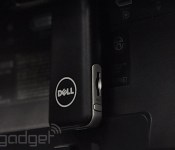
Dell’s new Android HDMI dongle turns screens into virtualized desktop computers for $130

Dell’s betting that a bunch of businesspeople want to be able to carry their work computer around in their pocket. Not literally, of course, but with the release of the company’s $130 dollar Wyse Cloud Connect dongle (formerly known as Project Ophelia), you can do just that. It connects to any TV or display with an HDMI or MHL port, and hooks up to mice and keyboards via Bluetooth or mini-USB. There’s also a microSD slot to give you up to 32GB of local storage, should you want it. Plus, you can access your desktop using yours or your company’s choice of virtualization technologies: Citrix, Microsoft or VMWare. Once plugged in, users can access a full Jelly Bean Android experience or their Windows and Mac machines via the aforementioned remote clients, and see them in 1080p resolution (on compatible displays, of course). Dell’s pitching the dongle as primarily an enterprise solution, but the company also thinks it’s well-suited as an educational tool, too.
We got to see the Cloud Connect in action today at a launch event in Silicon Valley, and in our limited time with the device, it worked just as Dell said it would. The dongle itself is a bit bigger than your standard flash drive… it’s roughly the size of an Apple TV remote. Installing the thing really is as simple as plugging it into a monitor, which turns said monitor into a fully fledged Android device. That means you have access to any compatible app from Google Play (or at least whatever apps your company’s IT department allows). Speaking of, the Cloud Connect management dashboard allows IT administrators to easily set permissions and access for the dongles with a straightforward and simple interface.
As for consumer applications, Dell’s VP and GM of cloud client computing, Steve Lalla, told us that his focus is on b2b for now, but regular folks are certainly on his radar. “It’ll bleed into the consumer space,” he said. “It’s just that businesses already understand the value proposition of the technology.” When we inquired about the possibility of building the Cloud Connect directly into monitors (essentially creating Android desktop computers), Lalla said that he has nothing to announce, but we get the feeling we’ll see one from Dell before too long.
Filed under: Networking, Internet, Dell
Source: Dell
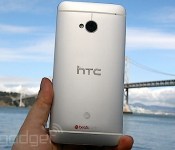
HTC to deliver KitKat to One owners a couple weeks late (updated)

HTC pledged to put KitKat on One handsets in the US 90 days after the newest version of Android’s release, but today, the company revealed that it’s going to miss its target date. While things looked to be on schedule as late as last week — when the company pushed the final software out to AT&T, Sprint, T-Mobile and Verizon — it appears that certification process is taking longer than expected (HTC One owners outside the US may experience a more timely rollout, namely in the Nordics, Eastern Europe, Turkey, Ukraine, Middle East and North Africa regions). There is a silver lining to be found, however. The delay should only last a week or two according to HTC Americas President Jason Mackenzie, and, of course you can keep an eye on the firm’s Software Update page. That way you One owners will know precisely when you’re able to break off a bit of KitKat for yourselves.
Update: We should mention that the update’s already rolling out to folks in Scandanavia, Eastern Europe, Turkey, Ukraine, Middle East and North Africa, with more to come.
Filed under: Cellphones, Software, Mobile, HTC
Source: HTC

HDTV deals of the week: 01.29.14

Early in the year is the best time to save your hard-earned cash on a new TV. Whether you’re prepping for the big game this weekend or just looking to upgrade your existing living room display, there are price cuts across the board on 2013 models to make room for this year’s releases. In order to lend a hand with the search, we’ve selected a handful of worthy contenders after the break. With a variety of sizes and price ranges covered, there’s sure to be something for those eyeing a new HDTV this week.
Just window shopping? No worries. Join us and add the gadgets you’re shopping for to your “Want” list; every time there’s a price cut in the future, you’ll get an email alert!
55-inch Sony KDL-55W900A

Price: $1,773.55
Regular Price: $3,300
Buy: Amazon
This 55-inch HDTV from Sony’s 2013 lineup has been touted for its picture quality, which many folks note is right up there with the best models available. In fact, Engadget users have given that stat a perfect 10. When compared with the current top-scoring HDTVs in our product database, the KDL-55W900A stacks up nicely in both ratings and price. Want to see how it stacks up to your current display? Make your own comparison right here after clicking “add to compare” on your HDTV’s product page.

46-inch Samsung F8000 Series

Price: $1,429
Regular Price: $2,449
Engadget Global Score: 87
Buy: Abe’s of Maine
This 46-inch LED HDTV from Samsung has also earned high marks for both picture quality and speedy performance, tallying up an Engadget Global Score of 87. According to our price-tracking tool, this is the lowest price we’ve seen on the unit since mid-November as well. Thinking about holding off a bit? Add the F8000 Series to your “Want” list and we’ll send you alerts as soon as the price tag fluctuates.

50-inch Panasonic Smart VIERA ET60 Series

Price: $841.30
Regular Price: $1,400
Engadget Global Score: 81
Buy: Amazon
Panasonic’s 2013 Smart VIERA ET60 LCD line is getting in on the end-of-the-model-year action as well with savings of around 40 percent off the MSRP. The HDTV has mustered an Engadget Global Score of 81 thanks to sharp picture and accurate color handling. If you’re after a bit more oomph, step up to the Smart VIERA ST60 Series and its 92 Global Score that’s currently priced in the $1,600 range for a 55-incher. To compare the two, mosey right over here for a side-by-side comparison.
32-inch Vizio M-Series Razor LED

Price: $360.04
Regular Price: $399
Buy: Target
Don’t need a massive HDTV to get the job done? Well, Vizio’s M-Series Razor family offers a 32-inch option that’s been discounted $40 from its original price when it arrived back in May. While the stats and picture may not blow you away, the affordable price for a smart TV with Hulu, Netflix and more packed in make this selection worth more than just a passing glance. Right now, it’s also priced the lowest we’ve seen in more than a month, according to the 90-day price history.

Filed under: Home Entertainment, HD
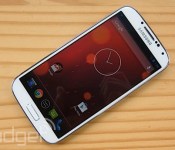
Reported Google deal could see Samsung deliver cleaner Android, less bloat

Google and Samsung agreeing to a 10 year patent licensing deal was good news for Android. But that might only be the tip of the iceberg. According to a report from Re/code the two are working together on a broader initiative that will bring the Samsung version of Android more inline with Google’s vision. The talks appear to have started at CES following the reveal of Galaxy Tab Pro and Note Pro lines, which featured a new skin called Magazine UX. The interface was not only a dramatic departure from the familiar TouchWiz, but from the very core of Android itself. In fact, the panel-based home screen looks a lot more like Windows 8 than Mountain View’s mobile OS. But Re/code’s sources say that future Samsung devices will either feature a drastically scaled back version of Magazine UX or lose the interface all together. Obviously, keeping the Android experience as consistent as possible across devices and brands is good for Google, but it could also help Samsung, which is now looking at maintaining three different Android-based tablet skins.
Google has been pressuring companies to minimize the tweaks to the Android UI (with varying degrees of success) for sometime now. So it balking at Magazine UX should come as no surprise. The more interesting part of the deal reportedly involves Samsung’s in-house apps. For years now the South Korean giant has been promoting its own (often lackluster) products that replicate functions of Google’s core Play Services. For example, WatchON, ChatON and the mSpot-enhanced Media Hub. Sammy has apparently agreed to instead shift focus to the Play store, Newsstand, Hangouts and other Google-built apps. Again, this will bring additional consistency to the Android universe and, considering the size of Samsung’s market share, will broaden the reach of Mountain View’s services.
What isn’t clear, is what concessions Samsung wrangled out of Google to get this deal done. It could simply be that Sundar Pichai threatened to pull access to the Play store if the Galaxy line didn’t, well, get in line. But that seems doubtful. Perhaps the company was promised the next Nexus device or even a seat at the brainstorming sessions for Lemon Meringue Pie (Lollipop? Lik-M-Aid?).
Filed under: Cellphones, Software, Mobile, Samsung, Google
Source: Re/code

Lenovo reportedly nearing $3 billion deal for Motorola’s handset business

According to several sources Lenovo is nearing a rather stunning deal that would put Motorola’s cellphone business in its back pocket for roughly $3 billion. Google snatched up Motorola in 2011 for $12.5 billion. Since then it’s slowly broken the company up, scaled back its device lineup and added its massive pile of patents to its legal arsenal. Now, after losing money for several years straight, Mountain View is reportedly preparing to offload the division on Chinese computer giant Lenovo. The purchase of Motorola will probably also put to bed rumors of Lenovo purchasing BlackBerry… at least for a little while. The company has been looking to step up its mobile efforts for the last couple of years, and Motorola’s existing infrastructure, patent library and brand recognition should help it make a dent here in the US.
The deal hasn’t been officially announced yet, but when (and if) it is there are bound to be plenty of questions. For one, how will the sale of Motorola to a Chinese firm effect the company’s recent efforts to bring manufacturing jobs back to the US? And how will this impact Google’s own expanding manufacturing plans in the future? Or course, we may have also just figured out how exactly Google convinced Samsung to start putting more focus on Play Services.
Filed under: Cellphones, Misc, Mobile, Google, Lenovo
Source: Reuters
 AIVAnet