


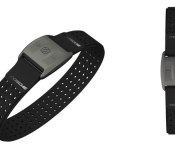
Scosche’s new heart rate armband helps you leave the smartphone at home

Forgotten about your New Years’ resolutions yet? Don’t worry; Scosche is announcing another fitness wearable that’ll help you make up those lost days. The company is unveiling the Rhythm Smart+, an armband designed to optically monitor your blood flow and heart rate that’s apparently much more accurate than a traditional chest strap. The unit is able to pair with both smartphones and sport watches over Bluetooth or ANT+, and will work with the usual bunch of apps including RunKeeper and Strava. If, however, you prefer to leave the other gear at home, embedded memory will track your stats for upload later. It’ll arrive at some point between April and June, priced at $99.
Filed under: Wearables

Sleep Number’s x12 smart bed monitors your sleeping habits

CES 2014: the year the Internet of Things got very, very real. So far at the show we’ve seen a smart toothbrush and even a smart slow cooker, but is everybody ready for a smart bed? Sleep Number just announced the x12, which packs a variety of sensors to monitor your sleeping habits, movement, heart rate and breathing rate. Basically, then, it potentially eliminates the need for a wearable fitness tracker, assuming you can do without the activity monitoring. In particular, the bed has two sections, each of which are independently adjustable, so that once the bed knows your sleeping patterns, it can suggest ways you might want to change, say, the head incline. Additionally — and this is perhaps our favorite feature — a Partner Snore feature allows you raise your partner’s headrest to help ease snoring. (Because anything that introduces passive-aggression to domestic relationships wins our vote.)
Wrapping up, the bed offers simple voice commands, and an under-the-bed light acts like a pathlight when you get up to go to the bathroom in the middle of the night. Look for it next month, shipping only in select markets at first, with a nationwide rollout following sometime later. No word on just how many sizes will be offered, though Sleep Number is saying it will definitely offer a queen-sized model for $8,000. Additionally, the built-in SleepIQ technology will eventually come to Sleep Number’s other (less smart) beds, with prices then going as low as $999.
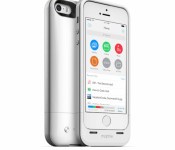
Mophie Space Pack for iPhone is a battery case with built-in storage

Mophie‘s line of Juice Packs and Powerstations has proven invaluable to anyone who needs their handsets to keep on ticking from dawn ’til dusk, especially at a show like CES. Now the company behind those popular external batteries has introduced the Space Pack, a battery case for the iPhone that also incorporates built-in storage. Designed for the iPhone 5 and the 5s, the Space Pack not only packs a 1,700mAh backup battery, it also comes in either 16GB or 32GB iterations that could potentially double or triple your iPhone’s storage capacity. Any file type can be stored and managed on it, from photos and videos to your iTunes library. Mophie also introduced a free iOS app called Space that organizes the files into easy-to-view Collections so you can see what’s stored in your Space Pack. The 16GB version retails for $149.95 while the 32GB version will cost you $179.95. So if you’ve ever been stymied by your iPhone’s poor battery life and fixed storage, you can go ahead and pre-order Mophie’s Space Pack today as it starts shipping on March 14, 2014.
Filed under: Cellphones, Peripherals, Storage, Mobile
Source: Mophie

Live from the Engadget CES Stage: Huawei VP of External Affairs Bill Plummer

Chinese telecom company Huawei has been aggressively targeting the consumer space in recent years with Android-powered smartphones and tablets like its Ascend line. Does it have what it takes to become a big-league competitor alongside the likes of Samsung, LG and Apple? We’ll ask the company’s VP of External Affairs, Bill Plummer.
Follow all the latest CES 2014 news at our event hub, and check out our full stage schedule here.
Filed under: Cellphones, Mobile
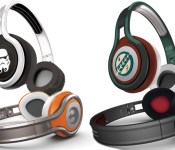
50 Cent’s SMS Audio joins the alliance with new Star Wars-themed headphones

[Cantina Band plays in the background] In a collaboration, we’ll admit, we weren’t expecting, 50 Cent has teamed up with Lucasfilm to release a series of Star Wars-themed headphones. Based on 50′s existing Street design, the new line includes Stormtrooper, Rebel Alliance, Boba Fett and Imperial editions. We know what you’re thinking — where’s the Leia-inspired cans? The new range is said to be available for a limited time only, and will come with a certificate of authenticity, along with some in-the-box Star Wars goodies. Once you’ve decided which side of the Force you’re on, you can get yourself a pair for $200 around springtime, ideal for checking out that lost footage on the commute.
Filed under: Home Entertainment, Peripherals
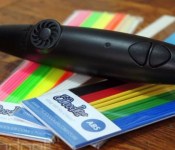
3Doodler 3D printing pen coming to Brookstone stores later this year

If the only thing standing between you and a $99 3Doodler was the ability to mull the decision over in a nearby massage chair, 2014 is your year. Wobbleworks announced today that its 3D printing pen is finally getting a little retail distribution, namely Brookstone, which will be adding the peripheral to its offbeat gadget arsenal later this year. The 3Doodler’s also extending its online reach, thanks to ThinkGeek, the MoMa Store and Maker Shed. The Wobbleworks team is apparently heating up even more retail partnerships, though it’s not quite ready to offer up any information for the time being.
Filed under: Peripherals
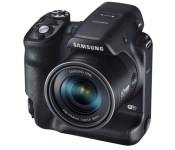
Samsung announces a batch of sharing-focused SMART cameras, including a dual-grip beast with 60x zoom

They don’t run Android, and we’re not sure if they even run Tizen OS, but a lineup of new smart cameras at CES represents Sammy’s best efforts to elevate point-and-shoots to a higher state of technological being. (Hopefully before the entire genre of the “cheap camera” is wiped out by smartphones.) We’re still lacking exact pricing and availability, alas, but the model numbers and specs hint at the essential hierarchy, starting with the huge WB2200F bridge camera with 60x zoom and going all the way down to the tiny WB35F with a 12x zoom. All the cameras come with WiFi and NFC for quick pairing to a smartphone or tablet; all deliver 16MP images as a bare minimum; and we’ll take a moment to cover each one in a little more detail after the break.
WB2200F

This bridge camera sits at the head of the table, with a Back-Side Illuminated (BSI) sensor for improved low-light performance (at least compared to the regular CCD sensors lower down the lineup), 60x zoom with optical stabilization for ridiculously detailed shots of squirrels and usefully wide 20mm focal length at the other end of the zoom range. Aside from NFC and WiFi, other connectivity options come in the form of a full-sized SD slot and HDMI output. In addition to the big 75mm LCD, a dual-grip design stands out as being unusual for this category of camera, and it makes room for a bigger battery that Samsung promises will allow users to “indulge their passion [for photography] for longer periods of time than ever before.”
WB1100F

On the face of it, this camera delivers much the same feature set as the WB2200F, but with a smaller 35x zoom that brings the weight down to 462 grams (as measured, conveniently, without the battery), instead of 608 grams. But there are other sacrifices to be made: the sensor is a non-BSI CCD, plus there’s only 720p video recording (instead of 1080p) and no HDMI output.
WB350F

This looks to be an updated (and hopefully cheaper) hybrid of last year’s Galaxy Camera and WB850F, without Android, but with the same 21x zoom, 16MP BSI sensor and max ISO of 3200 — all of which suggests that picture quality should actually be pretty decent. We’ve got the same-sized LCD as the WB220F, but now with touch sensitivity. We also have the same connectivity features, but here housed in a camera that weighs 216 grams, which suggests this could be the most mainstream offering of the lot.
WB35F and WB50F

This is the smallest of the bunch, at 144 grams and just 10 centimeters wide. Aside from the difference in form factor, with just a 12x zoom lens here, most features and specs are similar to the WB1100F. Also the SD slot is replaced by microSD, which may actually be more convenient for sharing to other mobile devices. Finally, the WB50F is billed as a “child-friendly” alternative to the WB35F, with a slightly more rugged build that slightly adds to the weight.

A closer look at Intel’s smart earbuds, which match songs to your heart rate

OK, it’s not as groundbreaking as that internet-connected baby onesie, but Intel’s smart earbud concept is still one of the neater items you’ll find inside the company’s CES booth. In brief, it’s a pair of headphones with sensors inside the earpiece that can monitor your heart rate. The headphones themselves are powered through the headphone jack, which means you’ll never have to worry about running out of juice mid-workout.
But anyway, you don’t care how it charges; you want to know what it does. Using that biometric data, the earbuds work with a companion app, where you can set a target heart rate for your workouts, and automatically select appropriate music tracks (fast, slow, et cetera). According to Indira Negi, who invented the earbuds, the built-in music coach won’t change songs too abruptly, even if your heart rate does fluctuate a bit. Rather, you’d get a warning and then, if you still weren’t reaching your target heart rate, the app would switch to slower-tempo songs. For now, Negi can’t say when this will ship or how much it will cost; just that Intel is working with partners to potentially bring it to market. Until then, we’ve included some hands-on photos below, just in case you quantified-self nerds out there want to see how the app works.
Filed under: Portable Audio/Video, Wearables, Intel
WiTricity Announces New Wireless Charging System Design for iPhone 5/5s
Wireless power firm WiTricity today announced the release of a reference design for its new wireless charging system aimed at the iPhone 5 and iPhone 5s. Moving beyond existing induction power transfer technologies such as Powermat that require direct contact with a charging pad, WiTricity’s system supports power transfer over short distances using magnetic resonance, allowing charging pads to be kept out of sight such as mounted on the bottom surface of a desk.

The WiTricity charging system for the iPhone 5/5s includes a wireless charging hub and a charging sleeve that fits an iPhone 5 or 5s. Similar to other protective covers, the WiTricity sleeve quickly slides onto an iPhone 5/5s and is powered when in proximity to the WiTricity charging hub. Capable of charging two phones concurrently, the charging hub can be placed on top of a table as an upright or flat charging pad, or mounted underneath a table or desk for charging through the surface. By mounting the charging pad under a surface, smartphone users are freed from the tangle of charging cords and cluttered desktops.
We first explored Apple’s connection to WiTricity in July 2011 after it was reported that Apple was working on a “new way of charging” the iPhone, and while that way turned out to simply be the Lightning connector introduced in the iPhone 5, Apple does clearly have an interest in wireless charging and WiTricity’s technology in particular.
Patent applications from Apple have outlined how the company could use something in line with WiTricity’s technology to allow a computer such as an iMac to serve as a wireless charging hub, with accessories and other devices such as keyboard, mice, and iOS devices able to be charged simply by being in close proximity to the iMac. Shortly after the publication of a key Apple patent application on the concept, WiTricity even demoed how such a system would work.
WiTricity’s system announced today is a reference design not meant for direct sale to consumers, but it will allow the company to partner with a variety of other firms such as device manufacturers, accessory companies, and furniture makers to explore implementation of the technology.
     |
T-Mobile CEO “crashes” AT&T party in Las Vegas
The ongoing battle between AT&T and T-Mobile took a turn for the interesting last night as the Uncarrier’s CEO made his way into Ma Bell’s Las Vegas party. Saying he was only there to “see Macklemore” perform, John Legere ultimately found himself being escorted out of the show.
All of a sudden these gigantic goons said ‘Can I talk to you over here,’ Legere said, in an interview outside the Venetian hotel later on Monday, adding that he was told that if he didn’t leave immediately he would be charged with trespassing. Legere said he was also escorted from the premises.
Legere seems quite content in his role of throwing rocks at the giant of AT&T. He’s never been shy about calling them out on Twitter; commercials, marketing, and other media focuses its laser on AT&T more than othe carriers.
Ran into @JohnLegere at the AT&T party. Yep, he crashed it. And still wearing the pink t-mo shirt. #CES2014 pic.twitter.com/gy9vGTJUEW
— Roger Cheng (@RogerWCheng) January 7, 2014
While we would love to believe Legere’s claim that he was there for the music, something smells really fishy. One doesn’t go to a concert and then take pictures with people like Roger Cheng of CNET without risking exposure and a potential storm. Either way, he’s a ballsy guy and we applaud his efforts in the mobile space. If anything, he keeps it fun and fresh and increasingly better for the consumer.
The post T-Mobile CEO “crashes” AT&T party in Las Vegas appeared first on AndroidGuys.
 AIVAnet