



Live from the Engadget CES Stage: Mozilla COO Jay Sullivan

It’s true that CES is primarily a hardware show and Mozilla is primarily a software company, but the team behind Firefox no doubt has plenty to discuss — including, most likely, some hardware, too. Join us as we talk to COO Jay Sullivan about the browser wars, online tracking and Firefox OS’s place in the world of smartphones.
Follow all the latest CES 2014 news at our event hub, and check out our full stage schedule here.
Filed under: Cellphones, Software, Mobile

Oculus Rift’s latest prototype features positional tracking, an OLED screen, and kills motion blur (hands-on)

The newest version of the Oculus Rift headset is another major step toward the retail version promised for some point in 2014. It takes the existing HD headset we saw at E3 2013 and swaps an LED screen for OLED. It adds an external camera, and positional markers on the headset, to track your position depth-wise. Perhaps most importantly, it kills motion blur — one of the biggest issues with previous versions of Oculus VR’s incredible Rift headset.
The latest prototype, dubbed “Crystal Cove,” is here at CES 2014, and we’ve just gotten out of an EVE Valkyrie cockpit to tell you all about how much of an improvement this new guy is over the previous model.
Leaning forward in the cockpit of an EVE Valkyrie dogfighter, there’s readable text on a smattering of control panels. The forward thrusters, it turns out, are about to be engaged, hurtling us into space amongst a volley of other spaceships out for blood. Oculus VR director of dev relations Aaron Davies has us pause so that he can toggle one of Crystal Cove’s newest features: “low persistence.” We turn from left to right, unable to read the blurred text in front of us. He flips a switch, and voila: no motion blur. Well, very little. It’s a far cry from the first Kickstarter dev kit we used many moons ago and, despite the importance of positional tracking, makes a tremendous impact on the usability of the Rift.

In the same breath, let’s not discount how amazing it is to move our head forward and have that action replicated one-to-one in-game. This means that the gauges in our cockpit more than just window dressing: that’s the HUD. Another demo, specially made for Crystal Cove by Epic Games, had us sitting in the Unreal Engine 4 demo with the…er…magma lord (?) that previously terrified us at E3. Looking down between where he’s seated and our own position, a little world of creatures in a castle are available for torture should we push the face buttons. Push A, fire rains down and decimates the little guys. It’s a bit like The Seventh Seal, but less existential. Thus far, position tracking is handled by adding a camera to the equation which tracks a handful of sensors on the front of the Rift. CEO Brendan Iribe made sure to note that the camera is not final and may never ship with the final product. It’s just the easiest solution for now. See those little white dots all over the headset? Those are the sensors.

And all of this looked far, far crisper than previous units — that’s due to the new OLED screen inside and a 30 millisecond lag time (down by half from the previous dev kit). As far as when all these new bells and whistles will arrive in developer hands is another question altogether — we’re told by Oculus that the Crystal Cove prototype is just that: a prototype. With around 46,000 dev kits out in the wild already, it’s probably unfair to ask all those folks to re-buy kits. That said, we expect it won’t be long before new dev kits are available, and not long after that for the world of VR to expand dramatically. If 2013 was the year of proof-of-concept for Oculus Rift and modern virtual reality, 2014 seems poised to be the year when it comes into its own. With Crystal Cove, that possibility is greater than ever.

Yahoo CEO Marissa Mayer’s CES 2014 keynote liveblog

No-one was sure what to expect when Google’s Marissa Mayer took over at Yahoo, but it’s clear that she wasn’t there for an easy ride. In less than two years, the company has bought a clutch of other outfits, including Tumblr for $1.1 billion, redesigned its logo and brought some much-needed love to Flickr. Now she’s here at CES, ostensibly to talk about the “next wave of innovation,” which we hope includes some dirt on Yahoo’s future direction. Care to join us for the play-by-play?


Filed under: Internet
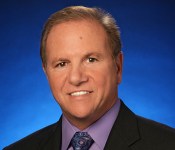
Live from the Engadget CES Stage: Sony President Mike Fasulo

Mike Fasulo hasn’t been in his position for long, but Sony’s new president/COO knows a thing or two about consumer electronics, having previously served as the company’s CMO/VP. We’ll grill him on what the company is offering up year — or at least as much as we can fit into half an hour.
Follow all the latest CES 2014 news at our event hub, and check out our full stage schedule here.
Filed under: Cellphones, Cameras, Handhelds, Home Entertainment, Laptops, Tablets, Wearables, HD, Mobile, Sony
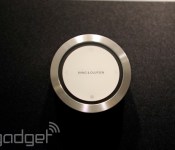
B&O’s Essence allows wall-mounted music control of your wireless streaming habits (hands-on)

Here at CES 2014, Bang & Olufsen is looking to make access to tunes as soon as you get out of bed “as easy as turning on the lights.” To do so, the high-end audio company has announced Essence: a circular music control dial that can be either wall mounted or fixed to a small metal plate for use around the house. The device features a rotating aluminum ring that doubles as a volume dial with track skipping, play/pause and power touch control on the face. In fact, it’ll pick up at the exact point you last listened. That bit of silver alongside minimal graphics and black accents keeps the unit inline with B&O’s upscale look. Measuring about two-inches across, the Essence is quite small and only extends a couple of inches off of the wall — when mounted in that fashion. Up to three of the controls can be used in a single room, if you’d like to spread out multiples.
In the event that you need that controller to be a bit more mobile, B&O had accounted for that. The company is calling it a “table-top” mount and it’s attached to a metal plate that’s about the size of an index card. As you might expect, the add-on keeps with the aesthetic while making the Essence a bit easier to keep track of. In order to connect to that gaggle of speakers — like the recently announced BeoLab 17, 18 and 19, for example — there’s a separate box that can remain hidden in a cabinet and connects to the controller via low-energy Bluetooth. In terms of compatibility, you can expect AirPlay and DLNA support as well as streaming from Spotify Connect, QPlay and a variety of internet radio providers at launch. It also plays nice with the BeoPlay smartphone app, too. Speaking of its arrival, the Essence will be available this spring for $995 and that so-called table-top option tacks on an additional $200. Despite showing off a smattering of color options for the back plate here in Vegas, we’re told only the dark grey option will be available at launch — which is a bummer, because the wood grain looks really nice. We’ve already had a look at the device for ourselves, so jump down in the gallery that follows for some snapshots.


Will Lipman contributed to this report.
Filed under: Home Entertainment, Household

Live from the Engadget CES Stage: ARM CTO Mike Muller

Mike Muller isn’t just the CTO of ARM — he’s also a founder. Suffice it to say, the executive knows a thing or two about the mobile industry. We’ll be picking his brain tonight at 5PM ET.
Follow all the latest CES 2014 news at our event hub, and check out our full stage schedule here.
Filed under: Cellphones, Mobile

Yahoo News Digest to offer bite-sized news for busy people

Yahoo has just announced Yahoo News Digest, an app that summarizes all the biggest news of the day into short easily consumable chunks. Summly’s Nick D’Aloisio is heading up the venture, and he came on stage to describe how the app works. A large cover image greets you on the splash screen while a cluster of headlines lie underneath. The app is designed to summarize news twice a day from multiple sources, and the news chunks have contextual information like maps and tweets baked right in. Infographics, stock tickets, scoreboards are part of the app, and it’ll prompt you when you’re done reading.
Source: Yahoo

Sprint’s new “Framily” plan lets you share your account with 10 friends, but still bills you separately

It’s a scam thrifty cellular subscribers have been pulling for years: sharing a “family plan” with a group of non-biologically related peers to save a few bucks. It works, but it’s kind of a headache – family plans arrive as one bill, and the ringleader needs to hassle their friends to pay their share of the bill. Tired of the nightmare? So is Sprint – the company has dropped all pretense for these plan-sharing schemers with its horribly named “Framily” plan, which allows up to 10 lines to be shared on a single account regardless of blood relation.
The initial line of service costs $55 a month, but each additional user takes $5 off the price of every line on the plan until they reach a maximum discount of $30 per line, per month. A group of seven, for instance, can score unlimited talk, text and 1GB of data for $25 per line. Best of all, each line is billed individually, and allows each user to manage and customize their own plans without going through the central account holder. The new system will be available to new and existing Sprint customers on January 10th, although currently active lines can only be combined if they are already owned by the same person. If you can tolerate its moniker, Framily seems to be a good spin on the existing shared plan dynamic. Want more details? Check out Sprint’s official announcement at the source below.
Filed under: Cellphones, Mobile
Source: Sprint
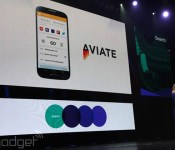
Yahoo acquires Aviate to build context-sensitive Android apps

That was quick — Aviate hasn’t even finished developing its context-aware Android home screen, and it’s already an acquisition target. Yahoo has announced at CES that it’s buying Aviate for an undisclosed amount; the web giant wants to use Aviate’s simplified, ever-changing interface as a “central part” of its Android software in 2014. While it’s not clear just what that entails, the launcher replacement will live on for the foreseeable future — in fact, the first 25,000 people to use the code “YAHOO” will get into the ongoing private beta.
Filed under: Cellphones, Mobile
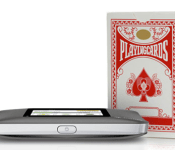
Sprint announces Virgin Mobile hotspot with Spark LTE support, adds six new markets

Most carriers shy away from offering LTE on its prepaid plans, but Sprint is diving right in by making it available on its first Virgin Mobile device. The network will take advantage of Sprint’s Spark service, which will offer tri-band LTE support at faster speeds on the company’s Broadband2Go plans. The first device to leverage it is the Netgear Mingle, which is essentially a red version of Sprint’s Zing (pictured above). You can get the fast service at a cost of $5 per day, or you can choose monthly plans of 1.5GB for $25 or 6GB fof $55. Additionally, Sprint announced that it will launch Spark in six more cities: Dallas, Austin, Fort Worth, San Antonio, Houston and Fort Lauderdale.
Filed under: Cellphones, Wireless, Mobile, Sprint
 AIVAnet