


Setting a course for the future: the best of CES past

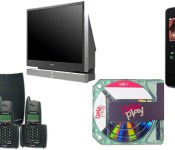
Who remembers the CyberGenie cordless phone system from Cygnion? Truth be told: We don’t either. That’s understandable, though, as it came out nearly 15 years ago. While it might seem like this fairly low-tech (by today’s standards) piece of office equipment is a million miles away from what’s on Engadget these days, back in 2000, thanks to its unified messaging features and personalized auto-attendant, the CyberGenie was considered innovative enough to be voted Best in Show at that year’s CES awards. Coincidentally, it’s Engadget that has the honor of deciding which of the thousands of products on display will be worthy of that same title this year. We take a look at a few of the key highlights from the history of CES awards.
Of course, this is quite a responsibility, and with so much new and innovative technology on display, picking the best in each category is challenging. For example, CyberGenie’s ability to notify users anywhere in the world when new voicemail, email or faxes arrived may have excited gadget fans back then, but it’s something that would barely get a mention on a press release today. In this regard, looking back over the history of the CES awards gives a delightful insight into some of the problems we’ve faced in our daily lives, and how technology was employed to solve them.
In 2001, for example, the problem was evidently boredom — as that’s the year that the original Xbox was unveiled at the show. But it was an optical disc — the ill-fated DataPlay format — that went on to snag the top award, before ultimately shuffling off into obscurity. On the other hand, 2005 was all about true HD/1080p. Samsung’s 67-inch HLR6768W TV might look bulky and cumbersome by today’s standards, but nearly 10 years ago, this was probably the nearest you’d get to a wall-mountable full HD set — if your walls were made of meter-thick concrete that is. Samsung’s well-known for both TV and mobile these days, but it was already in the game back then. In 2005, it wasn’t a Galaxy S picking up acclaim; no, it was the snazzy Samsung i730, complete with Windows Mobile 2003, a 65,000-color display and, of course, EVDO/3G. Compare both of those products to current offerings, and you’ll see just how far we’ve come.

Two years after Samsung scooped the top prize, another Korean firm, LG, would get its time in the spotlight. Once again, home entertainment and physical media dominated the show, with the top prize in 2007 going to a machine that ticks about as many CES boxes as you could hope for: the LG BH100 HD DVD and Blu-ray combo player. The BH100 was notable for its ability to play both formats from the same disc tray, but functionality came at a price — an impressive $1,200 price tag. Ultimately, and perhaps unsurprisingly, the hefty price tag wouldn’t be the biggest setback the BH100 faced. The fairly rapid demise of HD DVD soon after would render that half of the deal somewhat limited in appeal, making this one heck of an expensive Blu-ray player. Home cinema and entertainment always feature prominently at CES, but 2007 was an especially viewing-friendly year, as even the winner of the cellphone category was Verizon’s Wireless V Cast TV.

The living room continued as the inspiration for the Best in Show award a year later when Philips took the top title with its Eco TV, but 2008 also reminded us how fickle technology can be. Motorola caused more than a few head-scratches when its Rokr E8, complete with eye-catching design, only offered 2G connectivity, but still won the cellphone category. Meanwhile, iRiver — remember iRiver? — bagged the top spot in the portable media player category with its W7 PMP. While the 480 x 272 display and lack of WiFi might make it seem an unlikely winner, a 3-inch touchscreen media player in 2008 was still something worth talking about.
As this list demonstrates, technology is, by its very nature, transient, or prone to self-cannibalization. A fact no more eloquently proven than by 2009′s Best in Show and People’s Voice Award winner: the Palm Pre. You might think that taking home two gongs would solidify the Pre’s place in the technological zeitgeist of the time, but the historical facts tell a different story. The webOS platform it ran might have been “all new” at the time, and the combination of touchscreen and full QWERTY keyboard certainly could have given it broad appeal, but both are also excellent reminders of how quickly the public’s tastes can change. Both the operating system and the physical keyboard eventually fell into relative obscurity in the years that followed (the former, not least thanks to HP). But of all the items in this article, it’s hard not to see the Pre as the harshest example of technology’s temporary nature. The top-spot spoils between 2010 and 2013, however, were shared between TVs and — for the first time — tablets, showing both a new form factor gaining prominence, and the reliable consistency of home theater wares winning over judges.

While it may seem easy to paint this as a cautionary tale — a long list of since forgotten gadgets — there’s a part of all these award-winning devices that lives on today. Whether it’s the full HD display in your mobile, or the gradual move away from physical formats, or even the ability to notify users anywhere in the world when new voicemail, email (or even faxes) arrive, there’s a little bit of “Best of CES” in everything that surrounds us. And this is, perhaps, the real job that rests at Engadget’s feet in 2014: spotting the features, functions, designs and trends that make a gadget stand out from the rest. Particularly those that will then be adopted, improved upon and ultimately rendered obsolete in the grand silicon circle of life. So, you might be thinking “no pressure, Engadget,” but we prefer to think of it as a responsibility.

Live from the Engadget CES Stage: Lenovo VP Dilip Bhatia

What are Lenovo’s big plans for 2014? We’ve got the VP and general manager of the company’s iconic ThinkPad business line onstage to discuss the place of the laptop and tablet in the ever-changing business world.
January 7, 2014 6:30:00 PM EST
Follow all the latest CES 2014 news at our event hub, and check out our full stage schedule here.
Filed under: Cellphones, Laptops, Tablets, Lenovo

Ford Sync will soon let you order pizza while on the road

Ever wish you could (safely) order pizza while driving home? You’ll have that chance soon. Ford has just announced Sync AppLink support in five apps that could prove handy for many commuters, including Domino’s Pizza. An upcoming version of the eatery’s software will let you dictate orders without taking your hands off the wheel. New editions of Parkopedia and Parkmobile, meanwhile, will respectively help you find and pay for parking. ADT’s Pulse app will verify that your house is safe and sound, and an update to HABU later this month will send mood-setting tunes to the car stereo. It’s not clear just when all of the new apps will be AppLink-ready, but it shouldn’t be long before you’re asking for an extra-large Pacific Veggie while you’re stuck in traffic.
Filed under: Transportation

Live from the Engadget CES Stage: 3D Systems CEO Avi Reichental

The company that helped invent rapid prototyping has been in the 3D printing game for nearly three decades. In recent years, 3D Systems has been making an aggressive play at the consumer market with products like the Cube, CubeX and Sense as one of the driving forces in the desktop 3D printing revolution.
January 7, 2014 7:00:00 PM EST
Follow all the latest CES 2014 news at our event hub, and check out our full stage schedule here.
Filed under: Peripherals

Kazuo Hirai on unifying Sony through Ultra HD and PlayStation Now (video)

Sony CEO Kazuo Hirai left the theatrics at home during his opening day keynote this morning, instead choosing to focus on the company’s vision of the future and his push to unify its disparate divisions. Since he took the reins last year, he’s been preaching a unified approach, something he calls “One Sony.” That approach manifested itself in a collaborative effort to push 4K content, distribution and devices, and, as of today, a new service called PlayStation Now. That service will allow users to stream PlayStation content to gaming devices, tablets, smartphones and Bravia TVs. We met up with Hirai at Sony’s CES booth where he told us to expect more collaboration in the future and, eventually, PlayStation Now on iOS, Android and beyond. For more of Hirai’s plans for the future of Sony, check out our interview after the break.
Filed under: Cellphones, Cameras, Displays, Gaming, Home Entertainment, Software, HD, Mobile, Sony

PlayStation Now actually works! (hands-on)

You’ll excuse us if we didn’t expect PlayStation Now to work so well. It’s a game streaming service, and the history of game streaming services is littered with dead bodies. When Sony spent an unbelievable $380 million on Gaikai, it seemed impossible that the service could ever live up to that incredible sum. While PlayStation Now may not live up to that massive payout, it does, in fact, work. And it works really well.
We got our hands on PlayStation Now today at a CES 2014 PlayStation event, where we tried God of War: Ascension on a Bravia TV (without a PS3) and The Last of Us on a Vita. Both games played like there was a local PlayStation 3 (including the incredibly long initial load for The Last of Us) and ran without a hitch. There was zero perceptible lag in our (admittedly brief) playtime, and we suspect that the internet Sony’s using is of the very strong variety.
The service is set to launch later this month in closed beta, and later this summer on PlayStation 3, PlayStation 4 and Vita. As for mobile devices and Bravia support, that’s expected by years end. Given the relative earliness of PlayStation Now, the UI we saw was non-final (and looked like little more than placeholder art). The same goes for the list of supported titles via streaming — the service will launch with a variety of “marquee PS3 games,” though nothing’s set in stone thus far. We expect the God of Wars and Gran Turismos of the world will be there on day one, but only time will tell.
Beyond full games, there’ll be rental and demo options available through PlayStation Now. But again, none of this is final, and only one facet of PlayStation Now was available for testing here at CES. What we did see was impressive and fulfilled the promises Sony’s made when it comes to game streaming, but there’s a long way to go before PlayStation Now launches this summer.
iOS 7.1 Beta 3 Tidbits: Revamped Keyboard, Darker Icons, New Phone Look, and More
Earlier today, Apple released the third beta of iOS 7.1 to developers, which included both bug fixes and a number of visual changes that give several aspects of iOS 7 an entirely new look and feel. For example, the Phone dialer has been revamped with new buttons and several icons have had their color toned down, making iOS 7 less neon.
We’ve rounded up all of the visual changes that have been found in the iOS 7.1 beta thus far, creating an overview of what iOS 7 might look like in just a few months if the revisions make it into the final public release.
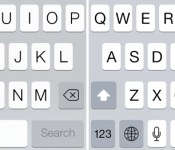
Keyboard: The keyboard in iOS 7 has been slightly revamped, making adding a slight boldness to the font and a new design to the delete and shift keys. It also incorporates a somewhat darker, less yellow gray tone. Overall, the keyboard changes have the effect of adding contrast and making the letters easier to see.
 iOS 7 keyboard on the left, iOS 7.1 keyboard on the right
Icons: The green color in the Phone, Messages, and FaceTime apps has been toned down and is now darker, especially at the bottom of the icons. This introduces a less neon coloration to iOS 7, cutting down on some of the operating system’s brightness.
 Darker iOS 7.1 icons on the top, brighter iOS 7 icons on the bottom
Phone: The Phone app has seen the biggest changes, with a renewed focus on simple, circular buttons. The standard incoming call screen with rectangular buttons has been replaced with a black background and two round Accept and Decline icons.
 New incoming call buttons
The “Call” and “End” buttons visible on the dialer have also been replaced with circular icons.
 iOS 7 dialer on the left, iOS 7.1 dialer on the right
Wallpaper: When selecting a new wallpaper, users can now choose to turn the parallax effect on or off.
Shut down: The power off screen when shutting down the phone has a new look that does away with the red “slide to power off” and cancel tabs first introduced with iOS 7. The new design includes a power button icon at the top and a cancel icon at the bottom.
 Slide to Power Off in iOS 7.1
Accessibility: A New option has been added in the Accessibility’s Contrast menu, allowing users to reduce iOS 7′s white point. This feature joins both the “Button Shapes” and Darken Colors options that were added in an older iOS 7.1 beta.
Music: The Music app has new shuffle and repeat buttons that are more prominent, and iTunes Radio has a revamped “New” button.
 iOS 7 buttons on the left, iOS 7.1 buttons on the right
According to a recent report from BGR, iOS 7.1 may not make it to consumers until March, indicating that the software will see a lengthy beta testing period. Beta 3’s release notes indicated a number of known issues that remain with iOS 7.1, suggesting that the update is not yet ready for the public.
     |
CES 2014: OtterBox Introduces New One-Piece Symmetry Series Case for iPhone 5s and 5c [iOS Blog]
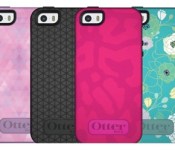
At CES today, Otterbox introduced a new series of iPhone cases that are some of OtterBox’s most minimalist yet. The one-piece Symmetry case is available in a number of different colors and graphic designs for both the iPhone 5s and 5c.
The cases leave the front of the iPhone completely exposed, but they protect the sides and back of the device — a very popular style of case. OtterBox also has the Commuter and Reflex series cases, but those use multiple pieces rather than the one-piece design of the Symmetry.

The OtterBox Symmetry Series is the culmination of over a year of design, testing and innovation. This slender, cleanly constructed protective smartphone case is molded into a single piece for ease of installation. A dual-material construction makes Symmetry Series one of the slimmest, most protective cases in its class and a raised beveled edge helps keep the touch screen safe. Internal synthetic rubber with honeycomb coring helps protect the device from drops and shock. A full spectrum of wraparound colors and graphics on the sleek exterior add seamless style that slides easily into and out of pockets.
The OtterBox Symmetry Series will be available for $40 and $45 depending on color. They should be available in early Spring of this year.
| |
Battery, Screen and Manufacturing Issues Plaguing Apple’s iWatch Development
Apple is experiencing multiple development issues with its iWatch, according to a new report from The Information (via Business Insider). The company is said to be facing challenges with screen technology, battery life, and manufacturing.
Multiple iWatch rumors have suggested that Apple is planning to incorporate an OLED display into its smart watch, but The Information notes that the company is actually having difficulties deciding on a screen technology for the device, primarily due to battery issues. For that reason, Apple considered new screen technologies to improve battery life late last year.
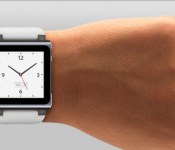
Reports of the iWatch’s poor battery life first surfaced in early 2013, indicating that prototypes of the watch were seeing just a few days of battery power before needing to be recharged, with Apple hoping to expand battery life to at least four or five days between charges. It appears that battery life is still a major issue for the device, which is said to utilize a 100mAh battery that is comparable to the 105mAh battery in the sixth-generation iPod nano.
 Sixth-generation iPod nano with watch face
The Information’s report also appears to confirm a rumor from earlier this week, which suggested Apple was facing yield problems due to the finish treatments for the body of the device.
Apple reportedly shut down “advanced prototyping” of the watch with an unspecified manufacturer in late 2013, but it is unclear whether the shift was due to the developmental snags. In late 2013, rumors pegged Quanta as Apple’s iWatch manufacturing partner.
Along with manufacturing issues, iWatch development has also been somewhat impacted by the loss of a key team member, Bryan James, who recently left Apple for Nest. James, who previously worked on iPods, was a member of the iWatch team.
Despite the numerous issues Apple is facing with iWatch development, the company still has a “sizable team” working on overcoming the device’s problems. These snags are not expected to delay the iWatch, however, which still has a prospective release date of late 2014 according to the most recent rumors.
| |

Motorola announces January 14th event in UK, hints at Moto X in the invite

UK residents that liked the Moto G, but wanted the Moto X might not have to wait long. In middle of untold CES-based emails, rants and schedule updates, Motorola tells us that it’ll be holding a London event for a “new addition” to the Motorola family. Oh look, there’s a Moto X right in the photo. You can join the dots, right?
Filed under: Cellphones, Mobile, Google
 AIVAnet