


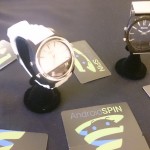
Martian Notifier Smartwatch Makes Debut at CES 2014 for $129
I have been a big fan of Martian and their original ‘Dick Tracy’ voice command line of smartwatches that made their debut at CES 2013. They have since taken all the users feedback and combined it into a new smartwatch offering, the Martian Notifier. Where many smartwatch manufacturers are taking the all inclusive, large touch screen, high dollar approach to the smartwatch game, Martian is going backwards. Aiming to make the Notifier the smartwatch to have in 2014.
The Notifier is, in my opinion, is the correct implementation of a smartwatch design mixed with functionality. Making it more of an extension of your device, rather then attempting to mimic your device. It gives you a classic and modern analog watch face that runs off its own separate watch battery. Implementing a small LCD screen that sends you a running read out of your text messages, incoming caller ID, Calendar notifications, email and plenty more. The Notifier smartwatch is capable of giving you all your notifications and alerts from your phone directly to your wrist.
There is a complimentary app that gives you full control over which notifications you receive to your wrist which ones you don’t. Not to mention date and weather information at the tap of a button. Go one step further and trigger Google Now voice commands from your wrist, rather than from your phone.
The Martian Notifier is one heck of a watch and is sure to make a fairly large splash this year. Especially when you see all that it can do, what it looks like and that the watch band is a standard watch band that can be interchangeable, all for $129, how can you not pick one up?
Take a look through the photo op we have with the new Martian Notifier and let us know what you think. Be sure to check out all the detailed specs and learn more at Martiannotifier.com.


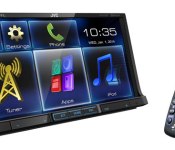
JVC outs more MHL-ready in-dash receivers at CES 2014

Face it, your old car’s factory stereo system isn’t going to last forever – eventually, you’ll need to upgrade. Luckily, JVC is here to trot out it’s latest head units at CES 2014. Just like last year, the company has outfitted two of its new receivers (the KW-V0BT and KW-V40BT, specifically) with MHL support, giving Android users easy access to their mirrored apps while on the road. The new receivers can mirror iPhone 5 apps too, provided one brings their own Apple Lightning AV adapter. Folks without MHL capable devices (or those who opt for the company’s lower end receivers) will still find support for 20 iPhone 4 and 4s apps through Bluetooth, including Waze and MotionX navigation. All seven of the companies new models also support Pandora, iHeart Radio and a standard assortment of hands-free features; you know, wireless music streaming, one push voice calling and other phone functions. JVC says its new receivers are starting to roll out this month and will continue to arrive through March.
Filed under: Misc, Transportation
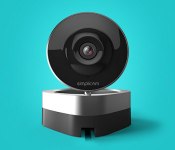
Simplicam watches your house while you’re away, uses facial recognition to tell you who’s home

WiFi cameras are a handy tool to keep tabs on your home, but they’re really only useful if you’re looking at them. Checking up on your family means pulling up an app, logging in and manually scanning your living room for occupants. ArcSoft says it has an easier way: facial recognition. By equipping its Simplicam WiFi camera with motion, sound and facial detection software, the firm says it can notify you when your family comes home or if someone is lurking around when they aren’t supposed to be. It also includes two-way talk, automated alarm systems, and access from any PC, iPhone or Android device. Oh, and by signing up for Closeli’s optional cloud service, you can record, share and save clips from the camera too. Simplicam will be available next month for $150. Looking for more? Check out the company’s website at the source link below.
Filed under: Misc
Source: Simplicam

CES 2014, Day 2: Five signs you’re at the biggest tech show on Earth

It’s easy to lose track of yourself in a city as busy as Las Vegas. Between the iconic Strip, the historic downtown casinos and the international trade shows, folks have a habit of waking up without a solid sense of location. We understand, and we’re here to help. It just happens to be the second day of CES. Take a deep breath; take a careful look at your surroundings; and see if any of the following five stories sound familiar. If so, there’s a good chance you’ve been doing the trade show shuffle at the Las Vegas Convention Center. If not, well, then you just got fed Engadget’s top five stories of CES 2014, day two. Really, it’s win-win.
Sony’s Kaz Hirai and the recipe for a CES keynote

It’s not a real trade show until industry bigwigs take the stage and run through the keynote formula. Sony CEO Kaz Hirai was certainly up to the challenge, kicking off the morning by looking back at Sony’s successes and failures, chatting with Breaking Bad’s Vince Gilligan and Sony Pictures’ Michael Lynton about the evolution of TV and trumpeting the PlayStation 4′s multimillion-unit sales figures. No keynote is complete without announcements, however, and Sony had plenty. In addition to proposing a Life Space UX projector that promises to turn your home’s walls into 4K displays, Kaz revealed two new cloud services designed to stream television content and PlayStation games over the internet, finally delivering on the company’s 2012 Gaikai acquisition.
Oculus goes deeper into the Rift

Palmer Luckey’s virtual reality headset impressed us as a low-resolution prototype. It blew our minds again when Oculus VR upgraded it with an HD display. Now, the company has taken it a step further, building yet another prototype with an even better screen, less motion blur and positional-tracking technology. With the help of John Carmack (the mind behind PC classics like Doom, Quake and Wolfenstein 3D), the company is creating virtual experiences that are more realistic than ever. The latest headset, called the Crystal Cove Prototype, may not be representative of what a final consumer model will look like, but Oculus VR is clearly pushing the envelope in terms of virtual reality hardware.
Razer reinvents the desktop PC

Thought you knew how to build a gaming PC? Think again. Razer has traded in the desktop PC’s usual configuration of motherboards, PCI-E cards and RAM chips for a tower of modular pods, each outfitted with a specific hardware component that can be swapped in and out on the fly. The strange-looking computer tower is called Project Christine, and it’s Razer CEO Min-Liang Tan’s attempt at making building your own computer a simpler, more user-friendly affair. To the PC gamers that habitually assemble their own rigs out of off-the-shelf parts, Christine could seem like an unnecessary stroll into a walled garden, but newbies wading into the category via Valve’s Steam Machine initiative could find Razer’s latest project to be an accessible alternative.
Audi unveils a sports car with laser-powered headlights

If you’re thinking of picking up a high-end hybrid, you may want to take a look at Audi’s CES offerings. Today the company revealed its Sport Quattro Laserlight for the first time, a hybrid electric concept car with, you guessed it, lasers headlights built in. These beams promise to shine brightly across five football fields of darkness, and their casing is nothing to laugh at either — the vehicle boasts an impressive 700 horsepower electric and gas engine that can run 90 miles on a single gallon. It’s not too hard on the eyes, either.
Scanadu’s Scout tricorder is finally complete

Looking for a futuristic gadget? How about a real, functioning tricorder? The Scanadu Scout is the culmination of big dreams, massive crowdfunding and an X-prize competition to create one of Gene Roddenberry’s fictional scanning devices. This isn’t Spock’s clunky scanner, however; it’s a sleek, lightweight medical device that fits in the palm of your hand. Backers will be able to check their vitals this March, but we’re just excited to see this piece of science fiction technology materialize in the real world.
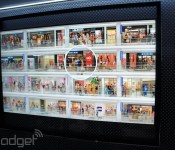
Samsung’s 98-inch 8K TV lets us go to the mall without leaving CES

Despite announcing plans to flood the market with a number of new HD and Ultra HD TVs, Samsung still found room in its CES booth for the first 8K TV we’ve seen from the manufacturer. Labeled as QUHD or Quad Ultra HD, it’s also only the second flatscreen with 7,680 x 4,320 pixels that we’ve seen, period. Still, our eyes may be getting jaded as a result of all the super high-res displays we’ve seen lately because this one didn’t have the shock value Sharp’s 8K Super Hi-Vision screen garnered with its debut a couple of years ago.
Another reason could be the demo content, as Samsung opted for a Robin Sparkles-ish mall scene that was impressive in its sharpness and realism, but didn’t exactly draw us in as viewers and the crowded booth gave little room to take it all in. The demo video even magnified specific sections at time to emphasize the 8K res, but we’d prefer a reel with more action. Check after the break for a few more close up pictures and let us know if you can see the 8K difference.


Filed under: Home Entertainment, HD, Samsung
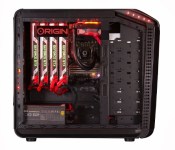
Origin’s Genesis and Millennium PC cases take customization, expansion to new heights

Honestly, gaming PC cases are already pretty customizable and flexible, but Origin seems to think there’s room for improvement. In order to accommodate as many possible configurations of components, Origin has made it possible to mount a motherboard in one of four different orientations: standard ATX, inverted ATX, rotated 90 degrees or rotated 90 degrees and inverted. That means it can handle practically any combination of high-powered graphics cards and over-the-top water-cooling systems you can imagine. In addition, the company will be selling an expansion kit that will turn the mid-tower Millennium into the full-tower-sized Genesis that allows you to add either a giant radiator or 24 additional hard drives. Though, even the Millennium has room for five hot-swappable drives. So you should be pretty set on storage even with the “entry-level” model. And we use that phrase pretty loosely, since the Millennium starts at $1,629 and the Genesis weighs in at $1,849. You can see the whole system in action after the break.
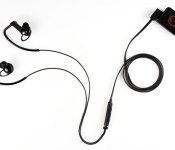
CES 2014: LG Debuts Earphones That Monitor Heart Rate [iOS Blog]
LG yesterday announced a new set of fitness-oriented earphones, which are designed to offer real-time heart monitoring. The earphones, which connect to a small medallion that is strapped on an arm or waistband, track both metabolic rate and maximum oxygen consumption while allowing users to listen to music. They function through sensors that measure blood flow through the inner ear.

In addition, the Heart Rate Monitor Earphones include an accelerometer that measures a wide range of data, including distance, calories burned, steps taken, and more. It also includes hi-fi sound and a built-in microphone for phone calls.
It’s never been easier —or more tuneful—to track your metabolic rate and cardiovascular fitness (VO2 max). And it’s all accomplished with LG’s revolutionary HRM Earphone Heart Rate Monitor. Because of the unique physiology of the ear, users can count on health and fitness metrics with none of the inconvenience of chests strap measuring devices.
The add-on medallion that connects to the earphones serves as a data processing hub that sends real-time biometric information to an iPhone via Bluetooth, which can be accessed by the LG Fitness app. The earphones are also designed to work in conjunction with LG’s recently announced Lifeband Touch activity monitor. Along with the LG app, the earphones can sync with popular third-party apps like MyFitnessPal and Runkeeper.

The earphones will ship during the first half of 2014 and will retail for $179.99.
     |

Apple Requests Removal of External Compliance Monitor in E-Book Antitrust Case [Mac Blog]
 Apple today requested that U.S. District Judge Denise Cote disqualify Michael Bromwich, the external compliance monitor Apple was ordered to hire to ensure the company complies with all antitrust requirements in the future, from serving in his position, reports Reuters.
An attorney for the consumer technology giant on Tuesday asked U.S. District Judge Denise Cote in Manhattan to disqualify Michael Bromwich from serving as an external compliance monitor, arguing he had shown a personal bias against the company.
In a letter to Cote, Apple’s attorney claimed the report filed by Bromwich last month, in which he accused Apple of blocking interviews and disrupting his investigation, was a “wholly inappropriate declaration”.
Bromwich’s report was filed in reaction to a complaint Apple had filed in November, in which the company claimed Bromwich was overcharging them for his services. In addition, Apple cited Bromwich had aggressively sought to interview top executives when his mandate required him to assess the company’s antitrust policies 90 days after his appointment.
Those same complaints were re-asserted in Apple’s letter to Cote requesting the removal of Bromwich. Apple was found guilty of conspiring with five publishers to raise the prices of e-books in July.
| |

Apple Opens Official Store On Popular Chinese E-Commerce Site Tmall [iOS Blog]
Apple has partnered with Chinese e-commerce giant Alibaba to open an official online store on its popular online marketplace Tmall, reports the Wall Street Journal.
An Alibaba spokeswoman confirmed that the Tmall page is indeed Apple’s and that it opened recently, but declined to comment further. An Apple spokeswoman wasn’t immediately available for comment.

Tmall is one of Alibaba’s two dominate online marketplaces and hosts over 70,000 merchants, including brands like Nike and Gap. Its structure is essentially an online shopping mall, with trusted brands each having their own store portal. However, Tmall requires each seller to pay a deposit, an annual service fee and charges a commission on each transaction.
The online store mirrors Apple’s own Chinese store portal, but allows the company to reach China’s fast-growing population of online shoppers.
The move is yet another effort by Apple to boost sales in China as the company is also set to start selling iPhones to China Mobile’s 700 million subscribers on January 17. Apple also recently announced its annual Lunar New Year sale, a one-day event for Asian countries also known as “Red Friday” because of its similarities to Black Friday, would take place on January 10 in Asia.
| |
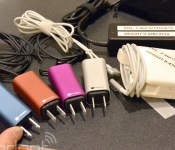
FINsix laptop adapter is tiny, yet powerful, arriving in time for summer

It’s 2014, and while some of you have already upgraded to an Intel Haswell laptop, many still have to carry a bulky power adapter for the more demanding machines. Luckily, MIT spin-off FINsix has come up with a breakthrough technology that dramatically reduces both the size and weight of laptop adapters. As you can see above, the startup’s new 65W brick is dwarfed by its conventional counterparts; the claim is it’s four times smaller and six times lighter. The new adapter also comes with a handy 2.1A USB port alongside the laptop plug, both of which can be used at the same time. Fret not, MacBook users, as FINsix is working on getting Apple’s approval to make a MagSafe version as well.
We won’t go too deep into the technical details, but in a nutshell, the FINsix adapter is enabled by MIT’s VHF (very high frequency) switching technology, which is a thousand times faster than what we use today. As with all legit electronics, this new product will go through the usual safety compliance tests, so there should be nothing to worry about once it hits the shelves. There’s no pricing just yet, but watch out for a pre-sale campaign in two months’ time ahead of the summer launch. Check out our video after the break, in which the lovely CEO Vanessa Green introduces her company’s product at CES.
Filed under: Peripherals
 AIVAnet