



GoPro to launch extreme sports channel on Xbox One and 360

GoPro is about to unleash its unique brand of action sport videos on Xbox Live for both the Xbox One and 360. We asked GoPro if it had further details on when the channels would be available, but apparently that date hasn’t been confirmed yet. All we do know is that the channel will come to 360 first, before making the hop over to its younger brother. If you fly Virgin America, you can actually get the channel right now, but that’s perhaps a little less convenient than shouting “Xbox on” when you need an instant adrenaline fix.
Missed our CES stage interview with GoPro creative director Brad Schmidt? You can catch it in full here.
Filed under: Home Entertainment, HD

Gmail now lets users email Google+ connections, opt out available
Further integrating its social network into its other services, today Google announced a new feature allowing Gmail users to email a Google+ connection, whether they’ve exchanged email addresses or not.
Gmail and Google+ users should be receiving an email with information about the new feature in the next few days. The feature can then be enabled with a new setting in Gmail, with certain circles, anyone or no one at all from Google+ being able to email you.

Google said that the way it works is when typing an address in the “To” box, you can keep typing or select an email address from someone you already have contacted before, as always, or you can choose to send an email to a Google+ contact, whose email address you don’t have.
Keeping privacy in mind, Google said that your email address is only shared with the people you want to have it, so your email address isn’t visible to a Google+ connection unless you send that person an email, and vice versa, that person’s email address isn’t visible to you unless they send you an email.
Lastly, if a contact in one of your circles emails you, it’ll show up in the Primary tab of your Gmail inbox, while all others will be filtered to the Social tab.
The post Gmail now lets users email Google+ connections, opt out available appeared first on AndroidGuys.

Possible Nokia Android Phones Leak with UI Displayed

We are busy at CES, but today I finally have some time to catch up on news that is not so CES. Seems that leak king, evleaks, has leaked out this image while tweeting “Android on Nokia”. We have been hearing lots of rumors that Nokia is finally going to release their very own Android powered device, and evleaks has been on top of all those rumors. The Nokia Normandy is the name being thrown around for this device, and apparently it was found out later yesterday that the device will be running Android 4.4.1 KitKat.
The Nokia UI looks rather eye-pleasing, and that fact that it will have KitKat on board makes all of our Android hearts happy. Let us know what you think about this leaked image, and let us know if you are looking forward to grabbing a Nokia Android phone.
Source: @evleaks
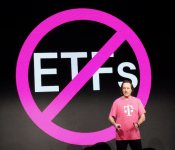
T-Mobile Unleashes UNCarrier 4.0 and Will Pay Your Early Termination Fees

Just in case you didn’t hear the news from the T-Mobile UNCarrier live event at CES yesterday; T-Mobile decided they wanted to change the carrier game once again. They will generously pay your termination fees if you decide to make the leap from Sprint, AT&T, or Verizon, for each of the lines you have on your plan. I’m sure that is a no-brainer right there for most of you to jump on the T-Mobile boat, but just in case you want to read further details, check out the press release below.
T-Mobile Delivers Contract Freedom for Families By Paying Off Early Termination Fees
Company marks 1st anniversary of Un-carrier revolution by offering to reimburse entire amount of customers’ early termination fees when they switch from AT&T, Sprint or Verizon
LAS VEGAS – Jan. 8, 2014 – One year ago at International CES, T-Mobile US, Inc. (NYSE: TMUS) threw down the gauntlet, promising relief for customers fed up with a broken, arrogant wireless industry. Since then, the company has delivered on its promise with a relentless barrage of Un-carrier industry innovations.
In its latest move, T-Mobile is eliminating one of the last remaining obstacles for individuals and families wanting to switch from AT&T, Sprint or Verizon to the Un-carrier by offering to pay off their early termination fees. With an eligible phone trade-in, the total value of the offer to switch to T-Mobile could be as high as $650 per line.
“We’re giving families a ‘Get Out of Jail Free Card,’ said John Legere, president and chief executive officer of T-Mobile. “Carriers have counted on staggered contract end dates and hefty early termination fees to keep people bound to them forever. But now families can switch to T-Mobile without paying a single red cent to leave them behind.”
Customers have been flocking to T-Mobile for its no annual service contract Simple Choice Plan, industry-leading JUMP!(TM) upgrade program, unlimited global data at no extra charge in 100-plus countries, and most recently for Free Data for Life on every tablet – up to 200 MB of free 4G LTE data every month for as long as they own their tablet and use the registered device with T-Mobile. But Nielsen research suggests up to 40 percent[i] of families hold back from switching because of high early termination fees (ETFs), and a recent online poll conducted by GigaOM suggests that 78 percent[ii] would switch to T-Mobile if their ETF was paid. ETFs can cost as much as $350 per line. Multiply that two, three or four times for a family, and switching becomes an extremely expensive proposition.
“Carriers like to make you think you’re just signing up for two years with their family plans, but with staggered expiration dates and early termination fees, they’re really locking you in forever,” said Mike Sievert, chief marketing officer for T-Mobile. “Now, families are free to switch without worrying about early termination fees. And by switching to T-Mobile, a family of four can save $1,880 over two years compared to an AT&T shared family plan[iii].”
Here’s how T-Mobile’s offer to pay off these fees works:Starting tomorrow, customers from the three major national carriers who hand in their eligible devices at any participating T-Mobile location and switch to a postpaid Simple Choice Plan can receive an instant credit, based on the value of their phone, of up to $300. They then purchase any eligible device, including T-Mobile’s most popular smartphones, now priced at $0 down (plus 24 monthly device payments, for well-qualified customers). After customers get the final bill from their old carrier (showing their early termination fees), they either mail it to T-Mobile or upload it to http://www.switch2tmobile.com. T-Mobile then sends an additional payment equal to those fees, up to $350 per line. Trade-in of their old phone, purchase of a new T-Mobile phone and porting of their phone number to T-Mobile are required to qualify.
This offer to pay early termination fees provides families with a quick way to escape carrier contracts that have deterred them from pursuing a better and more affordable wireless experience with T-Mobile.
T-Mobile is also making it easier for its longtime customers to migrate to Simple Choice plans as well without incurring any migration fees. To qualify for this option a current customer under contract trades in their current device and purchases a new T-Mobile device and switches to Simple Choice. In addition to waiving the migration fee, T-Mobile will also eliminate the existing annual service contract for that customer’s line.
With a Simple Choice Plan from T-Mobile, families start with one line at $50 per month for unlimited talk, text and Web with up to 500 MB of 4G LTE data. They can add a second phone line for $30 per month, and each additional line is just $10 per month. In short, a family could get four lines for just $100 per month (plus taxes and fees). The potential savings are so significant that if every single AT&T, Sprint and Verizon customer switched to a Simple Choice Plan, T-Mobile estimates they would save up to $20 billion [iv] collectively each year.
In addition to great family plan savings, individuals and families can also enjoy an incredible wireless experience thanks to T-Mobile’s rapidly expanding nationwide 4G LTE network- now the fastest[v] in the United States. For more information, visit the T-Mobile newsroom.
About T-Mobile US, Inc.:
As America’s Un-carrier, T-Mobile US, Inc. (NYSE: “TMUS”) is redefining the way consumers and businesses buy wireless services through leading product and service innovation. The company’s advanced nationwide 4G and expanding 4G LTE network delivers outstanding wireless experiences for customers who are unwilling to compromise on quality and value. Based in Bellevue, Wash., T-Mobile US provides services through its subsidiaries and operates its flagship brands, T-Mobile and MetroPCS. For more information, please visit http://www.t-mobile.com.
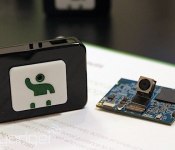
Wearable Google Helpouts streaming camera shares GoPro heritage, we go hands-on (video)

Ambarella isn’t exactly a household name, but the 10-year-old company’s silicon has long found its way into GoPro cams and other hardware thanks to its video-compression chops and low-power tech prowess. Word broke last month that Google commissioned the outfit to produce a reference design for a wearable camera that would stream to its Helpouts service, which lets folks ask experts for help over video. Here at CES, the manufacturer’s brought along a few samples of the device, and we’ve just put our paws all over one.
Inside a plastic housing the size of a chunky matchbox, Ambarella’s placed a custom chip (an A7LW, if you’re curious) that endows the package with the ability to stream 1080p video at 30fps for a minimum of one hour. The housing also comes with a mini-USB port, microphone, 500mAh battery, 8GB of flash storage, WiFi and Bluetooth connectivity, along with power and “connect” buttons up top.
Not only can the setup stream 1080p footage with just 1 Mbps of bandwidth — albeit with a varying bit rate to adjust quality — but it also pipes the video directly to Google’s servers over WiFi, removing the need to tether to another device. After a user joins a Helpouts session, the camera will become available as a video source. What’s more, the hardware can either be used by one of the pros on Mountain View’s service, or the Average Joe looking for a hand.

The camera held its own when it came to video quality, which looks like what we’ve come to expect from Google Hangouts. Although it piped footage to the cloud and down to the tablet on display, there was only about a second’s worth of lag, likely thanks to Google’s software.
When it comes to the wearable aspect of the cam, some of the models on hand sported a clip on the rear or a metal loop up top for a necklace. Having said that, form factor and features will be up to device manufacturers who buy the innards from Ambarella — that is, if Google goes forward with the idea of shooters that natively support Hangouts.
Ultimately, the draft hardware not only shows that Hangouts may score capable, tailored streaming hardware, but also that those cams might not be too far off. Details regarding pricing, release dates and manufacturers are still too early to pin down, but something tells us we can expect to hear more from Google this year.
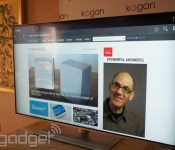
Kogan’s ultra-budget 4K TV and 3G tablet arrive at CES

Kogan’s name may not roll off your brain as easily as some companies we could mention, but the Australian outfit is attempting to bring premium technology to the masses with a focus on low prices. In fact, there’s probably a comparison with Vizio to be made here, considering that Kogan’s first 4K TV retails for $999 AUD, or around $890 USD. Then there’s the Agora HD Mini 3G, a 7.85-inch tablet with a 3G modem that retails for $199 AUD, or about $180 in the US. Considering that how frequently our Antipodean friends are gouged by technology companies, it’s good to see the locals fighting back.
The 55-inch 4K Smart TV comes with a well-rounded spec list, including four HDMI inputs, three USB 2.0, one USB 3.0 and a microSD card slot. On the connectivity-front, there’s Ethernet and WiFi built-in, and it runs Android 4.2.2 with Google Play, letting you save downloaded apps to the 4GB of internal storage. There’s a dual-core 1.2GHz Cortex A9 with a Mali 400 GPU inside, and even with the traditional stick remote, we were able to read all of the highlights on Engadget. Naturally, the company will also supply a luxury remote with trackpad and keyboard, which will set consumers back an additional $40. So, what of the picture quality? The demo certainly didn’t embarrass the hardware on show – although trade show demonstrations are hardly the greatest acid test of a display’s power. On the upside, it’ll go on sale in Oz in late January – with news about if it’ll make it to the US and Europe dependent upon the market.

Then there’s the Agora HD Mini 3G, which packs in a tri-band 3G modem despite its price of $199 AUD, or about $180 in the US. The 7.85-inch 1,024 x 768 display is crisp with a strong backlight, which is surrounded by a narrow bezel and chamfered edges that’ll remind you of another device in the same size category. The similarities end there, however, with the rounded-off corners and smooth edges. The port selection runs along the top, where you’ll find the exposed microSD card, microUSB port, 3.5mm headphone jack and microSIM slot. Inside, you’ll find a 1.2GHz MTK MT8389, with 1GB RAM, 16GB storage, although with the aforementioned microSD card slot, you can add a further 64GB to that proposition. There’s a 4,500mAh battery inside, promising 10 hours of battery life, and, best of all, it runs an AOSP build of Android 4.2.2 that is delightfully free from bloatware. While the company isn’t committing itself to update the unit to KitKat, it’s certainly something that is being mulled over internally. When we asked about what’s next for the outfit, it seems as if Kogan is going to leap upon the dominant trend of CES and produce a wearable of its own. We were unable to coax any more information out of them than that, but it’s something we’ll keeping our eyes and wrists on in the near future.
Jamie Rigg contributed to this report.
Filed under: Home Entertainment, Tablets, HD, Mobile
Source: Kogan

Live from the Engadget CES stage: Razer CEO Min-Liang Tan

Like you, we’ve always thought of Razer as a gaming hardware manufacturer. And like you, we were caught a bit off-guard when the company tossed its hat in the crowded fitness-tracking landscape. We’ll be discussing the company’s diversifying line and place in the rapidly evolving gaming landscape with CEO Min-Liang Tan.
Filed under: Gaming
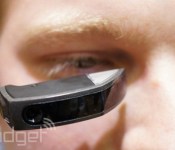
Live from the Engadget CES stage: Vuzix CEO Paul Travers

Haven’t gotten your wearables fix yet at this year’s CES? Good news: coming up next on the Engadget stage is an interview with Vuzix CEO Paul Travers, who will discuss the company’s new Android-powered smart glasses.

Gartner: PC shipments have dropped 6.9 percent in Q4 2014, emerging markets to blame

Those tumbling PC shipments we’ve seen all year? They add up to a 6.9 percent year-over-year drop compared to 2012′s Q4 numbers, according to Gartner. The group’s latest totals puts PC shipments at 82.6 million units for Q4 2013, with the lions share coming from HP and Lenovo – though only the latter managed to grow its business during that period. Dell came in at a distant third, moving 4 million fewer machines than HP while maintaing a 6.2 percent increases in shipments since Q4 2012. The news seems grim for all but a select free companies, but at least it won’t get any worse: Gartner says that most markets have bottomed out, and the losses mostly come from emerging Asia/Pacific markets where consumers first computing devices are typically smartphones and tablets, not traditional PCs. Despite predictions that the US market has reached its lowest point, analysts note that holiday sales were primarily dominated by tablets and mobile devices, though optimistically note that hybrid devices and lower cost notebooks could spur some growth in 2014. Eager to dive into all the nitty gritty numbers? Hit the source link below for Gartner’s full report.
Source: Gartner

Live from the Engadget CES stage: Qualcomm SVP Raj Talluri

The next steps for Qualcomm? Well, if Steve Mollenkopf is to be believed, we’re going to see a lot more involvement in tablets and connected cars from the company moving ahead. We’ll sit down with its SVP of Product Management Raj Talluri to discuss the way forward for Qualcomm.
 AIVAnet