


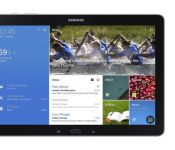
Samsung Galaxy Note PRO 12.2 available for pre-order in the UK
We have been hearing rumors about a super-sized Samsung Galaxy tablet for months, until it was finally debuted during CES 2014.
The Note PRO packs a selection of high-end specs including a gigantic 12.2-inch display resolving at 2560×1600, Exynos 5 Octa core processor clocked at 1.9GHz, 3GB of RAM, 32 or 64GB of storage with a microSD slot, an 8-megapixel rear camera and a massive 9,500 mAh battery. The device also supports LTE and ships with Android 4.4 KitKat with TouchWiz UI on top.
 For whatever reason, Samsung decided to initially launch the tablet in the UK instead of the US, with more countries to follow. You can pre-order the device from Samsung’s website. It will set you back £649 — around $1074. If you pre-order now you will also be provided with a $99 gamepad for free.
If you’re planning to buy a new tablet you can now pre-order our latest Galaxy NotePRO 12.2 from our e-store http://t.co/sRkHWuoWpD
— Samsung Mobile UK (@SamsungMobileUK) January 28, 2014
In case you are interested head over to Samsung’s e-store and opt for one before it goes out of stock. Let us know if you picked one up in the comments below.
Source: @SamsungMobileUK Twitter
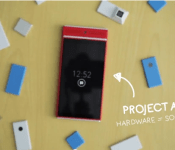
Project Ara will not be moving in with Lenovo, instead will be absorbed by Google’s Android Team
 While Google’s sale of Motorola to Lenovo is all but done and dusted, we’re still yet to find out exactly all the details of the sale and who gets what as part of the agreement. One part of Motorola that we’re most interested to find out the fate of is Project Ara, Motorola’s tantalizing modular phone project that was said to be shaping up quite well by Motorola’s CEO, Dennis Woodside, late last year.
Well, we’ve now learned that the Project Ara team, as well as the entirety of Motorola’s Advanced Technology and Projects group, will be moved to a ‘little’ part of Google‘s company under Sundar Pichai. And yes, that is the Android division. It’s hard to say what Lenovo might have done had they acquired Project Ara, but under the Android team at Google, you would hope the project would get the kind of care that Google typically gives to its other crazy, secret ideas.
What do you think of this sale of Motorola to Lenovo? And are you happy to know that Project Ara will be moved to Google instead of Lenovo? Let us know what you think in the comments below.
Source: Pocket-lint via Android Police

Porsche’s first car is 116 years old, and it’s electric

Many think that Porsche EVs are relatively new creations, but it turns out that they’re quite old — 116 years old, to be exact. The automaker has recovered the P1, an electric car that Ferdinand Porsche built while working for a carriage maker in 1898; it was also the first car he ever built. No one will mistake it for a Tesla between its wood frame, 3HP motor and 50-mile range, but it was fast enough to win an all-electric race in 1899. You’ll have to travel to the Porsche Museum in Stuttgart if you want to see this piece of EV history in person. Still, it may be worth the trek to know more about the 918 Spyder’s very, very long pedigree.
Filed under: Transportation
Via: LA Times
Source: Porsche
Samsung to back down on copying Google apps
New deal between the two should see less look-alike apps and services on Android
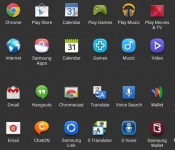
Earlier this week, Samsung and Google inked a patent deal for cross-licensing which should benefit both companies and help in any would-be lawsuits. As part of the terms, Samsung now agrees with Google to stop copying the infamous apps that make up Google’s service portfolio
CES 2014 featured some of Samsung’s current products, a launch of the Galaxy Camera refresh, and new Galaxy Pro tablets. It seems that Samsung has tried to make Android their own system in a sense, but now hopefully that does change. Perhaps the company’s push into Tizen might help place some extra space between them and Google.

As a Samsung user, I can definitely attest to the fact that many of these apps simply just aren’t needed. Hopefully this year we can see Samsung do something more simplified with the oft-overbearing TouchWiz/NatureUX.
Samsung shouldn’t feel the need to recreate something that already exists. On the other hand, when you’re that big, you can stretch out your arms a bit. There’s nothing wrong with trying to woo users to your platform-agnostic services.
There does come a time, however, when even Google has to step in and speak up. While some Samsung apps may have jump-started changes in apps like the default Video player, many owners (that we know of) haven’t much used some of the others. How many of you are using apps and services such as Samsung Apps, ChatON, and Samsung Wallet?
Recode via Android Community (image also courtesy of Android Community)
The post Samsung to back down on copying Google apps appeared first on AndroidGuys.
Lenovo buying Motorola Mobility from Google for $2.91 billion
Numerous sources reported today about a potential acquisition of Motorola Mobility that comes not even three years after Google bought it for $12.5 billion, and Lenovo just made the news official.
The Chinese-manufacturer announced that it entered into “a definitive agreement” with Google to acquire the Motorola Mobility smartphone business in order to strengthen its own smartphone market, basically to give it a presence in the U.S.
The acquisition price is $2.91 billion, subject to certain adjustments, including $1.41 billion paid at close, comprised of $660 million in cash and $750 million in Lenovo ordinary shares. The remaining $1.5 billion will be paid in the form of a three-year promissory note.
Google will maintain ownership of the vast majority of the Motorola Mobility patent portfolio… Lenovo will receive a license to this rich portfolio of patents and other intellectual property. Additionally Lenovo will receive over 2,000 patent assets, as well as the Motorola Mobility brand and trademark portfolio.
Back in August 2011, when Google acquired Motorola Mobility, it had said it was mainly interested in its patent portfolio. After becoming “A Google Company,” we’ve seen successful devices like the Moto X and Moto G, but Google was still reportedly losing hundreds of millions each quarter since the purchase.
While Lenovo said that it will be acquiring the MOTOROLA brand and Motorola Mobility’s portfolio of smartphones, like the Moto X and Moto G and the DROID Ultra series, “Google will maintain ownership of the vast majority of the Motorola Mobility patent portfolio, including current patent applications and invention disclosures.”
Google will also be licensing the patents to Lenovo, who will be receiving over “2,000 patent assets.”
One other interesting thing to note is that Dennis Woodside, CEO of Motorola Mobility, said that the company has “tremendous momentum right now” with the launches of the Moto X and Moto G and that Lenovo’s hardware expertise and global reach should help accelerate that.
Google is supposed to be reporting its quarterly earnings tomorrow, so maybe we will have even more information then.
The post Lenovo buying Motorola Mobility from Google for $2.91 billion appeared first on AndroidGuys.
Google Tells Samsung to Stop Making Storage-Clogging Apps

The Galaxy S4 came out last year, and it ended up being one of the most purchased devices on the market. The phone is loaded with all kinds of apps and features not found in other phones. Features that improved the experience, and features that were useless and stupid. The drawback of having these bloated apps and features, is that very fact: bloated. This causes of course some lags, as well as battery drains; so why put such features or apps if not needed?
According to certain sources, Google met with the Sammy boys and told them to stop developing these storage-clogging apps and features. Instead, work on apps that are more pure to the Android experience. Thank you Google. Yes, the Galaxy line are nice devices with some nifty features, but there are many features and apps that no one will ever use. But Google also told them to stop doing this simply because they want more control of their Android system. They are hating that Chinese manufacturers are running Android on their devices, but using their own UI’s and not placing the Google core apps into those devices.
Not only will Samsung consider dumping or altering the Magazine UX interface in future devices, but, more importantly, new Samsung devices will spotlight Google’s suite of apps to get movies, music and other content at the expense of its in-house developed software, which was once a proud showcase of Samsung’s evolution as a mobile industry leader.
The source was also quoted in saying that, which is a very good thing, because that Magazine UX was pretty laggy when we tried it at CES. Wasn’t appealing to us as well, so we will see what happens with future Samsung devices. Let us know your thoughts about this.
Lenovo Close to $3 Billion Deal to Acquire Motorola from Google [Update 2]
 Well this is certainly something we didn’t ever expect to see. According to Reuters, China’s Lenovo group is nearing the final stages of chatter to close a $3 billion dollar deal to pick up Motorola’s handset division from Google. That was not a miss type at all. The deal is set to not only pick up the company, but of course their patent holdings as well.
Of course the information is coming from sources that are close to the matter, while Google, Motorola and the various groups in discussion on the topic have not commented on the information as of yet. However, it is said that Lenovo will be using a combination of cold hard cash, stocks and deferred payments to close the deal. An official statement and/or announcement on the deal could come from any of the parties involved later today.
Did this totally come out of left field to anyone else?
Source: Reuters
Update: Looks like this story is gangbusters everywhere. China Daily is posting up the news claiming at least $2 billion which includes 10,000 patents. Lenovo is said to be having a press conference Thursday morning to announce what just happened. THis will certainly give Lenovo a leg up and a chance to finally break into the US market finally.
It is also being confirmed from sources at TechCrunch as well. Citing that Google held off on the sale for tax purposes. Which doesn’t surprise us.

Update2: Google has officially confirmed it via their Investor Relations page. Final talley states $660 million in cash, $750 million in Lenovo ordinary shares and the remaining $1.5 billion paid over three years in promissory notes. Final purchase amount totals $2.91 billion and is subject to certain adjustments. Total number of patents that Lenovo is picking up is only 2,000. Along with Motorola Brand and trademarks. Lenovo is also gaining a license to Google sportfolio patents and other intellectual property
“Lenovo has the expertise and track record to scale Motorola Mobility into a major player within the Android ecosystem. This move will enable Google to devote our energy to driving innovation across the Android ecosystem, for the benefit of smartphone users everywhere,” said Larry Page, CEO, Google.
“As part of Lenovo, Motorola Mobility will have a rapid path to achieving our goal of reaching the next 100 million people with the mobile Internet. With the recent launches of Moto X and Moto G, we have tremendous momentum right now and Lenovo’s hardware expertise and global reach will only help to accelerate this,” said Dennis Woodside, CEO, Motorola Mobility.
Need more? Lenovo just tweeted this out.
BREAKING NEWS: Lenovo to Acquire @Motorola Smartphone Business from @Google http://t.co/SD9IlKpqqI pic.twitter.com/9CKsRclzsn
— Lenovo (@lenovo) January 29, 2014
Google Selling Motorola Mobility to Lenovo for $2-3 Billion
Google is selling its Motorola Mobility division to Lenovo for $2-3 billion, according to a report from China Daily. Google acquired the company and its then 17,000-strong patent portfolio, along with 7,500 filed patents, in August of 2011 for roughly $12.5 billion.
At the time, Google said Motorola was a “natural fit” for the two companies and that it would “supercharge the entire Android ecosystem”. It’s likely that Google will retain rights to the Motorola patent portfolio, though the deal assigns the rights to more than 10,000 of the patents to Lenovo.

Lenovo Group Ltd is likely to buy Google Inc’s Motorola Mobility business, giving the Chinese company a bigger say in the global tablet and smartphone market.
The acquisition, worth at least $2 billion, will include more than 10,000 mobile communications patents currently held by the United States company, according to a person familiar with the matter.
The deal is expected to be announced on Thursday morning in Beijing.
Google’s Motorola Mobility subsidiary has been a money loser for the company in recent quarters, costing the firm $248 million in the most recent quarter. Earlier this month, Google purchased the Tony Fadell-founded Nest for $3.2 billion in cash.
     |
Developers We Love: Noodlecake Studios
Developers We Love is an ongoing series of posts designed to help discover great Android apps and games. We use the column to highlight both big name developers as well as small, indie outfits. Typically, we’ll opt for those who have released a number of titles before considering them for coverage but this is not a hard rule.
While you may already be familiar with some of these developers, new Android or smartphone users might not. Our aim here is to put companies on your radar so you can enjoy great content!
Who: Noodlecake Studios Inc.
Founded in 2011, this Canadian team is comprised of around eight members who specialize in fun, cartoon-y games with simple mechanics. At last check, we found nearly 50 titles in Google Play and Amazon Appstore. Most of what you’ll find are free games with in-app purchases to unlock additional features or enhanced game play. There’s nothing revolutionary at play here, just great execution of familiar games.
Start Here
Some of the more popular games from Noodlecake Studios include Happy Jump, Happy Fall, Super Stickman Golf, and The Blockheads. These will give you a sense of what to expect from the team; each is a little different yet similar in their own regard.
You’ll notice that some of the same characters are found across multiple games and make for a fun “download them all” experience. Also, don’t be fooled by the graphics and colors – these are not just for children. We cannot count the number of hours we’ve passed with some these mindless, endless games.
Don’t take our word for it, there literally millions of downloads for some of these games. Read through the reviews and you’ll find high average ratings and great user feedback.
The post Developers We Love: Noodlecake Studios appeared first on AndroidGuys.
Dell’s new Android HDMI dongle turns screens into virtualized desktop computers for $130

Dell’s betting that a bunch of businesspeople want to be able to carry their work computer around in their pocket. Not literally, of course, but with the release of the company’s $130 dollar Wyse Cloud Connect dongle (formerly known as Project Ophelia), you can do just that. It connects to any TV or display with an HDMI or MHL port, and hooks up to mice and keyboards via Bluetooth or mini-USB. There’s also a microSD slot to give you up to 32GB of local storage, should you want it. Plus, you can access your desktop using yours or your company’s choice of virtualization technologies: Citrix, Microsoft or VMWare. Once plugged in, users can access a full Jelly Bean Android experience or their Windows and Mac machines via the aforementioned remote clients, and see them in 1080p resolution (on compatible displays, of course). Dell’s pitching the dongle as primarily an enterprise solution, but the company also thinks it’s well-suited as an educational tool, too.
We got to see the Cloud Connect in action today at a launch event in Silicon Valley, and in our limited time with the device, it worked just as Dell said it would. The dongle itself is a bit bigger than your standard flash drive… it’s roughly the size of an Apple TV remote. Installing the thing really is as simple as plugging it into a monitor, which turns said monitor into a fully fledged Android device. That means you have access to any compatible app from Google Play (or at least whatever apps your company’s IT department allows). Speaking of, the Cloud Connect management dashboard allows IT administrators to easily set permissions and access for the dongles with a straightforward and simple interface.
As for consumer applications, Dell’s VP and GM of cloud client computing, Steve Lalla, told us that his focus is on b2b for now, but regular folks are certainly on his radar. “It’ll bleed into the consumer space,” he said. “It’s just that businesses already understand the value proposition of the technology.” When we inquired about the possibility of building the Cloud Connect directly into monitors (essentially creating Android desktop computers), Lalla said that he has nothing to announce, but we get the feeling we’ll see one from Dell before too long.
Filed under: Networking, Internet, Dell
Source: Dell
 AIVAnet