


Enable iOS in the Car in iOS Simulator With iOS 7.1 Beta [iOS Blog]
While developer Steven Troughton-Smith has shared several screenshots and a video of iOS in the Car running on iOS 7.0.3, the iOS 7.1 beta currently available to developers offers even more iOS in the Car functionality, including a redesign.
According to Troughton-Smith, it is difficult to access iOS in the Car in iOS 7.0.3, but another developer, Denis Stas, has discovered that it’s much easier to access iOS in the Car in iOS 7.1 and has detailed how to enable the feature using iOS Simulator.
Stas details three steps that are necessary to get iOS in the Car running in iOS Simulator with iOS 7.1:
– Download the second developer preview of Xcode 5.1
– Clone https://github.com/zyafa/iOSCar
– Build and run cloned project and follow included instructions
Developers with access to iOS 7.1 and Xcode 5.1 DP2 will be able to give iOS in the Car a try, but non-developers will not be able to access the necessary software.
According to Stas, the current implementation of iOS in the Car is both unofficial and unstable. The iOS 7.1 version of iOS in the Car features a different design than was previously seen in iOS 7.0.3, featuring a look more in line with the style of iOS 7.
As noted earlier today, these design changes may be the result of organizational issues that have affected the development of iOS in the Car. While iOS in the Car can be accessed by developers using iOS Simulator, it remains unclear when Apple might officially debut the feature.
     |

AppleScript Support Comes Back to Numbers, Could Signal a Return of Power User Features [Mac Blog]
 Last October, Apple angered a lot of iWork power users when it introduced new versions of Pages, Numbers, and Keynote.
The new versions were rewritten from the ground up for improved usability and cross-platform compatibility across OS X, iOS and iWork in iCloud, but, as a result, some power user features didn’t make it into the machine at release.
Apple promised to restore the lost features and last week’s iWork update is the first step in restoring those features.
As Macworld notes, Numbers has gained significant AppleScript support, almost fully backwards compatible with previously created scripts for Numbers 2009. The iWork team has also added a number of new scripting features. It seems likely that scripting support will be added to Pages and Keynote in a future update.
The latest update of Numbers reintroduces AppleScript support in a big way. While Apple could have taken an iterative approach, reintroducing a few commands here and there, it chose instead to go whole-hog: The entire suite of scripting terminology originally supported by Numbers in the 2009 edition of iWork has returned.
This means that, if you have Numbers scripts you used with that 2009 version, most of them should (in theory) now work with Numbers 3.1; those scripts may require tweaks, though, because some features of Numbers itself have changed.
Users with feedback for Apple regarding the iWork apps, including complaints about missing features or suggestions would be well-served to give Apple feedback on its website. With these changes to Numbers, Apple does appear to listen to its users.
Numbers is a $19.99 download from the Mac App Store. [Direct Link]
| |

Justice Department Skeptical About Sprint Acquisition of T-Mobile [iOS Blog]
 Back in December, it was reported that Sprint — the U.S.’s third-largest cell carrier — was preparing a bid to acquire T-Mobile, the country’s fourth-largest carrier. The deal, depending on the stake Sprint attempts to buy, could be worth more than $20 billion.
Recently, a pair of Sprint board members met with the U.S. Department of Justice to discuss a possible acquisition, reports The Wall Street Journal. The report says the DoJ has concerns over a potential deal.
The conversation, which occurred in January, signals the seriousness of Mr. Son’s interest in a deal, but also underscores his highest hurdle. U.S. antitrust authorities believe the current lineup of four national carriers is important to maintaining a competitive market, and department officials indicated at the meeting that a deal combining Sprint and T-Mobile could face regulatory difficulties, the people said
According to the WSJ, Sprint has lined up roughly $31 billion in potential financing and the company is not deterred from pursuing an acquisition.
Japanese carrier Softbank purchased a 70 percent controlling interest in Sprint back in 2012 for roughly $20 billion. T-Mobile is majority owned by German telecom giant Deutsche Telekom.
Previously, AT&T attempted to acquire T-Mobile but government intervention prevented the deal from concluding. Since then, the companies have had a growing feud as they launch ever escalating marketing efforts in an attempt to poach each other’s customers.
| |
Automatic Connected Car System Update Adds iBeacon Functionality [iOS Blog]
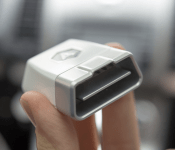
The Automatic connected car system today received an over-the-air update that allows users to turn their Automatic Link hardware devices into iBeacons, reports TechCrunch. As iBeacons, Automatic devices let users transmit to or receive information from other sensors or devices in the vicinity.
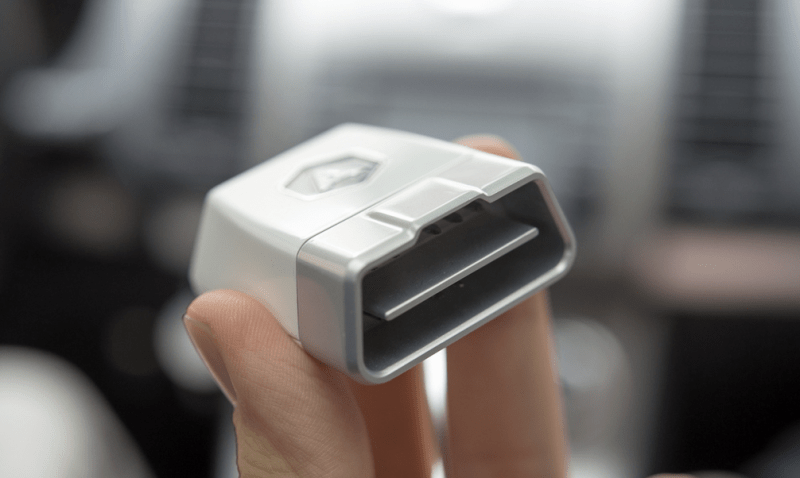
First introduced in March of 2013, the Automatic hardware plugs into a car’s onboard diagnostics (OBD) port and provides detailed data on driving habits and mileage within the Automatic app.
With the addition of iBeacon technology, Automatic could be a far more functional device in the future. While the iBeacon addition has no use at the present time, Automatic co-founder Thejo Kote says that it could be used to enable car-specific applications with a host of potential partners.
Applying iBeacon technology to a vehicle could make it easier for people to pay for things like parking, or gas fill ups, for instance — making the experience much better than it is today.
For right now, those types of applications are still theoretical, but Automatic is interested in seeing where it could go.
iBeacons, which have been growing in popularity over the last several months, use Bluetooth 4.0 to transmit data to nearby devices. This technology has been used within Apple Retail Stores to provide additional information on products, among other things.
In addition to iBeacon support for the Automatic hardware, the Automatic app was also updated today, adding event recording for external APIs and a number of bug fixes and improvements to the software.
Automatic can be purchased from the Automatic website for $99.95. The accompanying Automatic app is a free download from the App Store. [Direct Link]
| |
Get This Look: My Flat UI
We’re huge fans of changing the home screen around a bit and creating a new user experience for our Android. So much so that we present our ongoing series of Get This Look posts. In a nutshell we show you a new layout, app, widget, or icon set for your Android handset and tell you which apps you’ll need to mimic the feel.
Some of these are a little easier to create than others and many of them can be tweaked to no end. The following details are but the ingredients to which you can create your own delicious Android dish; your results will vary. Which is awesome!
If nothing else, this is a great way to discover new apps, widgets, icons, and more!
Click to view slideshow.
My Flat UI by Techy Tarun
Why we love this look:
Flat graphics and clutter-free layout are two popular design features employed by Android modders and tweakers; this excels at both. The colors, although somewhat muted, pop off the grey background and really grab your attention. Widgets and toggles behave as you expect they would but never feel like traditional widgets. In other words, they blend in perfectly and seamlessly.
If you’re the type of user who doesn’t need a bunch of icons and shortcuts on your home screen, this is one layout you’ll want to check out.
What you’ll need:
- Roundr | FREE
- ssLauncher the Original | $4.29
- Zooper Widget Pro | $2.49
- Media Utilities | FREE
- Power Toggles | FREE
The post Get This Look: My Flat UI appeared first on AndroidGuys.
AT&T adds 1.2 million smartphones to its network, account for 93% of postpaid sales

AT&T had a pretty good fourth quarter by pretty much every metric you can imagine. Revenues are up, subscriptions are up and the company added 1.2 million smartphones to its network. Those massive smartphone sales show that the market is continuing to accelerate, even as it nears saturation. And those sales probably won’t start to significantly drop off until AT&T finishes transitioning its customers to LTE. Currently, just over half of its smartphone customers are on the higher speed network. Smartphones account for 93 percent of AT&T’s postpaid sales, and while the company added 566,000 postpaid subscribers during the quarter, prepaid customers declined by 32,000. Still, that drop is but a pittance for a company that has 110 million total customers on its wireless books. And its Next program seems to be off to a solid start as it attracted 1 million customers and accounted for 15 percent of postpaid upgrades.
U-Verse also saw slow, but steady growth as it added 630,000 internet subscribers and 194,000 new TV customers. Those gains were partially offset by the business side of its wireline operations, which continues to struggle. There, revenues were down 3.4 percent over last year, but there are glimmers of hope. AT&T did manage to add 78,000 business U-Verse customers, and growth of its “advanced” business products such as VPN, cloud and hosting services outpaced the previous year.
Filed under: Cellphones, Wireless, Mobile, AT&T
Source: AT&T
BlackBerry targets developing markets with Gingerbread BBM app

BBM for Android has been installed millions of times since its (bumpy) launch, but that’s not enough for the folks in Waterloo. Today BlackBerry has confirmed what many already suspected: it’s planning to launch a version of BBM for phones still running Android 2.3 in February. Those first versions only ran on Ice Cream Sandwich or later, and BlackBerry has been not-so-quietly scouting for Gingerbread beta testers for at least two weeks. It’s not hard to see why the company wants to branch out further, especially since it’s dealing with pressure from buzzy messaging apps like Snapchat and WhatsApp. And while it might feel ancient, Gingerbread still powers over a fifth of active Android devices. Lots of those phones are sold at cut-rate prices across the globe, so BlackBerry has a shot at maintaining its messaging mojo in developing markets… though pumping out cheap Foxconn-made phones should help too.
Source: Inside BlackBerry
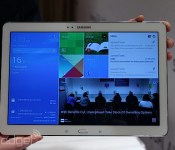
Samsung Galaxy Note Pro 12.2 now available to pre-order in the UK for £649

Brits won’t have to wait long to (barely) get their hands on Samsung’s Galaxy Note Pro 12.2. A WiFi-only version of the massive tablet is now available for pre-order in the UK at an equally large price of £649 ($1,076), with shipments due to start on February 4th. That’s certainly expensive compared to what many are used to paying for Android devices, although Samsung is tossing in a free gamepad to sweeten the deal. As for cellular models or an American launch, the company isn’t talking just yet — however, we won’t be shocked if either of them comes relatively soon.
Via: Phone Arena
Source: Samsung (1), (2)

Chrome apps will soon arrive on Android and iOS devices

Last month, we discovered Google was working on a tool that would port Chrome apps to both Android and iOS. Today, the folks in Mountain View released a developer preview that does just that. Like the early rumblings suggested, it’s based on open-source Apache Cordova, which leverages the software’s native HTML, CSS and JavaScript. This means that the software will get wrapped in the stylings of a native app and can be submitted to each app store for distribution. There’s also a slew of Chrome APIs available that you’d expect to see in mobile apps, including the ability to build in payments, notifications and alarms on top of those offered by the Cordova platform. Now that the tools are in the hands of devs, we’ll have to bide our time until the finished Chrome apps begin to surface.
Filed under: Software, Mobile, Google
Via: The Verge
Source: Chromium Blog

TV stations try sharing their airwaves to make room for 4G traffic

TV stations selling spectrum in the FCC’s upcoming wireless auction may soon have a viable alternative to moving or shutting down their channels. Two Los Angeles broadcasters, KJLA and KLCS, have agreed to participate in a CTIA-backed pilot project that will test whether or not they can share airspace without interference. If the trial is successful, stations will have much more incentive to give up their frequencies for the sake of phone carriers eager for 4G bandwidth — networks will get to both keep their channels as well as reduce their operating costs in the process. Cellular providers will have to wait patiently for results, though, as the trial will run through the first quarter of the year.
Filed under: Cellphones, Wireless, Mobile
Via: Recode
Source: CTIA
 AIVAnet