



Evernote now syncs your documents four times faster

Syncing Evernote content was quick when most users had just a handful of notes, but times have changed — many people are now transferring pictures, presentations and web clips. The company may keep up with that seemingly insatiable demand, though, as it just launched a brand new sync engine. The improved infrastructure syncs data roughly four times faster than before. You may not notice a difference if you’re a casual user, but veterans and Business customers should see the impact right away. This isn’t the end of the story, either. Evernote is updating its native apps to make better use of the engine, and developers will get to take advantage of the upgrade in the future.
Source: Evernote
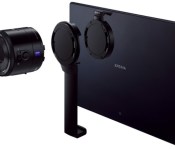
Sony add-on will let you graft a giant camera to your tablet

Whether you like it or not, tablet photography is here to stay — it’s only fair that slate owners get a fair chance at taking nice pictures. Sony certainly thinks so, since it has unveiled a new mount, the SPA-TA1, that attaches its QX lens cameras to tablets. The peripheral isn’t just for small devices, either; it includes six adjustable arms that accommodate larger hardware, like the Xperia Tablet Z and VAIO Tap 11. Sony ships the camera accessory to Japan this April for a suggested price of ¥3,675 ($36). There’s no word of a US release, but we wouldn’t rule out an eventual stateside launch.
Filed under: Cameras, Peripherals, Tablets, Sony
Via: Xperia Blog, Talk Android
Source: Sony (translated)
Is the Nexus Line Ending?! Nokia X Specs Leak Out! – The ManDroid Show

Time for that video portion of Android news. I think the biggest, as well as most controversial, is the fact that there might be a chance of the Nexus line ending. A lot of people don’t think it’s true, and it probably isn’t. But would it be so bad if it happened? Also the Nokia X got its specs leaked out and they are pretty underwhelming. Nokia is just dipping their tow in guys. Enjoy the show!
News Topics
Is the Nexus line ending in 2015?
red Nexus 5 shows up in packaging
Nokia X specs leak out
HTC M8 to have on-screen buttons
Mysterious HTC Desire image leak
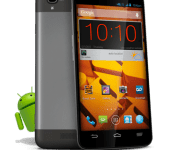
Boost Mobile launches Boost MAX 5.7-inch phablet
 Boost Mobile just announced its latest addition to its smartphone lineup, the Boost MAX.
The marquee feature of the MAX is its 5.7-inch HD IPS display, with Gorilla Glass on top for scratch resistance. The phones packs an average spec sheet, with a dual core chip clocked at 1.2GHz, 1 GB RAM and 8GB of internal storage. To accommodate the gigantic high resolution display, Boost bumped up the handset with a 3200 mAh battery, that should last for two to three days of light usage and fourteen hours of heavy.
The device has a 8MP shooter on the back, a 1MP camera on the front and it also supports LTE, Bluetooth and WiFi. As far as software goes, Boost has loaded Android 4.1 Jellybean on the phone with pre-installed Boost apps on board as well. ZTE is behind the hardware of the phone, hence the MAX comes with a glossy polycarbonate back.
 An exclusive feature on MAX’s software is Dolby Digital Plus, which allows the user to rock two apps on the screen simultaneously. And in my opinion, that’s the right way to make use of such a screen, though the phone might struggle to display two apps concurrently with only one gigabyte of RAM underneath the hood though, so that is something we should all be aware of.
The MAX retails for $300 off-contract and comes in only one colour flavor. In case you are interested, the handset is available for purchase from Boost Mobile’s website; link is in the source below.
Are you guys planning to pick one up? Let us know in the comments below.
Source: Boost Mobile

AT&T is veering away from subsidized phones, and it’s paying off

The wireless industry in the United States is in the midst of some rather significant changes. Ever since T-Mobile implemented its Jump program early last year, the carrier has turned subscriber loss into massive gains. The company’s success is rubbing off, too. AT&T’s Next program is very similar to Jump, which lets customers pay off their phones in monthly installments and become eligible for upgrades earlier, and is just one example of a major transformation taking place throughout the industry.
According to AT&T’s earnings report, the company saw more than 1 million Next sales, which accounted for 15 percent of all smartphones sold in the quarter. AT&T CFO John Stephens elaborated in today’s investor call, saying that Next accounted for 20 percent of total sales in December alone. This doesn’t sound like much right now, but the big picture shows a different story. Next is actually growing at an incredibly fast pace, and it’s unlikely that AT&T will change course anytime soon.
At present, 1.5 million subscribers have signed onto Next. Again, this is a small number compared to the company’s total customer base (there are now 110 million subscribers, with 72 million of those being postpaid), but what’s interesting is how quickly that number has grown. According to the numbers, 1 million people signed onto Next just in the past quarter; this means that only 500,000 subscribers — one-third of its current total — were activated in the three months following its July launch.
The fourth quarter is a huge one thanks to holiday sales, but AT&T is quite optimistic that this is the way forward for the company. In today’s investor call, Stephens said the market is embracing these kinds of plans, and AT&T customers are loving it. “You have to be aggressive in the marketplace and have your ear to the ground to what the consumer wants,” Stephens said.
That’s talking the talk, but AT&T is showing that it can walk the walk. Last week, the company announced that any postpaid subscriber currently on a standard two-year contract will be able to switch to Next and upgrade to a new phone once they’re six months into their commitment. In August, the carrier lowered Next device prices to compete with Verizon’s Edge plans; and last month, it added more pricing options and offered monthly discounts to anyone who is signed up for the service.
There’s a reason why AT&T wants its customers to switch plans: The old-school contract model is just not working out as well as it once did.
There’s a reason why AT&T wants its customers to switch plans: The old-school contract model is just not working out as well as it once did. At a December investor conference, CEO Randall Stephenson noted that subsidy plans are unsustainable. Stephenson noted: “As you approach 90 percent [smartphone] penetration, you move into maintenance mode. That means more device upgrades. And the model has to change. You can’t afford to subsidize devices like that.”
This wasn’t the first time a wireless executive has made this observation, and it likely won’t be the last. Carriers are always interested in finding new ways of making money, and as the vast majority of consumers embrace smartphone use in the US, it’s simply going to be tougher for them to bring in the revenues they’re used to enjoying. According to Stephenson, plans like Next and bring-your-own-device (in which you pay less per month if you don’t have a subsidy) are more sustainable over time.
Not only is Next quickly catching on with AT&T customers, it’s also exactly what the company wants — and it’s going to get even more aggressive about it. This year, expect to see a lot more drive from the company to accelerate Next adoption. Change is happening in this once-stale industry, and the transformation is coming a lot faster than we think.

NVIDIA’s mobile game portal now available for non-Tegra devices

Jealous of your friends’ phones packing NVIDIA chips and the access to TegraZone that they enjoy? You need not be any longer, as the game portal’s latest update means you can install it on gadgets with generic (read: non-Tegra) silicon. Plus, Android Community reports that it also adds enhanced support for the Mad Catz Project M.O.J.O. and NVIDIA Shield consoles. The update also brings achievements (thanks to Google Play Game services) and a Google+ login system that “personalizes” the application to your tastes… whatever that means. We checked the Play Store and the app was available on all of our devices — even an old LG Optimus V — but of course, your mileage may vary. Just try to not be disheartened if you see it stocked with games that your gizmo can’t run, okay?
Filed under: Gaming, Home Entertainment, HD, Mobile, NVIDIA
Via: Android Community
Source: Google Play, TegraZone

LG opens its QSlide mini-app platform to developers

LG’s QSlide mini-apps are handy for quickly checking your calendar or playing a video, but they’ve been limited to just a handful of first-party offerings so far. You may get a healthier selection of bite-sized software in the near future, though, as LG has just published a QSlide developer kit. The framework lets third-party Android apps pull off the same QSlide tricks as official programs, including floating windows and transparency. While it will take some time before any of these augmented apps reach a device near you, coders who want to try the SDK can get started at the source link.
Filed under: Cellphones, Mobile, LG
Via: TechnoBuffalo
Source: LG Developer

Playstation Now streaming service sends out invites for beta testing

We hope you’re ready to stream your favorite PS3 games to, well, a lot of things, because Sony is rolling out the private beta testing phase for PlayStation Now, emailing the chosen ones with a confirmation link and instructions on what’ll go down next. Those that sign up will get “exclusive access” to testing the new game streaming service as well as the ability to offer their (occasionally scathing) feedback to the PS Now team behind it all. Requirements are pretty fair too: you’ll beed a PS3 wired to the internet and a 5Mbps or higher broadband connection. In case you forgot to sign up earlier, you can catch up right here. From those we’ve heard that are getting the invites, it might be limited to the LA and DC areas: as mentioned at Neogaf, the site asks for your zip code during the sign-up process.
Source: Neogaf

Daily Roundup: prescription frames for Google Glass, Pebble Steel review and more!

You might say the day is never really done in consumer technology news. Your workday, however, hopefully draws to a close at some point. This is the Daily Roundup on Engadget, a quick peek back at the top headlines for the past 24 hours — all handpicked by the editors here at the site. Click on through the break, and enjoy.

Google Glass gets prescription frames
Google’s making good on its promise to deliver a headset with prescription frames. The eyeglasses are currently available as a $225 upgrade for Google Explorers, but early adopters will be able to pick up a pair as early as this afternoon. Click the link for details about styles and insurance options.

Nintendo denies smartphone mini-games
If the idea of Nintendo mini-games on your smartphone made you feel happy inside, get ready for a letdown. The company confirmed that it has no plans to make its software available to non-Nintendo devices. Click on through for more information.

An early look at in-car iOS
Developer Steven Troughton-Smith found workings of Apple’s expected in-car experience hiding in the public version of iOS 7.0.3. He also managed to crank up a preview of the interface through an emulation of a vehicle display. Click through for a video and more details.

Pebble Steel review
Smartwatches aren’t typically known for their sleek design, but the Pebble Steel is certainly a looker. At $249, Pebble’s new all-metal wearable may cost a bit more, but it’s got the right amount of bling to make up for it. Follow the link for our review.

iOS in the Car Development Plagued by Organizational Issues
Organizational issues have been plaguing Apple’s development of iOS in the Car, according to The Information’s Jessica E. Lessin (via AppleInsider). Because iOS in the Car did not fit neatly into an existing hardware or software team at Apple, executives reportedly “didn’t quite know what to do” with the program.
 iOS in the Car from iOS 7.1 (Source: Denis Stas)
The disconnect is attributed primarily to overarching organizational issues that are said to place pressure on non-hardware products that do not fit within existing teams.
Even in the lead-up to iOS in the Car’s high-profile unveiling at Apple’s Worldwide Developers Conference last June, executives were reportedly still unsure about the product’s future.
According to Lessin, the team working on iOS in the Car was forced to “lobby hard” for stage time during the Worldwide Developers Conference where the product was first demonstrated.
Since that time, iOS in the Car has been listed as an iOS 7 feature “Coming Soon” on Apple’s website with no update on its availability. The feature is intended to provide enhanced iOS integration in automobiles, offering an iOS-style interface on the car’s touchscreen dash that allows users to make phone calls, access Maps, control music, and more.
Recently, developer Steven Troughton-Smith released both screenshots and a video of iOS in the Car in action, as the software is partially built into iOS 7.0.3 but unaccessible by default.
The iOS in the Car content shared by Troughton-Smith appears to confirm some of Apple’s struggles with the software. While one design is depicted in the video, Troughton-Smith’s screenshots and commentary on Twitter indicate that iOS in the Car has undergone a redesign from its early depiction on Apple’s website and at least one other redesign in iOS 7.1, which is currently available for developers.
Video of iOS in the Car in iOS 7.1 (Source: Denis Stas)
Apple CEO Tim Cook has said that iOS in the Car is a “key focus” for Apple and the company believes that “having something in the automobile is very important,” but it remains unclear when iOS in the Car might make its official debut.
While many car makers have expressed interest in including iOS in the Car in their 2014 models, cars with the feature have yet to materialize. Thus far, in-car integration with Apple devices remains largely limited to Siri Eyes Free and Honda’s HondaLink, which falls well short of full iOS in the Car functionality.
     |
 AIVAnet