


Android 4.4 for the HTC One Almost Here! Sense 6 Spotted on Graph. – Device Updates

Device Updates is coming at you in this Monday night. We didn’t have much this week. Everyone with an HTC One will be happy to hear that Android 4.4 is right around the corner. We will let you know when carriers start rolling it out.
Device Updates
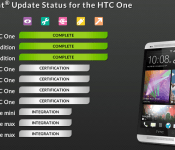
Android 4.4 for HTC One waint for certification
Other HTC devices show up on update graph as well as Sense 6

The 12 Most Desirable Cars of 2014

1. There is one automobile that tops most of the “I Love Cars More than Anything Else in the World” lists and it is the awesome and fast 2014 Alfa Romeo 4C. One of the things that Americans can thank Fiat and Chrysler for, if they love fast, expensive, well-made cars, is the alliance they made in 2009, to keep Chrysler afloat, which allowed American car enthusiasts to have cars like the Alfa Romeo.
Ask an Alfa owner what’s so great about an Alfa and he is likely to say that it resulted in the making of the Ferrari, since Enzo Ferrari was an employee for Alfa Romeo before he created his own masterpiece. But, more often than not, Alfa owners are poetic when they describe their cars. The Alfa Romeo has a personality, a human-ness, they will say, that has been processed out of other luxury cars.John Moore an Alfa Mechanic at Sell My Car San Diego states “It is not a cookie-cutter car, but remains unique”. Other say it is the Italian touch that makes the Alfa beautiful, fun, and, yes, passionate.
2. The Aston Martin Vanquish Volante 2014 has been much anticipated by car lovers. Some say that owning an Aston Martin puts the owner in the most exclusive club in the world. Being the car that James Bond drives and that Prince William left his wedding in may be enough for some. Again, there is a visceral reaction to this luxury car. The 2014 Vanquish Volante costs roughly $300,000, but it is not for the cost that makes people love this car. At one point Aston Martin was raising its own cattle to make its own leather for its cars’ interiors. It is the appointments, and the beauty, and the ambience, and the inside umbrella holder with its own umbrella. Really, what more would one want?
3. The 2014 BMW 4 Series only costs $40,000, but still sets motor enthusiasts’ hearts aquiver. The styling is beautiful and technically it is a superior car. But, most owners say that to understand what is so great about a BMW a person has to drive it. It shines when it is on the open road. Words like “connected to the road” and “exhilarating” are often used to describe the attributes of a BMW. The 2014 boasts a powerful four-cylinder motor, which should continue the highly-praised performance of the BMW quite nicely.
4. This car is a continuation of a car that was designed in 2009 by Cadillac, but was never produced. Many of the ideas in the first design are used in the ELR, 2014. The automobile has an electric engine in combination with a gas engine that can potentially cover a 300 mile range. The lavish interiors remain, as always, along with an in-car service which can assist in knowing when to recharge or make hotel reservations for its owners.
5. Muscle car, maybe, but luxurious, yes, the Chevrolet Camaro Z/28 for 2014 will not disappoint. Going on sale for approximately $55,000, this is not your grandma’s Chevrolet. With an LS7 V8 engine, it will have over 500 horsepower and will be lighter and faster than before. Hot-rodders rejoice.
6. Ferrari LaFerrari 2014 can get up to 217 miles per hour, possibly because of its 949 horsepower engine. The driver’s seat in the newest Ferrari does not adjust; the steering wheel does, however. The car’s pedals are also adjustable. This outstanding gem of an automobile may be ordered now and will be constructed in batches of 499 cars at a time. The cost will be $1,000,000.
7. A hybrid has made it to the list of most desirable cars of 2014. It is the McLaren P1. English made and costing about $1.2 million dollars, this car looks and performs as a luxury car should. The car is not only beautiful to look at, but is also economical, fast, and ostentatious.
8. The new Porsche is the 2014 Porsche 918 Spyder. Why so desirable? Three words will tell why Porsche lovers are so addicted, they are: speed, excitement, and quality. At a mere $ 850,000, many predict there will not be many manufactured, and they will sell out of these cars rapidly. When Porsche owners are asked what makes Porsche so great, they usually answer, “If you have to ask, you won’t be able to understand.”
9. Some may not agree, but for Corvette lovers 2014 is a red letter year. The new Corvette Stingray is out. Redesigned and with a 6.2-liter V8 engine, it goes from 0 to 60 in 3.8 seconds. One of the most anticipated features is a Drive Mode Selector which allows the driver 12 choices in performance based on driving conditions.
10. The 2014 Jaguar F-Type is curvaceous, a convertible, and a two-seater. A 495 horsepower version is available and it has 0 to 60 capabilities in about 4 seconds. Can you hear sports car fans cheering?
11. Believe it or not, many have rated the 2014 Kia Cadenza as one of the best luxury cars of the year. Its sticker price is $45,000. It isn’t a sports car, but it does have enough bells and whistles to warrant being voted one of the best.
12. The Lexus IS, on the other hand is a sports sedan, coming in at about $40,000. It has 204 horsepower and can go from 0 to 60 in a respectable 7.7 seconds. It has a 3-D Navigation system, a traffic news system, and standard weather reporting system. The Lexus may be the step-sister luxury car, but she is a very pretty step-sister.

Lenovo’s 10-inch Miix 2 convertible tablet goes on sale early, starting at $699

You won’t have to wait until March to get your hands on Lenovo’s 10-inch Miix 2; much to our surprise, the budget-friendly convertible tablet is already on sale. Just be prepared to pay extra for early access. The company is offering only higher-end versions of the Windows 8.1 slate, which currently starts at $699 for a WiFi model with 128GB of storage. The promised $499 variant isn’t listed on Lenovo’s site as of this writing. While it’s hard to complain too much about the higher price given the unexpectedly quick launch, those who want the cheapest edition of this mid-size Miix 2 will have to be patient.
[Thanks, Augustus]
Filed under: Laptops, Tablets, Lenovo
Source: Lenovo
Twitter update now lets you crop, rotate photos on Android

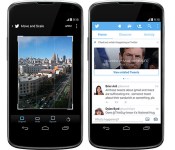
Love sharing photos on Twitter? If you’re an Android user, it just got a little easier. The microblogging service’s latest app update adds a simple photo-editor that allows users to crop and rotate images without the aid of a third-party program. It also flashes a reminder to @mention friends whenever you upload pics with people in it, emulating Facebook’s photo-tagging feature. Pulling down on the timeline reveals other new features: if there aren’t any tweets to load, the app will show recommended tweets, trending topics and will suggest users to follow. In the US, that list also includes news, sports, TV and events updates. While these new additions to the Twitter feed are only available for Android right now, the company promises that they’ll soon arrive on iOS.
Source: Twitter

Daily Roundup: flexible 3D-printed material, Lenovo ThinkPad Yoga review and more!

You might say the day is never really done in consumer technology news. Your workday, however, hopefully draws to a close at some point. This is the Daily Roundup on Engadget, a quick peek back at the top headlines for the past 24 hours — all handpicked by the editors here at the site. Click on through the break, and enjoy.

Lenovo ThinkPad Yoga review
Lenovo’s latest addition to its Yoga line is the ThinkPad Yoga. Starting at $999, this heavyweight convertible packs a Core i3 processor, 4GB of RAM and a 1,366 x 768 display. Click the link for our review.

New 3D printer creates flexible material
Since acquiring MakerBot, 3D-printing company Stratasys has been hard at work. Its new $330,000 Objet500 Connex3 3D printer claims to be the first with the capability to create objects with multi-colored, flexible materials. Follow the link for more information.

SkyDrive gets ‘OneDrive’ name change
Microsoft reluctantly renamed its cloud storage service to “OneDrive” today after losing a trademark dispute with British satellite TV provider BSkyB last July. Click the link for details.

NSA reportedly scouring apps for user data
Yet another leak from Edward Snowden indicates that the NSA can access user data from apps like Angry Birds. The agency may even be able to unearth more information than the apps alone can provide. Click through for the entire story.
Apple’s next cash cow could be your fingerprint

The mobile payments arena may not seem so big right now, but make no mistake: we’re just seeing the beginning of an exponentially growing trend. Some estimates we’ve seen from market research firms put the future mobile payment market in the US alone at around $90 billion spent in 2017. Compared to that, the $12 billion spent in 2012 is just pocket change underneath the couch cushions. Apple’s very much aware of the revenue potential in this category, and it’s taking the possibility seriously.
“Mobile payments in general is one [area] that we’ve been intrigued with, and that was one of the thoughts behind Touch ID.”
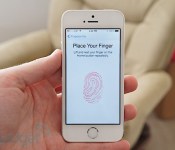
On today’s quarterly earnings call, Apple CEO Tim Cook stated that people love to buy content using Touch ID, the fingerprint reader featured on the iPhone 5s. “Mobile payments in general is one [area] that we’ve been intrigued with, and that was one of the thoughts behind Touch ID,” Cook said. “We’re not limiting ourselves just to that.” This is the first direct confirmation that mobile payments were at least on the table in some form when Apple began developing Touch ID. This wasn’t a promise from Cook that anything will happen in the near future, but it seems as though Apple would be leaving a lot of money on the table if it sat on the opportunity.
As soon as smartphone makers began adopting Near-Field Communication (NFC), the concept of using the tech to facilitate wireless payments began to bloom. Not coincidentally, Apple found itself receiving criticism for not adding the standard into the iPhone. Because of this, mobile payment tech has become a hot-button issue for critics who argue that Apple isn’t keeping up with the rest of the smartphone industry.

Two days ago, however, The Wall Street Journal reported that iTunes and App Store chief Eddy Cue personally met with unnamed industry executives to talk about getting involved with handling payments for goods and services. Whether or not this directly involves NFC remains to be seen, but it at least indicates that Apple is working on moving forward with mobile payments in some shape or form. The publication also reported that the company is shifting some of its executives into roles that will help build some sort of payment business; this isn’t the first time we’ve heard whispers that Apple was looking into the industry, and it’s much more likely to rapidly expand going forward.
Tie these rumors in with Cook’s declaration that mobile payments were a driving force behind Touch ID (Cook didn’t specify how much of a force, but the topic was at least a part of the discussion), and then consider Apple’s inclusion of services like Passbook and iBeacon location sensors, and everything starts to make sense. The company has been hard at work providing a foundation for a possible mobile payment option, and Touch ID is just another logical part of the framework.
The company has been hard at work providing a foundation for a possible mobile payment option, and Touch ID is just another logical part of the framework.
Combining biometrics with wireless payments seems like a natural match, but security and privacy are still significant hurdles that the company needs to jump over before it can become accepted by the masses. Apple is convinced that Touch ID is more secure than any other method of identity verification. Much of the public, however, was not as easily persuaded when the iPhone 5s was announced. The response from the public was mixed, varying anywhere from praise to skepticism and in some cases, to anger; Senator Al Franken even got involved in the discussion, sending Cook a letter addressing the potential privacy concerns involved.
Part of the solution is simply waiting for the right time to dive in. As more Touch ID-enabled iPhones are sold, the feature will continue to become more used and accepted, and most concerns will be soothed. More and more people will start using Touch ID to pay for iTunes purchases as they get comfortable with the feature. Given that iTunes made more than $2 billion this past quarter, it’s not too hard to visualize the benefits of Touch ID progressing into other money-making ventures for Apple.
Even though today’s statement by Tim Cook wasn’t an official guarantee that his company is diving into mobile payments, it’d be silly to expect Apple to just sit idly by in the coming years. With features like Touch ID, Passbook and iBeacons laying the groundwork for a future service, it’s pretty clear that this is an area of intense interest for the company. The next step is to determine when and how to slice up its piece of the pie.
Filed under: Cellphones, Wireless, Mobile, Apple

Nintendo reportedly planning mini-games and content for its biggest rival: the smartphone

Japanese newspaper Nikkei has a generally good record for getting the scoop on Nintendo, and this one could be pretty important. According to this report, Nintendo will announce plans to create “progressive” content for smartphones — the very devices that many reckon is chipping away at the company’s casual gaming audience. We won’t be seeing a full-length iteration of a Zelda title, but it could include background stories (video content is mentioned), offer a tour of in-game worlds and (least interestingly) the very latest news on retail games headed to Nintendo’s own hardware. Mini-games would introduce new characters and, as Nintendo has apparently told it to Nikkei, would be free to try, at least for a short period.
The report adds that Nintendo will hold off on paid-for games and in-app purchase, instead hoping that its smart device morsels would whet the appetite for full-version — full-price — console game purchases. CEO Satoru Iwata had already mentioned late last year that the company needed to “take advantage of [smartphones’] existence.” Nintendo hasn’t confirmed or denied the report yet: we reached out for comment earlier today. Nikkei says that Nintendo will announce these plans later this week, when Iwata-san discusses the game maker’s Q3 financial results. (Spoilers: there’s going to be some bad news.)
Source: Nikkei (Japanese)

Ringing in the Changes on Nuisance Calls

For many of us nuisance calls are nothing more than that – a nuisance. They may cause some colourful language and frustrating interruptions of our evenings but little more. For others they can be more serious; around 85 per cent of people receive at least one nuisance call every month with an average of seven calls being received by many individuals. While for most of us they are annoying for more vulnerable individuals they can be worrying and can even cause some serious problems. A number of cases have been reported where older consumers have been scammed and conned by these calls and resolving the problems caused can take far longer than it can to sign up to whatever service of product has been inadvertently acquired. Today, the majority of nuisance calls are sales calls offering everything from free loft insulation to claims for PPI (whether you’ve had it or not) and accidents that weren’t your fault (whether you’ve had them or not). There are still, in some cases, also problems with traditional nuisance callers, those who have little else to do in life but harass distress and otherwise cause a nuisance. Both types of call can be deeply upsetting and both types can, thankfully, be stopped once and for all.
Cocoa and Impotent Anger
Ultimately, whatever type of nuisance call you receive they’re annoying. However the reasons and the remedies to the calls are subtly different. Sales calls often come to us when we least want them – but we’re not entirely faultless in receiving them. Basically, unsolicited calls are illegal, unless we’ve opted in to receiving marketing calls. Opting in is surprisingly easy and without due care and attention it can be possible to opt in to a surprising number of sales lists. The problem has, if anything, become worse in the internet age. Not many of us read the small print (even in the pre-internet world) and these days there’s just so much of it that life is too short to read the online small print. Opting in is usually a case of forgetting to check or un-check the relevant box; to get round our increasingly savvy attitudes (realising we had to tick to “opt in”) many sites now helpfully pre-fill the tick for us, presumably on the assumption that we’d love nothing more than to receive a stream of calls and emails on a seemingly hourly basis. The basic rule is to be very careful whenever you submit an online form, or an offline one, and ensure that you are not opting in to a late night offer of free loft insulation (PPI/accident claim/etc.) which only serves to send your cocoa flying across the room in impotent anger.
Taking Control Without Losing Your Head
As long as you opt out on every form you ever fill in then you shouldn’t receive unsolicited calls; however, some less reputable firms try their best to get round this, simply by ignoring the regulations. Your next line of defence in this case is the (free) Telephone Preference Service (TPS). You can sign up by visiting the TPS website and it normally takes about twenty eight days for the service to come into effect. Any calls that do come through after this are very definitely illegal and simply advise the caller you’re registered and you don’t want to receive more calls from them. Take a note of their firm (if they haven’t already hung up in panic). If repeated calls continue simply report them to the Information Commissioner’s Office (ICO). Individual reports are not followed up but data is collected on serious offenders and action is taken to enforce the regulations. The downside to the TPS service is that it can’t block calls from overseas call centres – of which there are many. Alternative solutions to this include international call blocking from your telephone provider, although this may be a chargeable service and may not be suitable for those with friends and family scattered across the globe.
Creative Technology
Call blocker devices can be useful for many of those who are victim of numerous unwanted calls. A range of devices are available on the market, including the Pro Call Blocker. These devices allow you to block specific numbers and types of number (international for example) which makes them suitable for blocking nearly all the sources of unwanted (including traditional, nuisance callers) types of unsolicited call. For those with vulnerable relatives, including elderly relatives, a call blocker can offer a great deal of peace of mind. Leaving you and your family undisturbed and ensuring that any particularly vulnerable relatives are not left living in fear of the ringing of the phone.
Calvin Ford is a freelance writer and former telecoms worker. In this post he looks at the problems behind nuisance sales calls and how simple steps and a call blocker can help to resolve the problem once and for all.
Tim Cook: iPod is a ‘Declining Business’ [iOS Blog]
During its earnings conference call today, Apple CEO Tim Cook commented on the state of the iPod, noting that the product is a declining category for the company:
The way we look at it, our business is a sell-through point of view less iPod — all of us have known for some time that iPod is a declining business.

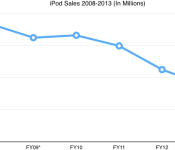
The iPod was Apple’s “halo” product for years, getting new customers to buy Apple products for the first time. Since their peak in 2008, however, iPod sales have seen a fairly steady decline as the iPhone and iPad have captured more of the market that the iPod occupied previously.
Apple’s last change to the the iPod line came with the debut of a new Space Gray color option for the iPod touch, iPod nano, and iPod shuffle at its September 2013 iPhone event. However, Apple has not updated the iPod classic in over four years, with that device more likely to be discontinued rather than refreshed.
     |

Tim Cook: Innovation ‘Deeply Embedded’ In Apple, Company Has ‘No Issue’ Coming Up With New Ideas
 Apple plans to launch new products in categories where it doesn’t currently operate, according to comments from CEO Tim Cook. During today’s earnings call, Cook said that innovation is “deeply embedded” in everyone at Apple and that the company has “no issue” coming up with new projects to work on.
There’s so much of the world that is full of very complex products. We have zero issue coming up with things we want to do. We must focus on the very few that deserve all our energy. We’ve always done that and we continue to do that.
Since the introduction of the iPod, Apple has concentrated on launching new products in markets where it sees significant room for improvement. With its touch-focused design, the iPhone was significant departure from its competitors when it was introduced in 2007, and the iPad, introduced in 2010 dominated the tablet market from launch.
Currently, Apple is rumored to be working in the wearables category, which Tim Cook previously suggested was “ripe for exploration” as there are no significantly popular products in that market. Apple is researching a host of possible features for its much-rumored smart watch that would set it apart from existing products on the market, including a range of biometric sensors.
Apple has also expressed interest in the television, with Steve Jobs claiming to have “finally cracked” the design for a simple integrated television set that’s simple to use.
While reports have suggested that the iWatch could make an initial appearance in 2014, Apple’s television plans are somewhat more nebulous and may have been put on hold in order for the company to work on wearables, which would be in line with today’s comments on focus.
During the call, Apple Corporate Controller Luca Maestri also confirmed the company is heavily investing in areas that will generate new products and services and Peter Oppenheimer said that Apple “remains confident in the new product pipeline.”
| |
 AIVAnet