


A Buyers Guide To Digital TV Aerials: Indoor Or Outdoor?
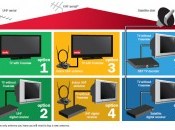

As more of us choose to either dial down our TV time in favour of more ‘active’ lifestyles or migrate from traditional television, over to the glamour of Netflix, satellite and cable television subscriptions are being cancelled left, right and centre – with good reason too. Why would you want to pay more per month for channels you never have the time or inclination to watch than you do for your water and electric combined?
If you’re thinking of ‘cutting the cord’ though and moving back into the world of terrestrial television, you might have forgotten exactly what is required for a terrestrial setup. In short you’re going to need an aerial in order to pick up a Freeview, digital TV signal and if you’ve spent a significant amount of years on a satellite or cable television plan, your (until now barely used) aerial might either have stopped working or have been removed to make way for a satellite dish that will soon be little more than an expensive and ugly tumour on your homestead.
So you might need to start considering the purchase of a new aerial in order to pick up a terrestrial signal and start enjoying television on a non-subscription basis. You might need to fork out a little for the aerial itself, but depending on your current package, you could be making long term savings in the thousands!
Indoor
Contrary to popular belief, indoor aerials are actually quite common. Usually it will be installed in an attic space, so as to be as high above ground as feasibly possible. Indoor aerials are significantly easier to install than their outdoor counterparts and as they won’t be exposed to the elements (wind, rain, snow, sun etc.) they should also last quite a bit longer. There are downsides to opting for an interior aerial though. The major disadvantage is in the signal. As its being shielded by a roof, walls and insulation, the signal that actually reaches the antenna will be far weaker than it would be if the device was outside. This might result in a slightly less clear signal and more frequent problems such as freezes, stutters, static or (in some cases) loss of signal altogether.
You’re more likely to have better luck with indoor aerial installation if your home is located closer to a town or city centre, where most digital TV transmitters are located. If you wish to find out how far your home is from your nearest transmitter there are numerous websites online that will allow you to enter your postcode so you can see for yourself. This (more than anything else) should be the primary deciding factor on whether or not you even consider going with an interior aerial.
It should be worth noting that it is however, possible to purchase an ‘amplified’ interior aerial that will have been designed specifically to be used in an attic space and will more than likely require an electrical socket. You can also fit signal boosters on your digital TV receiver, which will help substantially.
Outdoor
The traditional, roof mounted aerial is generally cheaper and will result in a far clearer and more consistent TV signal but there are many obvious drawbacks. For one thing exposure to the elements could lead to occasional signal loss during poor weather and there is even the (slightly less likely) chance that a bird or rogue frisbee/football/tennis ball could strike and damage it. The one overwhelming factor that will put the majority of the DIY shy amongst us off though is the fact that it will require some relatively risky installation.
If you’re not 100% comfortable and confident with heights and have never attempted anything quite so potentially dangerous before then we seriously recommend you hire a professional to do it for you, but installing your own outdoor aerial is (in theory) not an insurmountable task, as long as you have the right tools and someone to help you and keep you safe. There are hundreds of tutorials online that you could use but you might want to be a little more thorough with your research than just checked a few web pages before you take the plunge.
You should find that with an outdoor aerial installed, tuning your digital receiver should be a lot easier and that your TV Reception should be a lot stronger. Be careful when placing it though to keep it away from trees, bushes or other potential hazards that could block the signal in any way or damage the aerial itself.
Is My Current Aerial Good Enough Already?
Though the majority of old fashioned ‘analogue’ aerials should be able to pick up a digital signal (especially if you live in close proximity to your nearest transmitter), there are still many that will struggle. If your aerial has a more ‘dish’ like look (half way between an antenna and a satellite dish) then it will have been built in the ‘post digital’ era and will be perfectly suited to picking up a clear digital signal. If it looks more like the old fashioned ‘rod’ design though, you might need to replace it. You don’t know until you try though so don’t make your decision until you’ve tried tuning your TV using whatever aerial you currently have installed. If the signal strength is less than 40%, it might be time to consider a change.
Bob Emerald recently installed his own outdoor aerial with surprisingly little bother. Though his dad might have helped a little
 AIVAnet