


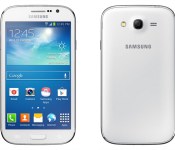
Samsung’s Galaxy Grand Neo melds ultra-basic specs with a mid-size screen

Let’s say you like the idea of a big-screened Samsung smartphone, but even the Galaxy Grand 2 is too rich for your blood. Are you stuck? Not at all — the company has quietly released the Galaxy Grand Neo, a more frugal take on an already cheap handset. The new device keeps the Grand 2′s quad-core 1.2GHz processor and 8GB of expandable storage, but scales down to a 5-inch 800 x 480 display, a 5-megapixel rear camera and a VGA front shooter. Few will be blown away by the hardware, then, although there is a healthy 2,100mAh battery inside. Let’s just hope that the pricing becomes more competitive. As of this writing, the Grand Neo sells for a relatively high €260 ($355) after tax in the Netherlands; we can think of a few smartphones that offer considerably more for your money.
Filed under: Cellphones, Mobile, Samsung
Via: GSM Arena, GSMinfo.nl (translated)
Source: Samsung, Belsimpel.nl (translated)

Verizon LTE now available in 35 NYC subway stations

Many commuters around the world take underground connectivity for granted at this point, but New Yorkers are still disconnected more often than not while riding the subway, or even just waiting for a train. Now, thanks to Transit Wireless, Verizon customers can surf the web via LTE in 35 Manhattan subway stations. Platforms for select trains are now online, with most of the participating stations located on the city’s west side, including Times Square and Columbus Circle. Service is notably absent at Penn Station and Grand Central, though that latter hub is slated to get LTE soon, when 40 additional stations come online as part of the next installation phase. Click through to the source link for the full list of 35 stations that offer LTE today.
(AP Photo/Mary Altaffer)
Filed under: Wireless, Mobile, Verizon
Source: Transit Wireless (MarketWatch)
NVIDIA updates TegraZone to support all Android devices
NVIDIA today issued an update to its TegraZone app (v 2.9) which sees much wider device support. No longer relegated to Tegra-powered devices, it lets players and gamers from other smartphones and tablets access the game portal. Also included in the update, the TegraZone offers enhanced support for the NVIDIA Shield, Android HID controllers for set-top boxes, and even micro-consoles.
Features in TegraZone 2.9
- Supports Google Play Game Services – provides achievements for downloading games, submitting reviews and ratings, and spreading the word about games featured in TegraZone
- Uses your Google+ login to personalize your TegraZone experience
- TegraZone Collections will allow highlighting of special interest groups of games by feature, genre, or publisher
- Sharing shortcut icon makes it easier to share via your favorite social network
- Dynamic loading of additional content when you scroll to the bottom of games lists and news
- Archived news items are now viewable
The post NVIDIA updates TegraZone to support all Android devices appeared first on AndroidGuys.
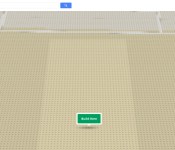
Build anything you want with Legos, in Chrome

Let’s be honest: You’re never too old to play with Legos. Thanks to the latest Chrome experiment (and a little help from WebGL) you can build whatever your heart desires directly from your browser. Using Maps, you’re able to choose a location-specific plot before starting to build, brick by brick. As you might expect, creations can be viewed across Google+ circles with categories for sorting, and tutorials will help hone those plastic contractor skills. If you really wanna get hands-on, use your phone or tablet’s touchscreen for a more tactile feel. Itching to get started? You can begin construction right here.
Filed under: Internet, Software, Google
Source: Google
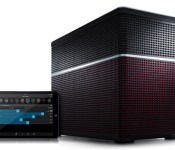
Line 6’s Amplifi duo claims to ‘reinvent’ guitar amps with Bluetooth streaming and iOS controls

Line 6 has been known to push the boundaries of guitar amps: It was one of the first to offer built-in effects for that type of gear. Now, the outfit says it has reinvented the amplifier once more by packing Bluetooth streaming and iOS app controls into its new Amplifi 75 and 150. For learning new riffs alongside Kerry King or simply for easy listening, the amp is compatible with Android, iOS, Mac and PC gadgets for beaming tunes from your repository of choice. To further integrate that mobile device, Line 6′s Amplifi Remote iOS app toggles every dial from an iPhone or iPad. That piece of software also accesses a cloud-based community for sharing and rating tones in addition to storing amp, pedal and effects presets for safekeeping.
As far as specs go, Amplifi is available in either 150 or 75 watts, as their numeric labels suggest. The 150 houses a 12-inch Celestion speaker as part of its five-speaker stereo setup while the 75 packs an 8-inch “custom speaker.” Line 6 says that this arrangement offers a “truly immersive guitar experience” that’s never sounded so “wide and spacious.” Both units offer wet/dry effects to boost said sound quality, tap tempo/tuner, four onboard presets and USB connectivity. If that sounds like the kind of innovation you’re after, the pair is priced at $400 and $500 respectively, and both are available now from guitar retailers. You can take a closer look at the amplifier in the video that awaits after the break.
Filed under: Misc
Via: Gizmag
Source: Line 6

CyberpowerPC stuffs full-size graphics into a tiny gaming desktop

Not interested in buying a Steam Machine this year, but still want a tiny gaming PC? Never fear — CyberPowerPC has just released the Zeus Mini, its latest take on a conventional small computer with full-sized performance. The system is just 4.4 inches thick and 18 inches deep, but it has room for fast video cards like AMD’s R9 290 or NVIDIA’s GeForce GTX 780. You’ll also find a high-end AMD Kaveri or Intel Haswell processor inside, and there’s space for a large liquid cooling system if you insist on a silent rig. Zeus Mini prices start at $599 for a basic variant with a 3.7GHz AMD A10 chip and integrated graphics, but demanding players can shell out $1,479 for a flagship model with a 3.5GHz Core i7 and GTX 780 video.
Filed under: Desktops, Gaming, AMD, Intel, NVIDIA
Source: CyberpowerPC
Chrome apps coming to Android and iOS
 Today Google launched an early developer preview of an open-source mobile development framework to bring Chrome apps to Android and iOS.
According to The Next Web, the framework is a toolchain based onApache Cordova, used for building native mobile apps using HTML, CSS and JavaScript and developers can use the tool to wrap their Chrome app with a native application shell that enables them to be distributed through the Google Play Store and Apple’s App Store.
Through this, basically any Chrome desktop app that run on Windows, OS X and Chrome OS, will be able to run on a mobile device.
TNW noted that for those who don’t know, Chrome packaged apps are written in HTML, JavaScript, and CSS, but launch outside the browser, work offline by default, and access certain APIs not available to Web apps. If anything, this may open up mobile development to a lot more people.
For developers building Chrome apps for mobile, they will also have access to numerous APIs. Some exclusive to Android are for payments, to sell virtual goods within your mobile app, and notifications, to send rich notifications from your mobile app.
There are definitely exciting times ahead for the mobile world. Check out the source links below for more info.
The Next Web, Sample Apps, GitHub readme
The post Chrome apps coming to Android and iOS appeared first on AndroidGuys.
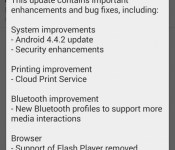
Android 4.4.2 Rolling Out to HTC One Users in Europe

HTC One users, it is time to start getting a little excited. Last week we learned that Android 4.4 was ready for US HTC One users, it was just matter of certification before it started being rolled out from our carriers. The OTA update has been spotted in Europe already, and for a moment there, XDA had the update in their grasp for you impatient folks out there. Sadly, that page has gone missing, but if it happens to return I will update this post.
The build version for the update is 4.19.401.8, and it is a hefty 308.24 mb in size. It is only a matter of time before we start receiving word that one of our carriers starts rolling out the Android 4.4.2 update to the HTC One, so keep a lookout for it.
Source: XDA
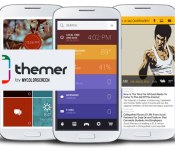
Themer Shows Us Homescreen Envy in New Video

Themer is one of those apps that can just completely transform your device. Being an Android enthusiast, you tend to get bored with what you have displayed on your homescreen, so you spend hours themeing, finding the right wallpaper, and just striving to be unique. Sadly there are many hours wasted trying to find a great theme and arrangment. That is where Themer comes in. It takes the hours of never ending alterations out of the picture, and now the popular app has recently updated, and they have a special new video titled, “Homescreen Envy”.
- UI improvements.
- Better performance swiping between homescreens and scrolling through apps in the app drawer.
- Improvements in animations when opening and closing apps from the homescreen.
- Fix for switching between Fahrenheit and Celsius.
- Improvements and fixes for sharing themes.
It was only a minor update, but long as people keep sharing their themes with the community, Themer will only get better and better. So check out their new video below, and make sure you head over to the Play Store to download it.
Google Bringing Chrome Apps to iOS and Android [iOS Blog]
Google today launched Chrome apps for iOS and Android, which will see Chrome-based apps encased in a native application shell that allows them to be distributed through the Apple App Store and Google Play. Currently, Chrome-packaged apps are written in JavaScript, HTML, and CSS, but are able to launch outside the browser, access APIs and work offline.
Developers can access an early developer preview of a toolchain based on Apache Cordova, an open source platform for building native mobile applications with HTML, CSS, and JavaScript. Using the toolchain, developers can wrap existing Chrome Apps with a native shell, which transforms them into apps that can be sold on the App Store.
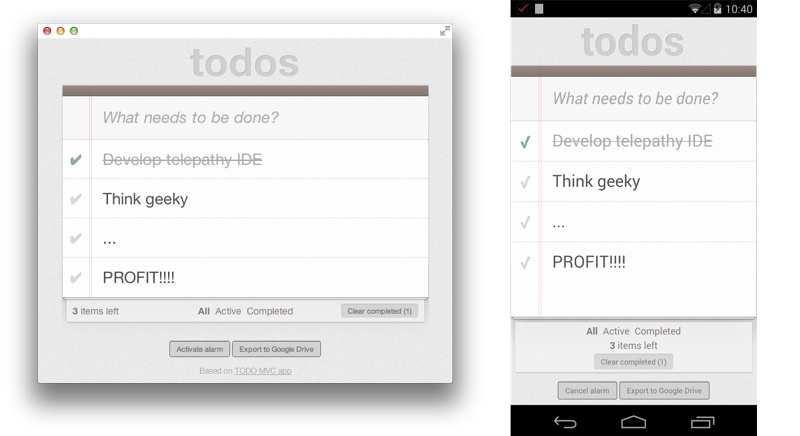 Example of a Chrome To-Do app running on OS X and Android
We provide a simple developer workflow for packaging a Chrome App natively for mobile platforms. You can run your Chrome App on a device or emulator using the command-line or an IDE. Alternatively, you can use the Chrome Apps Developer Tool to run your app on an Android device without the need to install an IDE or the mobile platform’s SDK.
Google has made multiple core Chrome APIs available to Chrome apps that are designed to run on mobile devices, including automatic sign-in via OAuth2, push messaging, storage, alarms, file system syncing able to store and retrieve files backed by Google Drive, and more.
In addition to the Chrome APIs, developers are also able to access APIs supported by the Cordova platform.
Chrome mobile apps come following the September launch of Chrome apps that work offline by default and function as native applications. In December, Google brought Chrome apps to the Mac, following a beta testing period that began in May. Chrome apps on the Mac are designed to function like native Mac apps, working offline, updating automatically, and syncing on any computer where a user is signed into Chrome.
Developers have the opportunity to begin working with Apache Cordova and their Chrome apps beginning today, but it may be some time before consumers see Chrome apps in the App Store.
     |
 AIVAnet