



Microsoft changes SkyDrive’s name to OneDrive

Microsoft had little choice but to relabel its SkyDrive cloud service after losing a trademark dispute with BSkyB, and it’s now ready to make that name switch. The newly rebadged OneDrive is functionally identical for existing SkyDrive users, who can go about business as usual. However, there are also promises that this is more than just a cosmetic change. The curious can register at a preview page to be notified when OneDrive launches with “more” than what they’ve known with SkyDrive. Microsoft isn’t saying exactly what users can expect, but it won’t hurt to sign up.
Filed under: Storage, Internet, Microsoft
Via: The Verge
Source: OneDrive Blog

Microsoft buys Gears of War franchise, new game in development

Microsoft now owns another major franchise tied to its Xbox game consoles: Gears of War. That includes “rights to all existing and future games, entertainment experiences and merchandise,” and it looks like a new game (likely for Xbox One) is already in production at Black Tusk Studios in Canada (Microsoft actually teased that news back at E3 2013 during the company’s press briefing). The franchise’s former director of production, Rod Fergusson, will take on oversight.
The Gears of War franchise was exclusive to the Xbox 360 (and later on PC as well), and Unreal Engine developer Epic Games used the third-person shooter series to show off its engines graphical chops. Beyond being a graphical showcase, however, Gears of War developed a loyal following among online console gamers — last year’s Gears of War: Judgment was the first entry in the franchise co-developed by Epic and Bulletstorm dev People Can Fly, and it was expected to be the final entry in the series.
Beyond a new entry in the massively popular shooter franchise, we expect re-issues (perhaps prettied up re-issues) will happen at some point (a la Tomb Raider‘s “Definitive” Edition). At very least, Gears fans can rest assured that more tales of meaty space marines taking down locust are on the way care of Microsoft.
Filed under: Gaming, Software, HD, Microsoft
Source: Microsoft

Russia’s Megafon Signs Multi-Year iPhone Distribution Deal with Apple [iOS Blog]
Russian wireless carrier Megafon announced today that it has signed a three-year deal with Apple to sell the iPhone, reports Reuters. Megafon first sold the iPhone in 2008 and subsequently halted sales of the handset after it and other Russian carriers could not sell the volume of handsets required by Apple.

Apple allegedly loosened its requirements for partner carriers, which opened the door for the Megafon deal. Competing carrier Vimpelcom signed a similar, direct deal with Apple in October 2013 that allowed the carrier to start selling the iPhone 5s and 5c. Among Russia’s top three carriers, market leader MTS is the remaining holdout, buying its iPhone handsets from third-party distributors instead of Apple directly.
Apple’s iPhone has a 20 percent market share of the smartphone market in Russia based on revenue and a nine percent market share based on units sold in 2013. Besides carriers, Apple also sells the iPhone in Russia through its online store and electronics resellers. 
     |

8-core HTC Desire phone rumor
It has been rumored for some time that HTC has been working with Mediatek chip-makers on producing a low to mid range 8-core smartphone for global markets. The pictures below are of the supposed development between the two companies, the “HTC Desire”.

The phone is said to boast a 5 inch display, 720p resolution, Android 4.3, 1.5GB of RAM, and HTC Sense 5.5. Now these are only rumors, but this could be HTC’s reaction to the iPhone 5c in order to get in on China’s growing smartphone market.
No availability has been released, but it has been said that the price will be 2000 Yuan or $330 USD. At this price it would be a direct competitor for business in China.
Source: GizChina
The post 8-core HTC Desire phone rumor appeared first on AndroidGuys.
Samsung and Google Sign Global Patent License Agreement
Samsung and Google have entered into a 10 year patent license agreement in order to “prevent litigation and focus on innovation”. With this agreement, Samsung and Google gain access to each other’s patent portfolios, paving the way for deeper collaboration on research and development of current and future products and technologies.
“We’re pleased to enter into a cross-license with our partner Samsung,” said Allen Lo, Deputy General Counsel for Patents at Google. “By working together on agreements like this, companies can reduce the potential for litigation and focus instead on innovation.”
I believe that it is crucial for tech companies to work together in order to avoid wasting time and money. Now, if we could only see Apple and Samsung do the same, which would take a miracle, I believe we could see even more innovation from the two.
Source: Samsung
The post Samsung and Google Sign Global Patent License Agreement appeared first on AndroidGuys.
Sony goes on offensive to fight spec leaks
When it comes to leaks, Sony is not playing. Their prototype devices now have built in traps for apps that are able to leak prototype information such as processor, ram, display resolution, etc. This is not even a warning, the new trap will prevent the app from running all together.
It is kind of disheartening to see this since we love to see what is being created before it even is officially announced, however I am sure our guys will figure out a work around and allow for those leaks to keep on flowing.
Source: XperiaBlog
The post Sony goes on offensive to fight spec leaks appeared first on AndroidGuys.
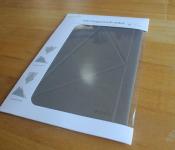
Moshi VersaPouch Mini Review: appropriating an iPad accessory for Android devices
 Some of you may have read my review of the moshi VersaCover for Samsung Galaxy Tab 3 7.0 where I couldn’t stop singing its praises, going as far to say that if moshi ever made an origami case for the Nexus 7 that I would be all over (you can read that full review here). Well, that wait is now over, in a manner of speaking; the case is called the moshi VersaPouch Mini and it’s a case technically for the iPad Mini. How dare I, you say? Well thankfully, for the VersaPouch Mini, moshi has opted for a more generic pouch accessory instead of a bespoke case for the iPad Mini, meaning that the case can be used for Android devices that have a screen-size of 7 to 8-inches. Let’s check it out!
The overview
 As we said in the introduction, the VersaPouch Mini is intuitively named as a pouch for use with an iPad Mini, however, owing to the fact that it is just a pouch, we can quite conveniently also use it with our Android tablets. For this review, I used my personal Nexus 7 and found it to be completely useable, but you’ll be able to use the VersaPouch with pretty well any 7-inch tablets and 8-inch tablets that come in at under 5.3-inches wide, which is the width of an iPad Mini.
 As with the VersaCover in our previous review, the material used for the VersaPouch is a soft microfiber that almost feels leathery to touch and manuipulate. Also like the VersaCover, you will notice the plates that lie within the VersaPouch’s surface which signify the existence of magnetic plates. If you didn’t manage to catch a look at the VersaCover’s review, then you’ll be interested to know that the VersaPouch has a party trick that makes it more than just a pouch.
 As you can see, the magnetic plates allow the VersaPouch to fold into a stand and the magnets ensure that it remains in that position till you’re finished using it. Unlike the VersaCover, however, there is only one way to use the VersaPouch and that is as pictured; most of the panels in the VersaPouch are in fact not magnetic. Even so, being able to fold up your pouch into a stand is already an incredibly useful feat and can prop your tablet up in portrait or landscape mode comfortably.
 Once your tablet is in the pouch, it is secured inside by the magnetic strips at the mouth of the pouch which close it off. The magnetic strips double as a means of holding the pouch in its stand position and also stopping the tablet from sliding down. The end result is a pouch that looks quite trendy, if not slightly futuristic, with its oddly geometrical panels and intriguing material.

The toughness
 While the microfiber that the VersaPouch sounds cloth like, the reality could not be more different; the material is definitely closer to a rubbery, leathery texture and as a result is quite durable and would merely need a wipe down with a cloth if it ever got dirty. Just about the only weak point on the whole VersaPouch is the seamed edge along one side and the bottom edge; if there were anywhere that I could forsee wear happening, it would be at this seam, but that’s definitely a very long term consideration.
 As for actual physical protection of your tablet, the VersaPouch doesn’t have much in the way of damage mitigation. It will do well enough in the office and home setting in keeping your devices clean and generally protected, but beyond that, it’s definitely more than a small risk of damage.
The practicality
 After playing with the VersaPouch for the period of this review, I had almost forgotten it was just a pouch. And when you think about exactly how many tablet pouches you can think of that do more than just be a pouch, you definitely begin to see the value of the VersaPouch and its handy stand functionality.
 As a pouch, the VersaPouch ticks all the boxes; it provides minimal protection to your tablet and serves as an effective place of storage. As a stand, again, it provides the minimal level of functionality which is one angle of viewing in both portrait and landscape mode. Put these together though, and you have a very unique pouch that makes other pouches look inadequate. Oh, and did I mention it looks trendy?
The verdict
Rating: 5/5
 It’s hard to fault the moshi VersaPouch Mini; if anything, I’d have to say its only fault is having “compatible with iPad Mini” on the box, but that would just be crass. For a pouch that also functions as a stand, it definitely raises the bar for what’s expected from a pouch and the fact that it can be used cross-platform for a multitude of tablets is a win for everyone. And at a MSRP of $30, I wouldn’t say it’s likely to break the bank either; if you have a 7 or 8-inch tablet and want a pouch, I think you’ll have a hard job denying that the moshi VersaPouch Mini is one of your best options on the market.
For more information about the moshi VersaPouch Mini, you can visit its product page here, or for more information about moshi’s other products, you can visit their homepage here (though it looks like it’s currently undergoing renovations). As a bonus, it looks like moshi is also offering free shipping within the continental US, with no minimum spend.
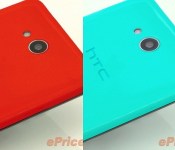
[LEAK] New, mysterious octocore HTC Desire leaks out in Pictures
 With all this hullabaloo about MWC 2014 and HTC M8 wallpapers being leaked left and right, you might be forgiven for thinking HTC might only be announcing their new flagship at MWC. Well, we know that HTC’s Desire line of devices has been pretty quiet since they launched the Desire 600 series, but if this new leak is to be believed, there could be a new octacore HTC Desire just around the corner.
 The leak alleges that HTC is readying a new line of Desire handsets which will sport new Mediatek octocore processors, as well as 1.5GM RAM, 5-inch, 720p display and a 8 megapixel rear camera. The leak also goes on to say that these Desire handsets would be getting Android 4.3 and Sense 5.5 and provides pictures of an assortment of brightly coloured handsets. I am slightly adamant about the details regarding the software version seeing as LlabTooFer’s leak a few days ago appeared to suggest that HTC has essentially abandoned all work on Android 4.3 in favour of Android 4.4, but all of this is up in the air anyway.
One thing is for sure: if this octacore HTC Desire is real, this could go a long way to help HTC claw back some market share in the cut-throat smartphone market in Asia. Do you think this leak is real? Let us know what you think.

Three Companies to Share Packaging Orders for Apple’s Next-Generation A8 Chip [iOS Blog]
 Semiconductor companies Amkor Technology and STATS ChipPAC will each handle 40% of the packaging orders placed by Apple for its upcoming A8 processor, while Advanced Semiconductor Engineering (ASE) will obtain the remaining 20% of the orders, according to a new report from DigiTimes.
Apple’s A8 chip will be a package-on-package (PoP) SoC solution comprising processors and mobile DRAM in a single package, said the sources.
Taiwan Semiconductor Manufacturing Company (TSMC) is also believed to have secured wafer-bumping orders for the processor, and will reportedly start ramping up production of the A8 chip using 20nm process technology in the second quarter of 2014, with the processor widely expected to be used in Apple’s next-generation iPhone.
According to a report in September, it is also expected that Samsung will assist with production of A8 chip, with the Korean company expected to handle 20% to 30% of the manufacturing load.
Overall, production plans for the iPhone 6 seem to be gearing up, with a report earlier this month stating that TSMC would be producing fingerprint sensors for the next-generation iPhone using a larger 12-inch fab from the current 8-inch fab to increase production efficiency. It was also stated that TSMC would handle the packaging process for the sensors itself rather than contracting out to other firms in order to centralize control over the component.
| |
iPhone Market Share Holds Strong as Android Increases Lead in Global Smartphone Race
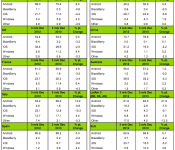
Research firm Kantar Worldpanel has released a new report (via The Next Web) highlighting global smartphone sales over the October-December period, finding that while Apple held strong in key markets such as the U.S. and China, Google’s Android devices increased their lead over other platforms during the end of 2013, registering year-over-year growth in various major markets.

Dominic Sunnebo, strategic insight director at Kantar Worldpanel ComTech, comments: “Android finished 2013 strongly, showing year-on-year share growth across 12 major global markets including Europe, USA, Latin America, China and Japan. Apple has lost share in most countries compared with this time last year, but importantly it has held strong shares in key markets including 43.9% in USA, 29.9% in Great Britain and 19.0% in China.
Apple’s total market share in the U.S. hit 43.9% in December, and was overall lower in most countries compared to the same timeframe last year. However, Sunnebo stated himself in Kantar’s prior report highlighting global smartphone sales over the August-October period that customers generally react more positively to “full” releases than incremental improvements such as the iPhone 5s and the iPhone 5c, which is the likely reason for the drop in market share.
Apple also continues to have strong presence in Japan, as the iPhone has held a steady market share in the months after the debut of the iPhone on the country’s largest carrier, NTT DoCoMo:
In Japan, consumers’ desire for all things Apple continued into the final quarter of 2013, with iOS taking 68.7% share of smartphone sales. Apple’s deal to sell iPhones through Japan’s largest carrier, NTT DoCoMO, has proved an unarguable success with Apple’s share on the carrier reaching 58.1% in the fourth quarter compared with 91.7% on Softbank and 63.7% on AU KDDI.
Despite its strong market share in various countries, the iPhone continues to face challenges in mainland Europe and China, where Android’s market share is around 70% or higher in many countries. Microsoft’s Windows Phone also continues to show growth in many markets, as the platform’s market share has even overtake that of iOS in Italy.
| |
 AIVAnet