



Red Nexus 5 Spotted in Retail Packaging

The red Nexus 5 first posed for the camera last week, but we weren’t quite sure if it was the real thing, or someone’s crafty Photoshop work. Today we get a new image of the Nexus 5 in its passion color. Only this time it shows up in the retail packaging, leading everyone to believe this red Nexus 5 actually exists.


One key bit of information the boys over at Android Police pointed out, is the fact that the same IMEI numbers show up in the photos. When looking up the number, the number is attached to an old Samsung phone, which seems a bit interesting, but the same number is on all of them, and who would go the extra mile to pull a prank off that extreme? Possibly these red Nexus 5 phones will show up just in time for Valentine’s Day. Seems to be a gimmick other companies have partaken in, but most likely not. These images were spotted in an LG warehouse in the UK, so they might not even reach the states. Let us know your thoughts about it.
Source: Android Police

Logitech Drops Price on ‘PowerShell’ iOS 7 Game Controller [iOS Blog]
Logitech has dropped the price on its PowerShell iOS 7 MFi game controller from $100 to $70, following a similar price drop on the SteelSeries gaming controller when it launched.
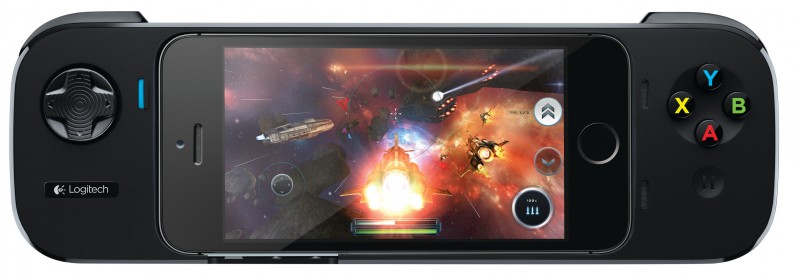
The form-fitting controller is made to plug into the Lightning port on a newer iOS device and features console-style controls including a directional pad, shoulder bumpers, and face buttons. It also allows for headphones to be connected through an included adapter, and also leaves the volume up/down buttons, ring/silent switch, and power/sleep button of an iOS device fully accessible.
Logitech’s controller includes a 1500 mAh battery which will charge an iOS device whiile it is plugged into the controller, and can also be charged simultaneously with a device through the controller’s micro-USB port.
Complaints about the high price tag of the MFi controllers and issues with build quality, could be causing poor sales of the devices, which is the likely impetus for the two price drops.
     |

iPhone Replaces Hotel Room Keys in New Pilot Program
Starwood Hotels & Resorts is implementing a new pilot program that will see two key hotel locations in Manhattan and Silicon Valley allowing guests to enter their rooms with their smartphones, reports The Wall Street Journal.
After installing the Starwood Preferred Guest (SGP) App, guests will receive a virtual key on their iPhone, which can then be used to unlock a door with a tap using Bluetooth 4.0. The newer Bluetooth specification, first introduced with the iPhone 4s, has been used in a similar way for many home locking products like the Lockitron and the August Smart Lock, but this is the first time it’s being used on a larger scale.
Starwood officials are betting that the technology will become the standard for hotels in the future, replacing traditional hotel check-in methods.
“We believe this will become the new standard for how people will want to enter a hotel,” says Frits van Paasschen, Starwood’s CEO. “It may be a novelty at first, but we think it will become table stakes for managing a hotel.”
Bluetooth 4.0 (or Bluetooth LE) is being utilized in a number of innovative ways. In addition to being installed in multiple different home locking products, it has also been used to replace traditional password logins on Macs through the Knock app and to deliver car diagnostics in the Automatic connected car device. Bluetooth 4.0 is also the driving technology behind Apple’s iBeacons, which are rapidly being implemented in retail stores and other locations across the world to deliver location-based notifications.
Two Starwood Aloft hotels, in Harlem, New York and Cupertino, California, will be updated with the Bluetooth 4.0 technology during the first quarter of 2014. Starwood has plans to roll out the system at all of its locations by the end of 2015 should the pilot program be successful.
| |
Apple’s App Store Usage Numbers Put iOS 7 Adoption at 80% [iOS Blog]
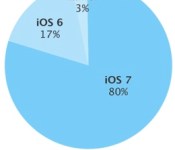
Following approximately four-and-a-half months of availability, iOS 7 is now installed on 80 percent of devices connected to the App Store, according to the newest numbers posted on Apple’s App Store support page for developers.

As iOS 7 adoption numbers grow, iOS 6 usage continues to drop, and the older operating system is now installed on just 17 percent of devices. Three percent of devices also continue use even older versions of iOS.
In early December, iOS 7 usage was at 74 percent, jumping to 78 percent later in December, while iOS 6 usage first declined to 22 percent and then to 18 percent.
Apple’s data, which comes directly from the App Store, represents the most accurate iOS 7 adoption information for developers.
| |
Third-Party Security Lock for New Mac Pro Now Available [Mac Blog]
Apple’s new Mac Pro is immaculately designed to waste as little space as possible, but for a multi-thousand dollar machine, many businesses and schools will look for a way to secure the machine so it isn’t easily stolen.
Some owners have built custom locking systems, while Apple uses an ethernet-based security cable at its Apple Retail Stores that doesn’t actually lock the device, but it does set off an alarm if someone tries to steal it.
For those uninterested in the “do-it-yourself” look, MacLocks.com has created a new security bracket that tucks inside the edges of the rear access panel, around the power cord, adding a more permanent security solution to the Mac Pro.
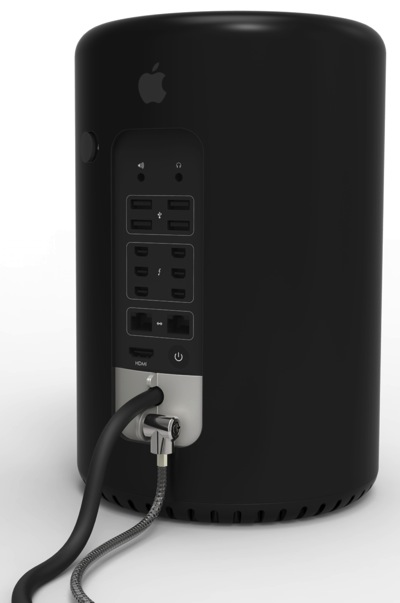
The new Mac Pro Lock Bracket with Security Cable Lock fits comfortably underneath the cylinder lid to offer complete protection of the device and its hardware components. By designing the Mac Pro Lock to fit the curvature of the new Mac Pro and the bracket plate to sit securely over the power cable the lid is now doubly locked into place. The bracket plate has an extended lip that will allow you to attach the included Security Cable Lock ensuring your Mac Pro workstation and all its impressive (and expensive) hardware are not going anywhere.
The Mac Pro Lock Security Bracket is available from MacLocks.com for $90.
| |
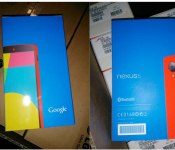
Nexus 5 might soon come in red

Currently, you can get the Nexus 5 in any color you want, so long as it’s black… or white. Those two options may have satisfied Henry Ford, but the modern consumer sometimes wants something a little racier. Twitter’s @artyomstar appears to have found a consignment of the smartphone clad in hot-rod red, something that’s sure to raise the hearts of anyone hoping to abandon monochrome devices. We can’t be certain, of course, but the images look a lot more real than the other leaks we’ve been sent, so let’s hope that LG and Google don’t make us wait too much longer before spilling the beans.
Filed under: Cellphones, Mobile, Google, LG
Via: Android Central
Source: Skazki (Twitter), (2), (3)

T-Mobile announces LG G Flex and Optimus F3Q, both coming February 5th

Welcome, LG G Flex — we’ve been expecting you. The curved smartphone has already been announced for T-Mobile, but we just didn’t have the exact pricing or availability. That information has finally come down the wires: The G Flex will be arriving at stores and online on February 5th. The total cost of the device will be $576 $672, although you can get it for nothing down and 24 monthly payments of $28 on the carrier’s Simple Choice plan. Additionally, anyone who grabs one will also get six free months of Netflix. (Update: T-Mobile originally mentioned $576 was the retail cost, but the math for monthly payments didn’t add up; we reached out to company reps who told us that this was a typo and is actually $672.)
Also announced with the G Flex today was the Optimus F3Q, an Android 4.1 Jelly Bean device that comes in misty blue and boasts a full physical QWERTY slideout keyboard. It offers a 4-inch IPS TFT display, 5MP rear camera, VGA front-facing cam, 2,460mAh battery, NFC, 1.2GHz dual-core Qualcomm MSM8930 processor, 1GB of RAM, 4GB internal storage, up to 32GB external storage via microSD and some of LG’s well-known features like QuickMemo and QuickSlide. The device retails for $312 at full price, or you can get it for 24 monthly payments of $13. You’ll also be able to pick one of these up alongside the G Flex on February 5th.
Filed under: Cellphones, Wireless, T-Mobile

Lenovo ThinkPad Yoga review: a good (if slightly heavy) Ultrabook for business users

It’s pretty clear that Lenovo made a mistake with its original Yoga laptop. Don’t get us wrong, we liked — no, loved — it, but we could never get over how awkward it was to use in tablet mode: Every time you folded the screen over, you had your fingers pressed against the loose keys on the back. It was such a glaring oversight that even other companies have taken note: first Sony with its Flip line and now Toshiba with its 5-in-1 convertible that has a reversible keyboard.
Lenovo also seems to have learned its lesson: The new ThinkPad Yoga has a “Lift ‘n’ Lock” keyboard that flattens out as you flip the screen back into tablet mode, making exposed buttons a thing of the past (mostly, anyway). It also allows for pen input — something you still won’t find on the consumer version. Even then, the ThinkPad Yoga introduces some trade-offs of its own: It’s thicker and heavier than the new Yoga 2 Pro, which doesn’t have a self-flattening keyboard, and it makes do with a not-quite-as-sharp screen. Those compromises aside, could this be the Yoga you’ve been waiting for?
Look and feel

It’s exactly what it sounds like, folks: It’s a ThinkPad that looks like a Yoga, and a Yoga that looks like a ThinkPad. Got it? Good. Here’s a quick tour. Unlike ThinkPads of yore, which had a soft, rubbery finish, the ThinkPad Yoga sports a smooth magnesium lid, though certain key details (the red TrackPoint, the glowing ThinkPad logo) have carried over. Also like older ThinkPads, it’s fairly boxy, with blunt edges and straight lines (though Lenovo did sneak in some rounded corners). All told, it’s a blockier shape than you’ll find on Lenovo’s consumer laptops, many of which have been chiseled to resemble a physical book.
We already hinted at this, but the thing that makes the ThinkPad Yoga so special — that Lift ‘n’ Lock keyboard — is also the thing that makes it so heavy. At 3.52 pounds and 0.76 inch thick, it’s noticeably heavier than the new Yoga 2 Pro, which comes in at 3.06 pounds/0.61 inch. It’s even bulkier than the last-gen Yoga 13, which weighed in at 3.3 pounds and measured 0.67 inch thick.
Even without that newfangled keyboard, the Yoga had a sturdy hinge. Which makes sense, given how much bending the thing was supposed to withstand. With the ThinkPad version, that hinge grew even bigger, as it has to support not just the folding screen, but also a series of mechanisms that help lift the platform between the keys, and then lock the buttons in place. Though the impact on the weight and thickness might not be such a good thing, a bigger hinge at least means the machine handles well. As on the other Yogas, the screen here folds back in one fluid motion, without ever feeling too loosey-goosey. Though the hinge never feels rigid, per se, you will encounter what we’d call a speed bump — a little bit of resistance to remind you that you’ve officially entered tablet mode.
And what of that novelty keyboard? As promised, the Lift ‘n’ Lock system clamps the buttons into place, meaning you can’t depress them when the machine is in tablet mode. That’s not to say you can’t still feel the individual buttons: They’re definitely there, and it’s easy to tell one from the other just by running your hands over the back of the tablet. Even so, it’s definitely a less awkward setup than on the original Yoga, where you can feel the loose buttons on the back. But is it a more elegant solution than what Sony is offering with the Flip series? Or what Toshiba has planned for its 5-in-1 convertible? It’s hard to say, particularly with regards to the Toshiba, which isn’t even out yet. But it’s a question worth asking as you consider buying the ThinkPad Yoga, a machine that’s heavier (and no less compromised) than most.

If nothing else, it does seem to us that the self-flattening keyboard would be at home on a smaller, perhaps 11-inch Yoga. Even under the best of circumstances, a nearly 13-inch tablet would be a bit unwieldy, but this one is especially cumbersome, just given how heavy it is. All of which creates something of a catch-22: It’s heavy because of that Lift ‘n’ Lock keyboard, but due to that heft, we’re less likely to use the ThinkPad Yoga as a standalone tablet.
Fortunately, there are other poses for you to choose from, including regular laptop mode, “Stand” mode (screen facing away with the keyboard tucked under) and “Tent” mode, with the laptop standing in an upside-down “V” shape. We’ve always been a fan of Stand mode for watching movies in cramped coach seats, but Tent is well-suited for presentations and videos as well. Interestingly, though Lenovo added a rubber bumper to the Yoga 2 Pro, there’s no such gasketing here. That leaves the ThinkPad Yoga’s edges exposed when you stand it on its head in Tent mode, but so far, at least, we haven’t observed any damage on our review unit.
Finishing up our tour, the ThinkPad Yoga doesn’t bring many surprises in the way of ports. For a power adapter, you’ve got the same OneLink connector found on all new ThinkPads, which has a similar shape to a common USB port. Speaking of the sort, this thing has two USB 3.0 ports — one on each side — along with a mini-HDMI socket, headphone jack, SD reader, lock slot and a volume rocker/screen-orientation button to use in tablet mode. There’s also a slot for the active pen, located on the right side, toward the front where the palm rest is.
Keyboard and trackpad

Lenovo may have messed with the X1 Carbon’s keyboard, adding an adaptive panel with controls that change depending on the app you’re using, but in the case of the ThinkPad Yoga, the company’s design team didn’t take any chances. This is the same spill-resistant, island-style layout we’ve seen on the last few generations of ThinkPads, with six rows of U-shaped “Smile” keys and a large, buttonless trackpad sitting underneath. Lining the top, you’ll see a row of function keys that serve primarily as multimedia controls (read: You’ll need to hold down the Fn button to use it for something else). Throughout, the buttons are generously sized, with only a handful of keys (the arrows, PrtSc) that appear shrunken-down. Like other ThinkPads, too, there’s a good deal of travel here and the buttons are backed up by a sturdy panel that doesn’t bend or flex as you’re pecking away. And we’d expect nothing less, really: Given how thick this machine is, relatively speaking, there’d be no excuse not to have dense, cushy keys.

We’ll admit: We were initially skeptical when Lenovo said it was moving toward buttonless trackpads for its ThinkPad line. After all, there’s something so inherently tactile about the ThinkPad experience: those pillowy keys; the rubber TrackPoint that other companies have tried (and failed) to imitate. Truly, though, the glass touchpad here is easy to use, and Lenovo has refined it so that the learning curve is even smaller than it was last year. When we tested the ThinkPad Helix, for example, we initially encountered a dead zone in the middle of the touchpad — a no man’s land between the regular left/right click buttons and the two buttons up top, which are meant to be used with the TrackPoint. Now, though, Lenovo has painted thin red lines where the two upper touch zones are, so that you don’t even have to feel your way around; you’ll know from the beginning where your finger is supposed to go.
As before, there’s also a row of raised dots right below the TrackPoint, indicating the scroll zone. Beyond that, the touchpad is also easy to press, and it makes a low-pitched sound — not unlike the keyboard itself, which also makes minimal noise. Gestures work well, too, so much so that you can pinch to zoom very slowly, allowing the font to scale up and down in small increments (because nobody likes going straight from 10-point lettering to 72-point).
Display and sound

Unlike the Yoga 2 Pro, which comes standard with a 3,200 x 1,800 screen, the ThinkPad Yoga starts with a 1,366 x 768 Gorilla Glass panel, though you can upgrade to a 1,920 x 1,080 display for an extra 250 bucks. (Our review unit had the 1080p screen.) Setting the resolution aside, what we like most is the matte, anti-glare finish, which makes it easy to view the screen from any angle, whether it be from off to the side, with the lid dipped forward or with the machine lying face-up in tablet mode. As an added bonus, the screen also appears to be coated in some sort of finish that makes it feel slightly less slick, so that there’s just the littlest bit of resistance as you swipe your finger across it (that’s a good thing, in case you couldn’t tell).
That textured finish also seems to assist with pen input, creating a more paper-like canvas on which to take notes and draw mustaches on people. Even without that matte screen, though, pen input would still be quite good, thanks to the Wacom active digitizer inside. As you might expect, pen input is pressure-sensitive, so your markings will run the gamut from fine lines to thick smudges, depending on how hard you press (and what writing implement you choose). That would be the case with any active digitizer, really, though Wacom’s tend to be particularly sensitive to differences in pressure. The one used here also picks up on even the faintest swipes, so we never had to press harder than we would with a normal fountain pen. And, in case you needed a reminder, most competing convertibles don’t support pressure-sensitive pen input at all, so if that’s a key spec for you, well, this is very good news indeed: Your only option happens to be a very good one.
Unfortunately, with as much care as Lenovo put into the display and writing experience, the speaker setup feels like an afterthought. Like, even more so than on other Ultrabooks. The volume is loud, fortunately, but at almost any sound level, the audio is hollow. Distorted. It’ll do in a pinch, but if you’re using this on the road, you’ll be glad to have access to a set of Bluetooth speakers once you get back home (that’s assuming you don’t have room in your road warrior bag for a Mini Jambox or some such).
Performance and battery life
| PCMark7 | 3DMark06 | 3DMark11 | ATTO (top disk speeds) | |
|---|---|---|---|---|
| Lenovo ThinkPad Yoga (1.6GHz Intel Core i5-4200U, Intel HD 4400) | 4,782 | 6,005 |
E1,690 / P910 / X284 |
555 MB/s (reads); 139 MB/s (writes) |
| Lenovo IdeaPad Yoga 2 Pro (1.6GHz Core i5-4200U, Intel HD 4400) | 4,676 | 5,688 |
E1,713 / P914 / X281 |
546 MB/s (reads); 139 MB/s (writes) |
| Samsung ATIV Book 9 Lite (1.4GHz “quad-core” processor, AMD Radeon HD 8250) | 2,060 | 2,814 |
E749 / P530 |
550 MB/s (reads); 139 MB/s (writes) |
| Lenovo IdeaPad U430 Touch (1.6GHz Core i5-4200U, Intel HD 4400) | 3,845 | 4,499 |
E1,448 / P742 |
113 MB/s (reads); 110 MB/s (writes) |
| Samsung ATIV Book 9 Plus (1.6GHz Core i5-4200U, Intel HD 4400) | 4,973 | 5,611 |
E1,675 / P867 / X277 |
547 MB/s (reads); 508 MB/s (writes) |
| Acer Aspire S7-392 (1.6GHz Intel Core i5-4200U, Intel HD 4400) | 5,108 | 5,158 |
E1,724 / P952 / X298 |
975 MB/s (reads); 1.1GB/s (writes) |
| Sony VAIO Pro 13 (1.6GHz Intel Core i5-4200U, Intel HD 4400) | 4,502 | 4,413 |
E1,177 / P636 / X203 |
1.04 GB/s (reads); 479 MB/s (writes) |
| Sony VAIO Duo 13 (1.6GHz Core i5-4200U, Intel HD 4400) | 4,440 | 6,047 |
E1,853 / P975 / X297 |
546 MB/s (reads); 139 MB/s (writes) |
| Sony VAIO Pro 11 (1.8GHz Core i7-4500U, Intel HD 4400) | 4,634 | N/A |
E1,067 / P600 / X183 |
558 MB/s (reads); 255 MB/s (writes) |
The unit we tested has basically the same specs as every other Ultrabook we’ve reviewed recently — namely, a 1.6GHz Intel Core i5-4200U CPU, integrated Intel HD 4400 graphics, 4GB of RAM and a 128GB solid-state drive. Even the SSD appears to be the same Samsung-made one used in other ultraportable laptops, which means that in addition to every other benchmark we ran, the read and write speeds are basically identical. In this case, that means 555 MB/s reads and 139 MB/s writes, both of which are normal for SSDs that don’t use the PCI Express standard.
In real-world use, the only area where the ThinkPad Yoga seems faster than other Haswell machines is in its boot-up time: The machine takes just seven seconds to get to the login screen, which is even quicker than we’re used to. Otherwise, the machine multitasks and launches apps with the best of them, with a strong 802.11ac WiFi connection that performed reliably on various networks (even my home router, which can be sort of poky sometimes). That’s all well and good, but it’s worth noting that the Yoga 2 Pro offers the same specs for a lower starting price of $999 (versus $1,299 for the ThinkPad Yoga with the same processor and upgraded screen). So as you’re shopping around, consider that you can get equal performance at a lower price, even within Lenovo’s own lineup. Just be prepared to give up the pressure-sensitive pen input if you decide to go that route.
|
Battery life |
|
|---|---|
| Lenovo ThinkPad Yoga | 7:32 |
| MacBook Air (13-inch, 2013) | 12:51 |
| MacBook Pro with Retina display (13-inch, 2013) | 11:18 |
| Sony VAIO Duo 13 | 9:40 |
| Samsung ATIV Book 9 Plus | 8:44 |
| Sony VAIO Pro 13 | 8:24 |
| Lenovo IdeaPad U430 Touch | 7:53 |
| Acer Aspire S7-392 | 7:33 |
| Acer Iconia W700 | 7:13 |
| Sony VAIO Pro 11 | 6:41 |
| Lenovo IdeaPad Yoga 2 Pro | 6:32 |
| Microsoft Surface Pro 2 | 6:27 |
| Dell XPS 14 | 6:18 |
| MacBook Pro with Retina display (13-inch, 2012) | 6:07 |
| Lenovo IdeaPad Yoga 13 | 5:32 |
| Dell XPS 12 (2012) | 5:30 |
| Toshiba Kirabook | 5:12 |
| Lenovo ThinkPad Helix | 5:07 (tablet only)/7:24 (with dock) |
| Lenovo ThinkPad X1 Carbon | 5:07 |
| Samsung ATIV Book 7 | 5:02 |
| ASUS Transformer Book | 5:01 (tablet only) |
| Lenovo ThinkPad X1 Carbon Touch | 5:00 |
| MSI Slidebook S20 | 4:34 |
| Samsung ATIV Book 9 Lite | 4:33 |
| Acer Aspire S7-391 | 4:18 |
| ASUS TAICHI 21 | 3:54 |
| Microsoft Surface Pro | 3:46 |
Lenovo claims up to eight hours on the ThinkPad Yoga, which is pretty spot-on: Our review unit lasted through seven hours and 32 minutes of continuous video playback with WiFi on and the screen fixed at 65 percent brightness. Though it pains us to say it, that’s actually fairly short battery life, at least compared to other modern day Ultrabooks. To be fair, it outlasts the skinnier Yoga 2 Pro by about an hour, but even then, its endurance isn’t any better than the Acer Aspire S7′s — and that guy’s thinner than them all. Considering some Haswell laptops are capable of lasting nine or 10 hours, we expected a little more here, especially since the ThinkPad Yoga is heftier than most other machines in its class.
Software and warranty
As always with the ThinkPad line, you’ll find very little third-party software pre-installed, though Lenovo does tend to throw in a bunch of its own programs. These include Live Tiles for Lenovo Settings and Support, as well as one for QuickCast, an app that lets you share files between two ThinkPads. In order for that to work, though, both machines must have the app open, and be connected over the same WiFi connection, so it’s mainly useful in offices where the IT guys have issued ThinkPads all around. Meanwhile, Lenovo Reach is the company’s own cloud service. For that, by the way, you don’t necessarily need a ThinkPad: you can use it on computers, tablets and phones, none of which necessarily has to be made by Lenovo.
As for those third-party apps, the selection is, again, quite small. On board, we have Skitch Touch, Evernote Touch, AccuWeather.com, Kindle, Zinio’s magazine store, eBay and the streaming service rara.com. And that’s it — could be much worse. As for warranty coverage, you’re looking at a one-year plan, extendable to up to five years.
Configuration options and the competition

The ThinkPad Yoga starts at $999 with a Core i3 processor, 4GB of RAM and a 128GB SSD. From there, you can add a Core i5 or i7 processor, up to 256GB of storage ($150) and, of course, that 1080p screen for an extra $250.
As we’ve already hinted, the ThinkPad Yoga has some competition from within Lenovo’s own lineup. On the off-chance you find the whole convertible thing overrated, the newly refreshed X1 Carbon offers a higher-res 2,560 x 1,440 screen option, and weighs much less (around three pounds with a touchscreen). That said, for $1,299 and up, you’re giving up that versatile, shape-shifting design, and won’t get the active digitizer, either.
It’s a similar story with the Yoga 2 Pro, Lenovo’s flagship consumer Ultrabook. It starts at $1,199 (currently on sale for $999) with a 3,200 x 1,800 screen and the same Core i5 processor used in our ThinkPad Yoga test machine. All told, then, it has a sharper screen with a thinner, lighter design and similar performance (minus about an hour of battery life). Still, the lack of pen input is likely to put off some would-be buyers.

Whatever you do, we suggest you stay away from the ThinkPad Helix, if only because it’s still running 2012-era Ivy Bridge processors. It’s a shame, because in every other respect, this is the ThinkPad Yoga’s closest corollary: It has a 12-inch screen that detaches from the keyboard dock, and can be inserted with the screen either facing the keyboard or facing outward. Oh, and it supports pen input too, for a change.
Otherwise, we’re left with a mishmash of laptops that fall into one of two categories: business Ultrabooks that don’t bend and contort the way the Yoga does, and consumer models intended for a totally different audience. On the business side, you might want to check out the Dell Latitude 7000 series, available in 12- and 14-inch screen sizes, whereas HP, meanwhile, just announced the 14-inch EliteBook Folio 1040 G1. That machine doesn’t support pen input. None of these do, actually. In case you were wondering.
As for consumer models, our reigning favorites are the Samsung ATIV 9 Plus, the Acer Aspire S7, the Sony VAIO Pro 13 and the Dell XPS 12. Of the bunch, incidentally, only the XPS 12 has a convertible design (in fairness, it does many of the same things as the Yoga series, just not pen input). Sony also has the convertible Flip series — and believe it or not, these do support pen input — though we’d stick to the smaller sizes, if possible (read: the 11– and 13-inch models).
Wrap-up

More Info
The ThinkPad Yoga’s self-flattening keyboard is a neat idea. We’d just rather see it on a machine that was smaller and lighter. As is, the so-called Lift ‘n’ Lock system comes with a massive catch-22: It makes the entire laptop thicker and heavier, and therefore more cumbersome to use in tablet mode. Which… sort of defeats the purpose of having a laptop that’s more comfortable to hold as a standalone slate.
In the meantime, though, we’re still inclined to recommend the ThinkPad Yoga, if only because this is one of the only Ultrabooks we know of (business or otherwise) that allows for pen input. And what a nice experience it is, too: The Wacom digitizer allows for nuanced pressure sensitivity, while the display’s matte finish makes for some wide viewing angles. The screen is more pleasant to touch as well, thanks to that slightly textured coating.
All told, you can easily find Ultrabooks that offer sharper screens, longer battery life and comparable performance — sometimes for about the same price. If pen input is important, though, the ThinkPad Yoga is by far your best option, and lucky for you, it also happens to be a solid performer in its own right.

Sprint now lets you buy Pogoplug cloud storage through your phone bill

Sprint hasn’t had a cloud storage service to counter offerings from AT&T and Verizon, but it’s catching up quickly through a new deal with Pogoplug. The partnership makes it easier for Sprint customers to grab the Pogoplug app, giving them a fast track to 5GB of free online storage. They also won’t have to jump through hoops if they need more space — they can now pay for Pogoplug’s $5 unlimited plan through their phone bills. The offer won’t matter to Sprint fans who already rely on other cloud services, but it should help newcomers who don’t know where to begin.
Filed under: Cellphones, Storage, Internet, Mobile, Sprint
Source: Sprint

Red Nexus 5 may soon become a reality
A few days ago, rumors surfaced with a bogus rendition of colorful Nexus 5 variants. While it seemed as though the rumors were squashed, some more photos leaked from Twitter regarding the Nexus 5 in bright red.
Twitter user Skazki (@artyomstar) leaked the images at around 8AM this morning, and they actually seem legitimate. Not only did the front and back images on the box leak, but the bar code on the bottom also specifies the color.
Don’t get us wrong – this could absolutely be a hoax. But if it is, somebody went to great lengths to trick the heck out of everybody. Here’s to hoping they’re officially announced soon!
 Via: Android Central
Source: Skazki (Twitter) 1, 2
The post Red Nexus 5 may soon become a reality appeared first on AndroidGuys.
 AIVAnet