


Teardown of Original Macintosh 128K Shows How the Mac Has Progressed [Mac Blog]
In honor of the Mac’s 30th anniversary today, iFixit has partnered with Cult of Mac and The Vintage Mac Museum to tear down an original Macintosh 128K. Analysis of the well-known vintage hardware obviously reveals no surprises, but does highlight just how far technology has come in the past 30 years.

Thirty years of progress yields some impressive changes to input peripherals. Keyboards and mice are now wireless, thinner, and comprised mainly of sturdy, non-yellow metal.
And we now have arrow keys! In typical Apple fashion, they ditched the arrows on the original Mac to force people to use the mouse, a strange new accessory at the time.
The engineering of the Macintosh 128K reflects the do-it-yourself culture from which this Mac emerged. Unlike the current Mac models, the 128K is relatively easy to repair, earning a repairability score of 7 out of 10. Most main components, with the exception of RAM, are user replaceable and easy to access since adhesive was not used in the assembly process. Deep-set case screws and electrocution hazards from power supplies are the biggest hindrances to a self-repair.
Originally released as the Apple Macintosh, the Macintosh 128K was unveiled thirty years ago by Steve Jobs on January 24, 1984 at the company’s annual stockholders meeting. The presentation showcased the computer’s then revolutionary graphical UI and speech technology.
     |

Incipio and AT&T Debut ‘Cashwrap’ iPhone Payment Case With NFC [iOS Blog]
Incipio and AT&T have partnered to produce the Cashwrap Mobile Wallet Case, which is an iPhone case that supports NFC and the Isis Mobile Wallet, allowing its users to pay with their smartphones at participating stores.
The Isis Mobile Wallet is an app designed to let users make payments with their phones. The mobile app works with Android apps without the need for a case, but because the iPhone does not support NFC, customers who wish to use Isis will need the Cashwrap case.

Using the Incipio Cashwrap™ Case, consumers with an iPhone 4, 4S, 5, and 5S can utilize the Isis Mobile Wallet® to pay and save at stores with just a tap of their smartphone. The Isis Mobile Wallet holds participating payment and loyalty cards, as well as offers. The Incipio® Cashwrap™ Mobile Wallet Case is the only Near Field Communication (NFC) mobile solution for iPhone 5/5s.
The case comes in a variety of color combinations and includes both a secure element microNFC and a Micro-USB cable. Users will also need the free Isis app and a supported account from Wells Fargo, Chase, American Express, and more.
The Cashwrap Mobile Wallet Case can be purchased from the AT&T website for $69.99 and will be in AT&T stores beginning on January 31.
| |
Windows 8.1 update may speed up budget tablets

We may not have to wait long to get that Windows 8.1 interface tweak, after all. ZDNet hears from sources that Microsoft wants to release the upgrade, tentatively named Update 1, on March 11th. The patch may let you do more than pin Windows Store apps, too: Redmond’s developers will reportedly be able to optimize Windows’ memory and storage footprints for lower-end tablets. ZDNet also reports that the software will be more business-friendly, though it’s unclear how. We wouldn’t be surprised if the launch details change, but it would certainly be nice to get a significant Windows refresh at the same time that we’re picking up Titanfall.
Filed under: Software, Microsoft
Source: ZDNet
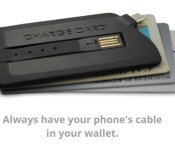
ChargeCard MicroUSB review
Hello Nomad was awesome enough to send us out a ChargeCard MicroUSB Card. Designed for your smartphone, it is small enough to fit in your wallet’s credit card slot. With the ChargeCard you’ll have a Micro USB Cable at the ready for all of your charging/data needs.
Usability/Practicality
The ChargeCard is very practical and just as useful as a normal cord. Provided you have your smartphone and the card together, you can charge via a computer’s USB Port, a portable external battery charger, etc. A downside, however, is that certain devices that use a protective case (OtterBox Defender), may be cause for nuisance.
Design & Build Quality

The ChargeCard’s build quality is wonderful; they’re built to last. Speaking of which, if you have a quality issue with your ChargeCard, simply contact Nomad, and they will set you up with a replacement. These guys are guaranteed for life!
Overview
I was able to use my ChargeCard w/ a USB power source to charge my cell phone, my Bluetooth accessories, and much more. No issues whatsoever. I was also able to use the ChargeCard as a data cable when connected to a PC.
The ChargeCard is easy fun to use, and you can get yours for $25.00. I recommend you also check out Nomad’s ChargeKey, a Key Sized Data/Charging Cable.
The post ChargeCard MicroUSB review appeared first on AndroidGuys.

The Engadget Podcast is live at 12PM ET!

Your intrepid Engadget Podcast trio braved the Hudson River and New York City’s snow-covered subway platforms to bring you today’s 381st episode of the show, and we’re even doing it early! Join Joseph Volpe, Terrence O’Brien and Ben Gilbert as we look back at the last week in news and look forward to what might be eaten for lunch shortly following the show. A sandwich? Burritos? The future is unknown.
Join us below for the live broadcast, won’t you?
Filed under: Podcasts
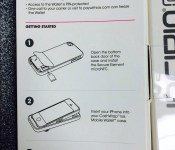
This case will turn your iPhone into a mobile wallet for $70

After a brief tease earlier this week, Incipio has officially unveiled its iPhone mobile payment case. The Cashwrap Mobile Wallet gives most iPhone users NFC payment support at any place that accepts Isis; beyond the case, all you need is a compatible account and a free app. If you’re eager to stop paying with plastic cards, the Cashwrap should be available online for $70. AT&T is only due to launch the peripheral at retail on January 31st, although the recent in-store sighting hints that you might have a chance at scoring a retail unit ahead of schedule.
Filed under: Cellphones, Peripherals, Mobile, Apple, AT&T
Source: BusinessWire
Apple May Be Forced to Unlock 4G on All Compatible Belgian iPhones [iOS Blog]
Belgian Deputy Prime Minister Alexander De Croo has announced federal government approval of a bill that prevents electronics manufacturers from blocking 4G on compatible devices (via De Standaard). The bill was proposed by Economy Minister Johan Vande Lanotte in response to consumer complaints, and as a result, Apple may be forced to enable 4G connectivity on all 4G-compatible iPhone handsets sold in Belgium, regardless of carrier.

The ruling marks a big win for Belgian consumers, who complain Apple is playing favorites by only enabling 4G access for customers who purchase iPhones from the manufacturer’s commercial partner Mobistar. Mobistar recently launched its 4G network and its coverage is still expanding.
Other carriers like Proximus and Base have active 4G networks, but have been unable to secure 4G approval from Apple, and customers who purchase a 4G-capable iPhone 5/5s/5c from these other carriers are limited to 3G service. This block only affects iPhone owners as Android owners with a 4G handset can access 4G services on all three major wireless carriers.
Apple may face stiff penalties if it fails to comply with the terms of this bill.
(Thanks, Pauline!)
| |
Nokia’s dumbphones face an uncertain future at Microsoft

“Year-on-year decline.” Those are words that no company looks forward to publishing in its earnings reports, but unfortunately we’ve seen them printed more often than not on Nokia’s quarterly statements. Though there have been a few ups and downs, struggling profits and sales have been a general concern for a long time, and unfortunately this quarter’s earnings report did little to soothe our worries; Nokia sold 600,000 fewer Lumias than the previous quarter. Now that Microsoft’s acquisition of Nokia’s devices and services division is nearly complete, much of our focus has turned to how the merger will affect the Lumia lineup of Windows Phones. An even bigger mystery at the moment, however, is what Microsoft will choose to do with the rest of Nokia’s phones — namely, the Mobile Phone division, which consists of the company’s basic featurephones and the Asha lineup of advanced featurephones, none of which run Windows Phone.
Just after Microsoft announced its intent to acquire the phone maker, Nokia insisted that the division wasn’t going anywhere; it has “substantial global reach … and a strong customer base,” but in emerging markets like India and China, it faces intense competition from fully functional smartphone platforms for a similar cost. Even worse, as we learned in yesterday’s report, sales from this division were flat — and as the competition gets heavier, it’s going to get worse, not better. Is it worth it for Microsoft to try saving a lineup of handsets that don’t feature Windows Phone OS? Or does it make more sense to push lower-end Lumia devices to cater to the next billion smartphone users?
We’ve seen several companies make huge moves to compete in emerging markets, where even a difference of $10 or $20 can have a significant impact.
In yesterday’s report, Nokia stated: “Our Mobile Phones net sales were affected by competitive industry dynamics, including intense smartphone competition at increasingly lower price points and intense competition at the low end of our product portfolio.” In other words, an influx of cheap Android and Firefox OS devices is making it difficult for Nokia’s lower-end devices to remain relevant in fiercely competitive countries like India and China.
The Ashas, which bridge the divide between featurephones and smartphones, range from $70 to $100; however, Android devices like the Galaxy Pocket cost around $85 in the same markets and offer similar specs with a much wider variety of apps. Firefox OS devices like the ZTE Open are now available for around $75. Heck, even the Lumia 520, which uses the Windows Phone platform, costs roughly the same as an Asha.
We’ve seen several companies make huge moves to compete in emerging markets, where even a difference of $10 or $20 can have a significant impact. Unfortunately, this means it’s much more difficult for the Asha lineup to compete today than just a couple years ago when they were first introduced. At the time, the concept was sound — if you offer a featurephone with smart abilities like a developer platform, messaging/email, social networking and so on, the customers will come. But today, as other platforms like Android and Firefox begin to flourish in emerging markets for the same prices, developers have less incentive to focus on making apps for Asha products, and consumers will become more hesitant to buy into the ecosystem.

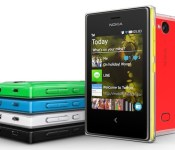
There’s still a place for the simplest of phones. The $20 Nokia 105, for instance, is a basic candybar phone that offers a few nice extras like FM radio, flashlight and (best of all) month-long battery life. But what about the $85 Nokia 301 (pictured above), which offers a camera, HSPA connectivity and Mail for Exchange? How about the $160, aluminum-clad Nokia 515? We’re not so sure there’s a place for them in the years to come. It’s fantastic to see a lot of variety in the low end, but these handsets won’t be able to stay afloat in a sea of similarly priced phones that have more capabilities.
These handsets won’t be able to stay afloat in a sea of similarly priced phones that have more capabilities.
Nokia states that featurephones won’t be going away under Microsoft’s reign, and everything under the Mobile Phone umbrella will continue on. But outside of the Nokia 105, we just don’t see how selling a featurephone that costs more than $60 makes sense — and if Microsoft continues the Asha lineup, it would have to add even more functionality in order to compete with phones that boast full smartphone platforms. This is where a device like the oft-rumored Normandy would play an interesting role, since it’s reportedly an Asha-class phone that features a forked version of Android. However, Microsoft may not be so keen on Nokia launching the phone for that very reason.
Regardless of what happens to the Normandy in the end, we doubt it will have much of an effect on Microsoft’s end goal — to help Windows Phone blossom and grow. The best place to do that right now is in emerging markets, where it’s finally becoming affordable to get a smartphone. Nokia created a lot of momentum with low-end smartphones like the Lumia 520, which Softpedia claims was the best-selling Windows device in the world in September. Microsoft should take advantage of those successes instead of focusing on products that deter from its objective.
Filed under: Cellphones, Mobile, Microsoft, Nokia
Sony teases ‘slimmest’ PlayStation device coming to the UK on January 30th

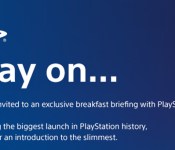
We’ve had a lucky run with product teasers recently. Instead of being totally vague, they’ve deliberately given us some inkling of what to expect, and we’re hoping that the Sony flyer above — summoning us to a PlayStation event in London — does so too. We’re told the briefing will introduce UK journalists to the “slimmest” PlayStation device, but we’re not told that we’re definitely going to witness the launch of a whole new product, which — to our minds, at least — suggests we might be looking at the UK launch of the PlayStation Vita TV (though it’s probably just a new Vita model). At just 13.6mm thick, the Vita TV is the thinnest PS device that we know of and it’s currently only available in Japan, so a launch in the UK (or anywhere outside of Asia) could potentially be a big deal. We’re gonna go ahead and rule out a super slim PlayStation 4 already, but the other alternative is that this could be the UK launch of the slimmer version of the PlayStation Vita handheld — in other words, the 2013 Japanese model, which has an LCD screen instead of OLED, better battery life and is just 15mm thick (20 percent skinnier than the current UK model). In any case, we’ll be there at the event on January 30th, with a flask of coffee and a pair of calipers.
LG G Pad 8.3 with LTE could be on its way to Verizon

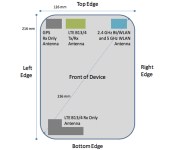
With LTE speeds putting coffee-shop WiFi to shame, many tablet makers now produce in pairs: one model with WiFi, and another with extra 4G radio and SIM slot. Not LG’s G Pad 8.3, though, as both skinned and Google editions of the slate spurn LTE for the sake of their ol’ buddy WiFi. It appears, however, that Verizon may’ve persuaded LG to pull together a cellular version of the G Pad for its network, if puzzle pieces from a recent FCC filing end up fitting together as we’d expect. All we know from the official docs is that an LG tablet, model number VK810, has been approved for the US market with LTE support for Bands 4 and 13 — Verizon’s magic numbers. As PhoneArena points out, the mystery tablet’s dimensions are more or less identical to those of the G Pad 8.3, which is where the trail ends. So, it’s more than likely we’ll see LG launch a 4G model with Big Red soon, but if being tied down ain’t your bag, then at least let it’s existence foster hopes of a carrier-agnostic LTE model sometime later.
Filed under: Tablets, Wireless, Mobile, Verizon, LG
Via: PhoneArena
Source: US FCC
 AIVAnet