



IRL: the iPad Air

By now, we’ve written nearly everything there is to say about the iPad Air, but that doesn’t mean we can’t revisit it here in “IRL.” In particular, our own Jon Fingas bought one to see if it was lighter and faster than his third-gen model. Surprise: it is.
 I like big-screen tablets, but I’m not a fan of the bulk that comes with them — a 1.5-pound slab isn’t especially comfortable to hold during an hour-long reading session. That’s why I leaped on the iPad Air when it launched this fall. In theory, it’s a large tablet that’s as nice to hold as more compact devices, including the iPad mini. But does it really defy the laws of physics?
Almost. The Air isn’t quite weightless, but it’s still wonderfully compact and light. I have no problems holding the tablet while I’m reading a couple of book chapters or playing an involving game. I can even thumb type with it, which wasn’t realistically possible with previous full-size iPads. It’s hard to imagine going back to any heavier slate after this; I’d rather carry an Ultrabook instead, since the added weight at least comes with more functionality.
The Air is also one of the quickest mobile OS tablets I’ve used. Web browsing is about as fast as you’d expect from a desktop, and most current apps don’t seem to faze it. I just wish developers would make better use of the A7 chip; right now, the best showcases for its processing power are media editing tools and intensive games like Infinity Blade III. iOS 7 runs smoothly and is certainly easy to use, although I’ve very occasionally seen the iPad crash without warning. It’s clear the software is still rough around the edges.
If there’s any major concern, it’s simply that the iPad Air won’t sway those who want a more PC-like experience. If you want to view more than one app at a time, you’ll have to get a suitably equipped Android or Windows tablet. There also aren’t any widgets, live tiles or other elements that would make better use of the screen real estate. While the iPad is excellent at most everything it does, there’s room for it to do more.
– Jon Fingas

Tesla’s toy boat: A drone before its time
Welcome to Time Machines, where we offer up a selection of mechanical oddities, milestone gadgets and unique inventions to test out your tech-history skills.

The military complex has certainly embraced the concept of telerobotics, especially in the use of drones, but luckily the technology has also led to other, more peaceful applications. Drones have been used to entertain, take on laborious tasks and even deliver packages (and burritos!). As we pursue the development of remotely controlled and autonomous craft, we must tread carefully or suffer the same fate as the fabled Icarus. Nikola Tesla saw both the terrible as well as the beneficial consequences for this technology when he debuted the “remote control” and the jury is still out as to whether we’ll succumb to a dystopian Terminator-style future or reach a peaceful stasis, where we harness the usefulness of robots and autonomous devices, and avoid the worst-case scenarios. Head past the break for more of the story.

Nikola Tesla’s Remote Control Boat
Tesla once said, “The world moves slowly, and new truths are difficult to see.” It was his way of responding to the crowd’s stunned disbelief upon viewing his scientific wizardry at New York’s Madison Square Garden in 1898. Using a small, radio-transmitting control box, he was able to maneuver a tiny ship about a pool of water and even flash its running lights on and off, all without any visible connection between the boat and controller. Indeed few people at the time were aware that radio waves even existed and Tesla, an inventor often known to electrify the crowd with his creations, was pushing the boundaries yet again, with his remote-controlled vessel.

Tesla’s presentation, which was part of an Electrical Exhibition, was decried as magic by some, but it’s unsurprising that others would focus on its potential as a weapon. It wouldn’t be the first time that well-known inventors had made a foray into war devices. Thomas Edison had been involved in the Sims-Edison Electrical Torpedo Company and in 1892 demonstrated the merits of its wire-guided torpedo. This 31-foot-long device was powered and controlled through a hardwired tether and manipulated by a remote on-shore operator, with the goal of harbor defense by delivering an explosive payload into invading vessels. A few months prior to Tesla’s radio-controlled presentation, W.J. Clarke, general manager of the US Electrical Supply Company, made use of radio waves for yet another warlike implementation. He proceeded to blow up toy ships by wirelessly detonating floating mines with radio waves, cribbing the basic design for his machine from Italian inventor Gueglielmo Marconi.
 When Tesla unveiled his own invention at the 1898 exhibition, the display consisted of an indoor pool, a 4-foot-long miniature ship and a control box equipped with various levers. The deck of the ship was studded with antennae for receiving signals, with the tallest located in the center and two others topped with small light bulbs. The lights would help an operator gauge the position and direction of the vessel in the cover of darkness. Its motion was driven by a screw propeller, with a keel and rudder situated in the standard positions for a nautical vessel. Inside the boat’s hull, there was an electric motor driving both the propeller and rudder, a storage battery and a mechanism for receiving the radio signals sent from the control box. Without the limits of a wired connection between the controls and the remote device, Tesla’s invention would allow operators to effect changes in speed and direction, and control on-board gadgets (such as lights or moving parts), even from a moving vehicle.
Although newspaper headlines chose to focus on the use of Tesla’s device as a wirelessly controlled torpedo, his plans for the invention were not wholly aimed at warfare. In a 1900 article from Century magazine, Tesla described a moment of self-realization, seeing his own mind and body as an automaton, reacting to external stimuli and situations. He stated that contemporary automatons were simply using a “borrowed mind,” and responded to orders from a distant and intelligent operator. Tesla believed that one day we may be able to endow a machine with its “own mind,” where it, too, can act on environmental stimuli of its own accord. According to Margaret Cheney’s Tesla: A Man Out of Time, when asked about the boat’s potential as an explosive-delivery system, Tesla retorted, “You do not see there a wireless torpedo; you see there the first of a race of robots, mechanical men which will do the laborious work of the human race.”
Inhabitat’s Week in Green: Passat BlueMotion, jellyfish drones and a pig-cloning factory
Each week our friends at Inhabitat recap the week’s most interesting green developments and clean tech news for us — it’s the Week in Green.

The North American International Auto Show kicked off last week in Detroit, and Team Inhabitat went to the Motor City for an early look at the industry’s eco-friendly offerings. Topping the list at this year’s show is Ford’s C-MAX Solar Energi, a hybrid electric car with a set of high-efficiency SunPower photovoltaic panels installed on its roof. Also in Detroit, Audi unveiled its Allroad Shooting Brake Concept, a compact plug-in hybrid that’s designed to handle “light off-road conditions.” And Volkswagen showed off its new Passat BlueMotion concept, which boasts the highest highway fuel economy rating of any non-hybrid mid-size sedan. Auto companies have good reason to be bullish on eco-friendly cars — just ask Tesla. The electric automaker recorded its highest sales figures in history in the fourth quarter of 2013. But despite recent advances in fuel efficiency, a new University of Michigan study makes a case for ditching personal cars altogether, proving that cars are the most inefficient form of transportation.
Wind farms are great and all, but they’re big and expensive to operate. Wouldn’t it be great if we could use a shrink ray like in Honey, I Shrunk the Kids and scale windmills down to a tiny size without losing much efficiency? Researchers at the University of Texas are working on producing teeny-tiny windmills that are just 1.88mm wide and could be used to charge mobile devices. Meanwhile, Spain is embracing wind energy on a large scale. Last year, the country generated 21.1 percent of its energy from turbines, making wind Spain’s top energy source for 2013. In California, an enormous 579MW solar power plant just went online. The plant will ultimately provide enough electricity to power 255,000 homes. And in Las Vegas, a new grove of solar trees is providing the energy to light the “Welcome to Las Vegas” sign.
The big news out of Silicon Valley last week was that Google had acquired Nest, the maker of energy-saving thermostats for $3.2 billion. The acquisition is a big validation for green tech, and it instantly made Nest a household name. Google’s experimental X Lab also made headlines by unveiling a smart contact lens that can monitor the glucose levels of diabetics. In other science and tech news, a South Korean designer unveiled a conceptual scuba mask that turns divers into human fish, and researchers at NYU created a tiny drone that mimics the movement of a jellyfish. Also in the “biomimicry” file, the company Bioglow has taken a cue from fireflies to create the world’s first light-producing plant, and our resident biomimicry expert Dr. Tamsin Woolley-Barker explained what the humble water flea can teach us about innovation. In a particularly disturbing development, the world’s first cloning factory is now open for business in China — and it clones 500 pigs a year. The company’s cafeteria serves as a testing ground for “genetically enhanced” meats, vegetables and even yogurt. In an attempt to learn more about the mysterious colony collapse disorder affecting bees, scientists are planning to fit 5,000 honeybees in Australia with tiny sensors to study how environmental changes impact the behavior of bee colonies. Japan is getting creative in its effort to remove the manmade debris that is cluttering up outer space — the Japan Aerospace Exploration Agency is preparing to launch a satellite equipped with a 300-meter magnetic net that will sweep up space junk. Boeri Studio shared with Inhabitat new photos of its vertical forest skyscraper nearing completion in Milan, and in anticipation of summer, the company Netatmo recently produced “June,” a smart bracelet that monitors UV exposure, letting its wearer know when they’ve soaked in too many rays.
Filed under: Misc

Paramount now releases movies only in digital form

While it’s no secret that film-based movie distribution won’t last much longer in the US, the big Hollywood studios haven’t officially completed their transition to digital. However, one of them may have quietly made that leap — sources for the LA Times claim that Paramount is the first large studio to send its major movies (not just smaller flicks) to American theaters solely in digital form. Anchorman 2 was reportedly the company’s last high-profile analog release, while The Wolf of Wall Street was the first to go all-digital. Paramount hasn’t commented on the apparent leak. If the report is accurate, though, the 8 percent of US theaters without digital equipment now have little choice but to upgrade if they want to offer the same selection as most of their peers.
Filed under: Home Entertainment, HD
Source: LA Times
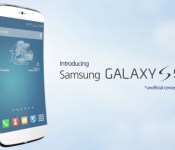
[RUMOUR] Samsung Galaxy S5 may have a more compact, 2,900mAh Li-ion Battery
 Seeing as the Samsung Galaxy S4 has sold well over 40 million handsets over the past year, it’s no surprise that its predicted successor, the Samsung Galaxy S5, is one of the most anticipated Android smartphones of the next few months. There have been precious few leaks regarding the devices, though we did get what appeared to be a sneak peek at some of the specifications just last week. One notable omission from that list of specifications was battery capacity, however, thanks to a tipster who spoke to Phone Arena, we might just have a better idea of what the S5′s battery will be like.
The tip says that the S5 will still have a Li-ion based battery with a capacity of 2,900mAh, a nice bump from the 2,600mAh battery in the S4. The interesting part about the tip isn’t the increase in battery size, which is expected seeing as the S5 is expected to have a 2K resolution display, but rather that the battery is able to store 20% more battery capacity than an older Li-ion battery of the same size. What this means is that while the capacity of the battery will have increased in the S5, the physical size of the battery may not have changed.
This can only be a good thing as the 5-inch screen of the S4 was already perilously close to phablet country, so if this new battery is able to help keep size down, then perhaps the device won’t be much bigger than the S4. What do you think about this news: are you satisfied with the battery capacity rumoured for the Samsung Galaxy S5? Let us know what you think in the comments.
Source: Phone Arena
[RUMOUR] Is Samsung preparing a curved tablet, the Samsung Galaxy Tab Round?
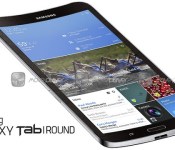
 I think that most people can agree that the Samsung Galaxy Round was a confusing device at best. Essentially a more expensive, slightly melted Galaxy Note 3 without a stylus, it failed to capture as much attention as its curved smartphone competitor, the LG G Flex, and its fancy self-healing material. Further evidence of this is the fact the G Flex’s reach is now spreading around the globe including carrier support, whereas the Galaxy Round appears to only be available through specific retailers. But was Samsung looking at the wrong form factor? Korean news site MovePlayer seems to believe that Samsung is actually now working on a curved display tablet called the Samsung Galaxy Tab Round.
 Part of MovePlayer’s argument for the existence of such a device is a patent filed by Samsung which includes the above diagram; the diagram depicts a tablet-sized device with a very slight curvature. It’s hard to guess which display size Samsung would try this design on seeing as they have Galaxy Tab devices with display sizes of 7, 8, 8.4, 10 and 12.2-inches, but we’ll have to see if this rumour holds any water first. Personally, I think the curved display design could work on a smaller tablet, like a 7 or 8-inch display, since this could still be held in one hand.
What do you think about this rumour of a Samsung Galaxy Tab Round? Is there any chance that Samsung is actually making one of these devices after the less-than-ideal launch of the Galaxy Round smartphone? Let us know what you think.
Note: There is a poll embedded within this post, please visit the site to participate in this post’s poll.
Source: MovePlayer via Android Ice Cream Sandwich

The Moody app helps students access Moodle on your Android Device
 Moodle is an online teaching platform that allows teacher to provide students with content in the manner they wish, but until now, there has been no mobile interface to interact with the platform. I recall using Moodle during my time at university and I remember one of my greatest gripes was that there was no mobile app to help me access all the content, relegated instead to the confusing layout of Moodle 2. Thankfully, firetrap over at XDA has plugged this gaping deficiency for students who use Moodle with the Moody app, which includes features such as:
- Access to courses main contents
- Notifications about new contents
- Send Messages to contacts
- Access to Cloud Storage (Dropbox/Google Drive)
- Device Hardware Integration
- Search inside courses
That sounds like pretty much all you’ll want to do with Moodle while you’re on the move, and I can’t express how jealous I am that this app exists now and not when I was studying. The app is compatible with Moodle 2.2 and newer, though the app is only in alpha at this point. That said, it will likely be a godsend for some students who have been pining for the convenience of an app or often like to sleep in. You can check out the current version of Moody that’s out now on the Play Store; links below.
Any students out there who have been waiting for an app for Moodle? Let us know if you try it out
Source: XDA News
Application: Moody
Price: Free

The 32GB Nexus 10 is out of stock on the U.S. Play Store; cue Nexus 10 refresh Rumours
 It seems like at the very mention of any activity regarding the Nexus 10, a whole slew of rumours begin with trigger-happy fans and writers, myself included, excitedly trying to predict when Google will replace its aging Nexus 10 tablet. Well, there is about to be more fuel added to the flames as the 32GB Nexus 10 is out of stock on the U.S. Play Store (note that it will probably still be in stock in Play Stores around the world). The 32GB Nexus 10 now joins its 16GB counterpart in the ‘out of stock’ category on the U.S. Store which for some would appear to imply a new version of the tablet is nigh.
Unfortunately, there’s little to suggest that the inventory of the Nexus 10 has anything to do with future product release; while you might argue that the Nexus 4 going out of stock heralded the release of the Nexus 5, we had heard a fair amount about the Nexus 5 through unintentional (or intentional) leaks leading up to the release. That’s not to say that this isn’t an indication though, as we could be savouring a new Nexus 10 in a few weeks’ time, but it pays to be cautious.
I guess we’ll just have to be stuck with waiting till Google decides to ‘accidentally’ drop some video of the new Nexus 10. Who thinks the 32GB Nexus 10 going out of stock is an indication of things to come? Let us know what you think.
Source: Google Play via Android Police
Nintendo Finally Considers Smartphone Move After Third Straight Annual Loss
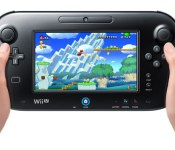
Nintendo president Satoru Iwata stated in a press conference that the company is now considering a “new business structure” that involves smart devices, reports Bloomberg. 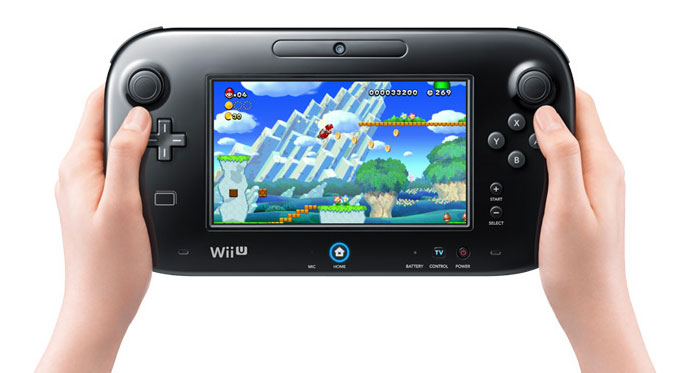 Wii U GamePad controller
The news comes as Nintendo reported a third consecutive annual loss, slashing the global sales forecast for its flagship Wii U game console from 9 million units to 2.8 million consoles. The company also scaled back its expectations for its 3DS portable game console from 18 million units to 13.5 million, with Iwata also claiming that there are no short term plans to reshuffle management.
“We are thinking about a new business structure,” Iwata said at a press conference yesterday in Osaka, Japan. “Given the expansion of smart devices, we are naturally studying how smart devices can be used to grow the game-player business. It’s not as simple as enabling Mario to move on a smartphone.”
Nintendo has faced fierce competition from mobile platforms in recent years, with App Annie recently finding that consumer spending on games for iOS and Android rose to 4x that of dedicated gaming handhelds. In 2010, Iwata reportedly told his senior executives to regard Apple and its devices as “the enemy of the future”, and also stated to CVG last August that he would “never think about providing [Nintendo’s] precious resources for other platforms at all.”
Investors have also called for Nintendo to develop titles for iOS and other platforms in August 2011 after lower-than-expected demand for the 3DS. Alternatively, some also suggested that Nintendo should “buy its way into” the smartphone platforms by acquiring companies and technology or developing their own. Iwata’s newest comments reveal that Nintendo is now seriously considering supporting smartphones in some manner in the near future.
     |

Off-Grid: EnerPlex Kickr IV Portable Solar Panel, Jumpr Slate and More
I have been keeping an eye on the solar powering side of mobile tech for a couple of years. I was never impressed enough with price tags and their delivery systems when they first started popping up. As with all technically aspects of our lives, technology improves and implementation gets better. Along with those aspects, the price tag drops from a high-end specialty item to an affordable option for mass consumption. Until more recently, a large majority of the solar options took hours to charge up a built in battery pack that then in turn you used to charge your device. There was a shift to direct charging panels, but their charge times were still way too long and their cost was still pretty high. Towards the middle-ish of last year, and definitely more apparent at CES 2014, I started to see more solar panel options that offered higher watts and amps that were able to charge up phones and tablets in a more reasonable amount of time. Ascent Solar is one of those companies, their brand being EnerPlex, I have been checking in with over the last year and I am happy to report that they have some options that I think it is about time we share.
Enerplex has a number of direct charge panels, battery packs, bags and cases available for you to pick up. Each has its own unique look and charging ability.
In the Kickr line, which is the name of the portable solar panel charging line, there is the Kickr I, which puts out 1.75 Watts Unregulated, 1.5 Watt, / 5 Volt System Regulated at 0.3 Amp Output. Then you have the Then you have the larger Kickr II, which puts out 3.5 Watts Unregulated, 3.0 Watt /5 Volt System Regulated at 0.6 Amp Output. Then we have the big boy, the one we are taking for a run, the Kickr IV. Don’t ask me where the Kickr III went, it isn’t listed.
Meet the Enerplex Kickr IV
 Power:
6.5 Watts Unregulated
6.0 Watt, 5 Volt System regulated
1.2 Amp Output (STC)
Cell Type: Copper Indium Gallium di-Selenide
Open-Circut Voltage: 9V
Conversion Efficiency: 10.5%
Weight: .68lbs / .31kg
Size Folded: 225mm (8.8˝ ) x 185 mm (7.3” ) x 18mm (0.71” ) [images in gallery below]
Size Open: 774mm (30.5˝ ) x 185mm (7.3” ) x 2mm (0.08” ) [images in gallery below]
In the Box:
- The Kickr IV
- Multi tip USB Cable (micro, mini and 30-pin)
- 8 multi-colored LARGE hair ties (best description I have)
- Instruction manual
The weight and the design are exactly what you would notice when you first pull it out of the box. It is extremely lightweight and flexible. You don’t feel like you need to baby it to keep it safe from harm. The outer shell is a plastic/rubber material that is soft to the touch and easy to grip. At one end you have the electronics needed to take the solar rays and convert them through to a standard USB out port.

 The panels themselves are all neatly contained in a fold up fashion. Simply, unfold it to expose the panels to the sun and plug in your cable and start charging. On the top and the bottom they have placed 2 sets of grommets for you to use to hang it from your tent, a tree branch, your backpack or wherever else you see fit to dangle it in front of the sun if you aren’t looking to just toss it on a table or the ground.

 The real question though is does it work. According to their outline, the Kickr IV can fully charge an iPhone 5 in 1.4 hours, a Samsung Galaxy S III in 2.1 hours and a Google Nexus 7 in 4.4 hours.
 Not being part of the testing I can only assume that this was conducted on a 0% battery, most likely while it was turned off. No matter, I did a brief amount of testing myself. It is still January and while I do have a little sun, it probably isn’t the optimal condition for laying it out. I stood it up to face the sun and hooked my Sony Xperia Z to it for about 15 minutes. I set the Battery Monitor Widget app to track the charge every 60 seconds so we had something to go off of. To be fair, I was streaming music from Google Music to a set of Turtle Beach i30 Bluetooth Media headphones for the first 5 minutes of the test, along with a little chatting on Google Hangouts. Surprisingly enough, I got more of a boost than I was expecting. Take a look.

 Battery jumped 9% in 15 minutes. If we go ahead and call it 10% then the math comes to 2.5 hours in the sun to charge the Xperia Z from dead to full. Assuming it is on and I am using it during that time. It is a tricky thing to fully predict. Each phones battery size is different, users use their devices different and the sun is an unpredictable monster. This was only a fraction of a test. As the weather starts to permit, I will be embarking on a much longer and larger solar charging adventure.
Keep in mind though, the Kickr IV isn’t just to charge your phone and tablet. Virtually anything you own that takes a USB cord to charge can be plugged straight in to this panel. Be it a digital camera, MP3 player or even an external battery bank to charge up for evening uses. I would also like to mention that you shouldn’t just think of this a campers gadget. Natural disasters, fires, floods, blackouts, brownouts andy time their isn’t a solid source of power from the wall, a Kickr IV can help. Yes, as long as there is light out.


The next review up from EnerPlex will be their Packr backpack with built in solar panel.More so for the guys on the go in the woods and the streets then for a discrete portable solar panel, but still very cool and useful.
As for what EnerPlex is up to in 2014, well, they have a number of new offerings. They brought out the Surfr series solar cases for the iPhone 4 and 5 lines as well as the Galaxy SIII and S4. They also brought out the big guns with the Jumpr Slate portable battery bank. Easily the slimmest battery pack we have ever seen. Coming in at 6.7mm thick, 2-full size USB ports, cut outs to slip it in the rings of a three ring binder. Comes in either a 10,000 mAh or 5,500 mAh variety. Be on the look out for some coverage on those shortly as well.


 Interested in buying any of the Kickr line? Hit up one of the Amazon links below, they are in backwards order and some have multiple color options.


 AIVAnet