


Valve: The future of Virtual Reality is just one year away

The most exciting aspect of contemporary virtual reality is its implications. Even using Oculus VR’s early duct taped-prototype, most users immediately “get it.” You’re transported to, say, Tuscany, or an underwater exploration vehicle, or a space fighter, and that experience is enough to trigger a flood of ideas for other potential interactions — interactions that are dramatically heightened by employing a VR headset. How about deep-sea exploration in 4K? Or maybe Mars? And we’re not talking just video games, but experiences. Valve VR lead Michael Abrash detailed that notion in a recent talk:
“Not only could VR rapidly evolve into a major platform, but it could actually tip the balance of the entire industry from traditional media toward computer entertainment.”
Abrash believes that VR headsets so vastly outperform other interaction methods (TV, theaters, etc.) that how folks absorb media in general may be impacted by the coming wave of head-mounted displays. His concept of our potential future may be distant-sounding, but the beginning of consumer-grade, extremely polished VR headsets isn’t far off: 2015. At least that’s what Abrash and Valve are targeting as primetime for VR, and they’re laying the groundwork right now.
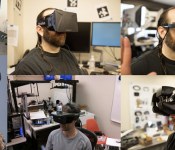
 This is a VR prototype headset from Valve
Valve’s first ever game developer conference, dubbed Steam Dev Days in honor of the company’s ubiquitous digital storefront/ongoing socio-economic experiment, took place this week. Abrash gave a talk titled “What VR Could, Should, and Almost Certainly Will Be Within Two Years,” where he detailed the current state of VR, what challenges the technology faces going foward, and when he (and Valve) believe it’ll be ready for primetime. In it, he established a baseline of standards for VR: perfect timing to lay a base given Oculus VR’s own standards for VR game development going live at nearly the same time.
First, any VR headset needs to create “presence” for the person using the headset. Abrash defined presence as such:
“It’s the sense of being someplace else while in virtual reality; many people feel as if they’ve been teleported. Presence is an incredibly powerful sensation, and it’s unique to VR; there’s no way to create it in any other medium.”
Cliché as it is, VR headsets aim to do exactly what their name implies: simulate a new reality for the user, real enough to fool the human brain. Oculus VR CEO Brendan Iribe echoed that sentiment to us earlier this year when he said that the closer the experience is to reality, the better the experience is for the user. Sadly for us writers, “presence” — or rather the experience of using a virtual reality headset and being convinced – is incredibly hard to convey with just words. “Most people find it to be kind of magical, and we think that once people have experienced presence, they’ll want it badly,”Abrash noted during his talk.
Moreover, Abrash thinks that the VR hardware available right now — including the latest Oculus Crystal Cove prototype — is still a step or two away from the specs required for true presence. He even has a list of target specs required for creating presence (which Valve has functioning in an R&D headset right now, and was shown to developers during Steam Dev Days):

The Crystal Cove prototype that Valve provided support for is “a big step in the right direction” Abrash said, but still not enough to create the sense of presence he and Valve are aiming to achieve. While Valve continues R&D on virtual reality hardware — Abrash said “several” companies are working on VR headsets, though we only know of two officially creating consumer products (Oculus and GameFace Labs). The company’s also building out Steam’s VR software support to stay ahead of the curve. That’s why SteamVR just went live (a VR version of Big Picture Mode) in beta; why VR games now have their own category in the Valve’s store; and why the company created the SteamVR API (read: it makes games play nice with the SteamVR platform).
Valve’s yet to give press a chance to try its VR hardware prototype, but developers who tried it at Steam Dev Days are responding positively thus far. It apparently has specs similar to what’s detailed above, and we’re not entirely clear on whether or not it uses a camera in conjunction with the headset for positional tracking (a la the latest Rift prototype). Given Valve’s openness during Dev Days and Abrash’s assertion that Valve is open to working with any partners to push VR forward, we’re certain to hear more in the coming year(s).
Abrash ended his speech with a confident, thrilling statement regarding VR:
“A great VR system at a consumer price in 2015 is more than just possible – it’s sitting there waiting to happen. And it will happen, if not in 2015, then soon after. Virtual reality on the PC over the next few years may be as exciting as anything that’s ever happened in games. We’re sharing what we’ve learned with you, and we’ll continue to do so. There’s a huge amount to be learned and figured out about VR, and we certainly can’t figure it all out by ourselves; I hope that as you dive into VR, you’ll make it a two-way exchange, so together we can make VR one of the great entertainment evolutions.”
Filed under: Gaming, Peripherals, Wearables, Software, HD
Source: Michael Abrash (PDF), Joe Ludwig (PDF)

Recommended Reading: Spike Jonze predicts the future of UI, confronting tragedy through video games and more
Recommended Reading highlights the best long-form writing on technology in print and on the web. Some weeks, you’ll also find short reviews of books dealing with the subject of technology that we think are worth your time. We hope you enjoy the read.

Why Her Will Dominate UI Design Even More Than Minority Report
(2,194 words)
by Kyle Vanhemert, WiredPocket!function(d,i){if(!d.getElementById(i)){var j=d.createElement(“script”);j.id=i;j.src=”https://widgets.getpocket.com/v1/j/btn.js?v=1″;var w=d.getElementById(i);d.body.appendChild(j);}}(document,”pocket-btn-js”);
For the better part of the last decade, Minority Report has been the go-to reference for futuristic UI design. But, lets be serious, nobody is clamoring for more gadgets to control by waving their hands like a lunatic. More likely, the future will see technology seamlessly integrated into our lives, the way it is in Spike Jonze’s latest film, Her. In this “slight future” everything around the protagonist Theo Twombly is subtly smart, responding to his movements, words and even moods. And there in lies the true potential of artificial intelligence. As Vanhemert asserts in his article, “it [AI] doesn’t have one fixed personality. Instead, its ability to figure out what a person needs at a given moment emerges as the killer app.”
|
I, School Shooter Like many, Danny Ledonne remembers exactly where he was when news of the massacre at Columbine broke. Also like many, he struggled to come to terms with what had happened. But his avenue for coping, creating Super Columbine Massacre RPG, stirred up as much of a media firestorm when it was released six years later as Marilyn Manson and Doom did in the immediate aftermath of the tragedy. Pocket!function(d,i){if(!d.getElementById(i)){var j=d.createElement(“script”);j.id=i;j.src=”https://widgets.getpocket.com/v1/j/btn.js?v=1″;var w=d.getElementById(i);d.body.appendChild(j);}}(document,”pocket-btn-js”); |
A Missing Genetic Link in Human Evolution All across the genome of humans and our great ape cousins are large swaths of duplicate genetic code. Most studies have simply ignored these complex, repetitive stretches of DNA. But new research indicates these genes, which are seemingly randomly dispersed throughout our genome, may be the key to what makes us human. |
|
How Netflix Reverse Engineered Hollywood You’re far from alone if you’ve ever stared in confusion at a hyper-specific genre spit out by Netflix. Visually-striking dark cerebral dramas? Gritty foreign period pieces? All told, there are some 76,897 “micro-genres.” The Atlantic decide to find out how (and why) the streaming king created something so exact. Then set about recreating the peculiar genre creation tool on their own. Pocket!function(d,i){if(!d.getElementById(i)){var j=d.createElement(“script”);j.id=i;j.src=”https://widgets.getpocket.com/v1/j/btn.js?v=1″;var w=d.getElementById(i);d.body.appendChild(j);}}(document,”pocket-btn-js”); |
How Stars Like Jay Z and Martha Stewart End Up with Samsung Devices Samsung’s marketing strategy goes well beyond commercials that take jabs at Apple fanatics. In fact, one of its more important initiatives puts Galaxy devices in the hands of big name celebrities like Jay Z, Martha Stewart and Swizz Beats. Dubbed the White Glove program, it delivers free phones to taste makers via attentive,and charismatic brand ambassadors. Pocket!function(d,i){if(!d.getElementById(i)){var j=d.createElement(“script”);j.id=i;j.src=”https://widgets.getpocket.com/v1/j/btn.js?v=1″;var w=d.getElementById(i);d.body.appendChild(j);}}(document,”pocket-btn-js”); |

The future of beauty school is Google Glass

At least according to L’Oreal. The hair care giant (and purveyor of giant hair) just announced Matrix Class for Glass, which gives clients and beauty school students a stylists-eye view of your head. The three-part program includes a video series of in-depth beauty tutorials shot with Google’s wearable; Matrix Eye for Style, an “exclusive” salon experience provided by George Papanikolas, who will record sessions with the headset; and a series of lessons for beauty professionals given by be-Glassed hair care superstars.
This isn’t the first or last time L’Oreal has taken advantage of the wearable; it used Glass to document Mercedes Benz Fashion Week in Madrid late last year and has plans to release a Glass app sometime in 2014. It might seem like an odd coupling considering most glass holes are more Super Cuts than Vidal Sassoon, but L’Oreal says there’s an intersection between the early adopters of fashion and tech. According to a study done by its partner at Fashion Week, Nurun, “The futuristic nature of Google Glass appealed to the fashion-forward, tech-savvy audience…” When we start seeing years-old issues of Wired replacing copies of Southern Hair at Truvy’s, we’ll believe it.
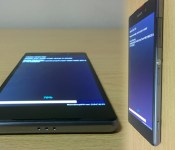
Unknown Sony phone pops up in photos, suggests new Z1 variant could land at MWC

Sony is doing a pretty job keeping itself in our line of sight right now. Not only did it out two (or almost two) new handsets at CES (the Z1 Compact, and a T-mo only Z1S), it also released a brace of mid-rangers a few days later. Today is all about the mystery handset you see in the picture above. A user on XDA claims the handset shows the model number Xperia D6503, and is potentially another Z1 variant. All we know from the image is that the mic grille is now three holes (not a mesh), and the lanyard hole is in a different location. Judging by the crash report on screen, there’s some unstable software running, so if it’s not a prototype Z1, then it’s still almost certainly a pre-production model. XDA user iRimas claims the device has the familiar metal body, but that the thinner bezel houses a screen nearer to 5.2-inches. So, MWC is just around the corner, and Sony likely doesn’t want to turn up without something new to show, but whether it’s a Z1 “L”-type deal or the fabled/logical Z2/Sirius (or just a prototype) remains to be seen.
[Thanks, ET]
Filed under: Cellphones, Mobile, Sony
Source: XDA Developers

Feedback Loop: TiVo services, getting fit with apps, fun with a NAS and more
Welcome to Feedback Loop, a weekly roundup of the most interesting discussions happening within the Engadget community. There’s so much technology to talk about and so little time to enjoy it, but you have a lot of great ideas and opinions that need to be shared! Join us every Saturday as we highlight some of the most interesting discussions that happened during the past week.

This week, we broke down the cost of TiVo services, shared our favorite apps and gadgets for getting fit, asked for recommendations on underwater cameras and looked for fun things that you can do with a NAS. Click past the break to read what fellow Engadget users like you have to say.
Cable costs and TiVo
AdamWillis has been taking a serious look at his cable bill and wants more bang for his buck. Should he keep using the set-top box he rents from his cable company, or will purchasing a TiVo be a benefit to him? Share your opinion in the Engadget forums.
What apps and devices do you use to improve your health?
Wearable fitness gadgets are all the rage right now. swin1974 wants to know: What apps and devices help get you fit? Tell us what’s motivating you to pump iron, run half-marathons and get you away from the computer screen.
Capturing photo and video underwater
After a hectic week at CES, our own richardlai is taking a well-deserved vacation. He’ll be going to Guam and wants to capture photos and video while underwater. If you’ve gone on an underwater adventure recently, make some recommendations on what he should be using!
Fun things to do with a NAS
Last year, I picked up a Synology NAS to manage my untold gigabytes of data. I’ve finally started diving into some of the more technical things you can do with it: WebDAV shares, web servers, print servers and more. What are some cool things you’re doing with your NAS?
That’s all this week! Do you want to talk about your favorite gadget or have a burning question about technology? Register for an Engadget account today, visit the Engadget forums and start a new discussion!
Comcast discontinues AnyPlay in-home IPTV device, preps cloud Xfinity TV apps

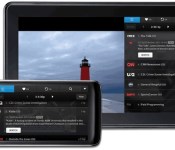
Back in 2012 Comcast rolled out AnyPlay, a headless (read: not connected directly to a TV) cable box that turned its live TV channels into internet streams users could watch on iOS or Android devices inside the home. Now in 2014 Comcast is discontinuing the AnyPlay service and nudging customers towards other options like Xfinity TV Go and other new features it will roll out later this year. Like a Slingbox that only worked within the house, compared to other cable TV apps AnyPlay had the advantage of directly supporting all the channels, but the downside of requiring additional hardware. It also looks like the leased Motorola Televation boxes that did the TV-to-IPTV magic will be going back soon, as the mobile apps will disappear from stores after March 31st.
So what’s in store for the future? Last week at an investors conference, Comcast CEO Brian Roberts showed off a new Xfinity TV app that brings full live TV, video on-demand and DVR access on phones and tablets. We showed you the app last year, which Roberts revealed is being tested in Boston this month and is scheduled to roll out across much of the country this year. It’s all part of the new X1 / X2 TV platform which brings more apps to the TV and “turns mobile devices into virtual TV sets” — hopefully without blanking them out nationwide. Multichannel News adds that Comcast is also testing out gateway devices from Arris that, like AnyPlay, don’t connect to directly to a TV, but will push video throughout the home to TVs and mobile devices alike. Comcast also mentioned that at the end of last year, it added to its total number of TV customers for the first time in over six years. We’ll see if these new features — along with cheap internet combo packages — can pull in more customers, or if people choose life with another provider, or no traditional TV service at all.
Filed under: Home Entertainment, HD
Source: Comcast Support Forums
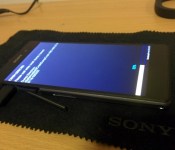
[LEAK] Sony D6503 candid photos leak out, show a slightly modified Xperia Z1
 Now, I know what you’re thinking: Sony said they were going to try and keep a lid on their future products as a result of what happened to the Xperia Z1. That ordeal could only be described as the worst kept secret in smartphone history and we knew exactly what to expect when it was released. Unfortunately, it doesn’t seem like Sony‘s preventative methods are working terrible well as a set of detailed leaked photos featuring a so-called Sony D6503 have been circulating the internet.
 The photos show a prototype that looks eerily like the Z1 except for some key differences including slightly narrower side bezels, suggesting a slightly larger screen, and a 3-hole speaker as opposed to the Z1′s mesh overlay. Some other minor placement changes are present too, but in general, the majority of the Z1′s physical features remain. Whether this Sony D6503 is the Z1 refresh we have been hearing about or the Z2 that Sony is reportedly unveiling at MWC next month remains to be seen, but it seems inevitable that we’ll be finding out more about this phone through leaks in the near future.
Would you be interested in a phone like this Sony D6503? For those who wanted a Z1 but were still on the fence, this might just be what the doctor ordered. Let us know what you think.
Source: XDA via Xperia Blog

More Nokia Normandy UI Screenshots! Google Smart Contacts Announced! – The ManDroid Show

Happy Friday my Android friends. Time for the video portion of Android news. More Nokia Normandy screenshots leaked. Looking very Windows Phone-like. There is also a new phone coming out that the developers claim will dodge those NSA boys. We will see if that is the case. Enjoy the show!
News Topics
Nokia Normandy screenshots
Dodge the NSA with the Blackphone
LG G3 rumored for May
Google announces Smart Contact Lenses
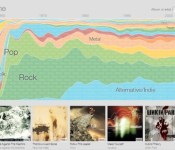
Google is mapping the history of modern music

It’s no surprise that Google has been tracking music uploads, but what’s unexpected is exactly what the search giant is doing with all of that info. Interactive maps of music’s ongoing journey are charted through Play Music’s users’ libraries, found over on Google’s Research Blog. You could, for example, trace the ebb and flow of a genre era by era (rock remains one of the biggies while electronica’s presence is relatively new), or even identify which release from a band is the most prominent. Looking at the Deftones, their biggest album is 2000′s White Pony, and they’re near the top of the alt-metal heap overall. Music nerds could lose a few days poring over the various ins and outs of the soundtrack to their lives, so be careful who you share this with. Perhaps best of all, Google says this likely won’t be the last collaboration we see between the research and music teams.
Filed under: Google
Source: Google Research (1), (2)

[LEAK] The Samsung Galaxy Note 3 Neo Is Looking Ready For Release
 We’ve heard rumblings of a smaller Note 3 device for some time now, but now it looks like the so-called Samsung Galaxy Note 3 Neo is almost ready for release. While the device is yet to be announced, leaked photos of the device have been circulating thanks to SamMobile and today, the list of leaks now includes a FCC filing which typically precedes an imminent product launch.
 Probably the most interesting hardware trait of the Note 3 Neo is the fact it will allegedly be the first of Samsung‘s devices to rock Samsung’s own hexacore processor which allows the simultaneous operation of all six cores at once. According to benchmarks, this new hexacore processor outpaces the Snapdragon 600 but comes up short when pitted against the Snapdragon 800. Other notable specifications of the Note 3 Neo include a 5.55-inch 720p display, 2GB RAM, 3,100mAh and Android 4.3.
While it is an obvious downgrade from the fully fledged Note 3, it looks a lot more like the Note 3 Neo is aimed at filling the spot currently occupied by the aging Note 2. Those specifications fit the bill to a T, but give enough of a performance boost to warrant attention. We have a little longer to wait before we actually see the device, but judging by the increasing number of leaks, it shouldn’t be too long before the Note 3 Neo is official.
Are you interested in getting a device like the Samsung Galaxy Note 3 Neo? Let us know what you think.
Source: FCC, SamMobile via Phandroid (1), (2)
 AIVAnet