



will.i.am on changing the world one 3D printer at a time

We were skeptical, too. The trend of gadget manufacturers putting rockstars on the payroll in figurehead “creative director” roles has gotten a bit out of hand in recent years. Again, if Alicia Keys and BlackBerry taught us anything, it’s that all the piano playing in the world can’t help right the ship of a struggling hardware manufacturer. After chatting with will.i.am high atop the 3D Systems booth in the South Hall of the Las Vegas Convention Center, we’ll say this: he’s a passionate guy. The Black Eyed Peas member’s excitement is palpable as he speaks about emerging technologies and their potential roles in education and sustainability.
He freely admits that he’s not really equipped to break down the technology behind the 3D printer company’s more complex offerings, but he’s got some grand visions with regards to the part he might play in helping making the technology more accessible and broadly appealing for a mainstream audience. Check out the full video interview just after the break.
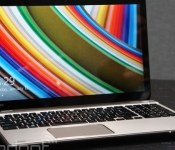
Toshiba’s high-res 3,840 x 2,160 laptop should arrive by back-to-school season

And just like that, 2K screens are old news. While other companies announce laptops with 2,560 x 1,440 screens, Toshiba is doing the competition one better: the outfit is showing off a notebook with a 15.6-inch, 3,840 x 2,160 display. Dubbed the Satellite P50t, the laptop has a screen density of 282 pixels per inch, which, as you can imagine, means some onscreen objects are going to be very, very small (check out that still photo of Windows Media Player in our gallery to see what we’re talking about). Other than that lack of optimized apps — a problem for every high-res notebook — the screen is quite nice, with good color reproduction and decent viewing angles. As for the rest of the specs, we don’t know much, expect that it will have a mix of Core i5/i7 processors (whether that means Haswell or Intel’s fifth-generation chips is a question for another day). We suppose all will be revealed when this finally goes on sale — sometime “mid-year,” says Toshiba. For now, enjoy the hands-on photos.
Filed under: Laptops

Live from the Engadget CES Stage: The Engadget Eurocast

Join Dan Cooper and the usual gang of European Engadget editors as they put a bow on the second to last day of CES 2014. Hijinks, most assuredly, will ensue.
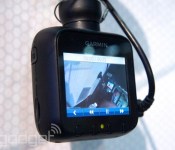
Hands-on with the Garmin Dash Cam

Garmin rolled into this year’s CES with a ton of stuff, including a brand new camera which can be mounted on your windshield. Dubbed Dash Cam, the device can take WVGA, 720p or 1080p video, and the idea is to have it capture footage of daily drives and use that as evidence in case of an accident — “It is fully automated and gives drivers peace of mind knowing any events that might occur will be captured,” Garmin says. The Dash Cam, which features a 2.3-inch display, also comes with a built-in microphone, microSD card slot and a GPS receiver that makes it possible to have time-stamps and geo-tags on all recordings.
After spending a bit of time using it, we can safely say it performs well and does exactly what it’s meant to; unfortunately we weren’t able to test it on the road, but the menus and settings are straightforward enough for any driver to use practically. While we can certainly see more than one use for Garmin’s Dash Cam (read: monitor your teenager’s driving habits), its starting price of $220 might end up being a bit too steep for some. Either way, there’s a gallery past the jump for you to enjoy, so take a look and let us know what you think.
Filed under: Cameras, Misc, Transportation
Source: Garmin
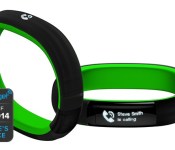
Razer’s Nabu smart band is your People’s Choice Award Winner

No close call here: Razer’s Nabu wearable accounted for nearly 50 percent of the 54,511 reader votes. We’d venture to say that Razer’s promotion of its finalist selection had something to do with the overwhelming turnout, but the company couldn’t pull off such a landslide victory without an extremely enthusiastic fan base. Though it didn’t snag our award for Best Digital Health and Fitness Product, the Nabu is pretty cool; it sports two OLED displays rather than the standard one, and Razer’s planning to add some of its gaming roots to the activity tracker with augmented-reality applications. Congratulations, Razer, and enjoy your 3D-printed trophy!
Filed under: Announcements

The Oculus Rift ‘Crystal Cove’ prototype is 2014’s Best of CES winner

Virtual reality has captured the imagination of developers, consumers and businesses for decades, but most VR headsets produced so far have been notable more for their limitations than their capabilities. With its latest prototype, code-named “Crystal Cove,” Oculus VR has taken a massive leap forward, eliminating the stomach-churning motion blur that has plagued previous generations of VR headsets, and adding sensors and a camera to track the position of both your head and body and provide more accurate simulated movement. With the latest Rift, Oculus has created a device that may usher in an era of truly immersive gaming and entertainment, and even create new opportunities for businesses to use virtual reality in everything from manufacturing to medical environments. Of all the exciting, innovative products we’ve seen at CES this year, the Oculus Rift “Crystal Cove” prototype is unquestionably the best of the best.
In its short history, Oculus has already gone from being a promising startup to becoming a market-moving creator of innovative technology. The first time we saw a version of the Rift, in mid-2012, Oculus had already raised more than $2 million on Kickstarter and caught the attention of legendary game developer John Carmack, who was so impressed with the company that he joined up as its CTO. In our first hands-on — playing a Rift-optimized version of the Carmack classic Doom 3 — we found ourselves “raving about it.” Since then, Oculus has raised more than $90 million, grown to almost a hundred employees and has sold 50,000 units to developers. And, of course, the company has continued to refine the Rift, with every update dramatically improving the device.
The Crystal Cove version’s 1080p OLED display is amazingly sharp and bright. However, what really sets it apart is its positional-tracking capabilities, accomplished thanks to an array of sensors mounted around the edges of the unit, which are monitored by an external camera. It’s no longer just your head that controls movement; lean forward or back, and the virtual environment moves in sync, providing an unparalleled, fully immersive experience. Use the new Rift for a few minutes, and you may never want to take it off; at the very least, it may change the way you think about gaming, and make that 55-inch TV hooked up to your console feel small and constricting. When I tried it out here at CES, in an all-too-brief demo session, I didn’t want to take it off, and only reluctantly returned it to the Oculus execs helping with the demo.
The Rift has broad applications beyond gaming, and Oculus VP Nate Mitchell tells us that the company has sold developer kits to companies in virtually every industry, from auto manufacturers to the movie business (and, yes, Mitchell admits that there are military applications for the technology). NASA is already using the Rift to create virtual tours of Mars and the International Space Station, and Mitchell points out that the Rift is getting a lot of interest from the training and educational communities. Virtual reality, says Mitchell, is a “new disruptive medium that can revolutionize the way we do a lot more than just games.” Forbes is already referring to the way businesses are looking to capitalize on VR as the “Oculus Rift effect.”
The biggest challenge for Oculus is getting the Rift in the hands of consumers, and the company remains quiet about a release date, with Mitchell saying only that “2014 is going to be a big year for VR.” It already is, now that Oculus has started the year as the winner of the official Best of CES Award for 2014.
Filed under: Announcements

Presenting our Best of CES 2014 Awards winners

Curating the Best of CES Awards as an official CEA partner is not a responsibility we take lightly. Finding plenty of worthy finalists was easy, but narrowing down each category to just one winner? Not so much. Nevertheless, we spent two nights in the Engadget trailer considering products against our criteria and arguing the list down to 14 killer, innovative picks. Congrats to all our winners — head past the break to check them out!
Best Startup: Airtame

The Airtame is a surprisingly intuitive and refreshing solution for wireless PC screen-mirroring. It’s easy to set up and responsive, and the software (available for Linux, Windows and OS X) even supports beaming one PC to multiple screens. It’s a Miracast dongle on steroids. — Richard Lai, Senior Editor
Best Digital Health & Fitness Product: JayBird Reign

In a sea of activity-tracking wearables, the JayBird Reign stood out not only for its attractive design, but also its innovative software. Android and iOS apps log your movements and display related stats, like calories burned and activity duration, then offer up suggestions based on your physical history. If you’ve spent your days exploring the convention center halls and your nights at Vegas clubs, for example, Reign will suggest that you add a few hours of sleep. Meanwhile, the morning after Super Bowl Sunday, the device may offer up some firm guidance to head to the gym. — Zach Honig, Deputy Managing Editor
Best Automotive Electronics Product: Corvette Performance Data Recorder

The original Corvette Stingray is a legendary car, revered for its stunning (if aerodynamically dangerous) design. After a long hiatus, Chevrolet has once again begun building Stingray Corvettes, and the 2015 model (though still a looker) may be legendary for a whole new reason: the Performance Data Recorder (PDR). For track day aficionados, the PDR is the holy grail, a way to both record video of their racing exploits and have their driving telemetry overlaid on top of it. We’re talking the kind of experience that was previously reserved only for pro racing drivers and those playing video games like Forza or Gran Turismo. — Michael Gorman, Senior Editor
Best Audio Product: ClearView Clio

The Clio from ClearView is a Bluetooth speaker with a difference: It’s almost invisible. Audio is generated using a patented “Edge Motion” system to “activate” a transparent piece of acrylic and produce full stereo sound. The Clio’s combination of innovative ideas and practical application make it our standout audio product from this year’s CES. — James Trew, Senior Editor
Best Video Product: Dish Virtual Joey

For years, we’ve come to CES and heard about technology that would let us watch TV without a box directly connected, and Dish has finally delivered on that promise. Its Virtual Joey app is coming first to LG smart TVs and PlayStation consoles, and is expected to reach other platforms soon. Subscribers will still need the main Hopper DVR set-top box, but multi-room access to live TV or recordings is possible just by connecting to your network and then installing the app. We thought the experience was exceptionally well-designed, with control possible via the device’s remote/gamepad, or by using a Dish RF remote to operate the DVR from another room. — Richard Lawler, Senior HD Editor
Best Software: Sony PlayStation Now

This is how your PlayStation will look in five years. It’s not a box — it’s just out there. With a connectivity speed that’s possible on the majority of broadband connections, and entire PS3 games coming at launch in summer 2014 (PS4 content and older titles are also coming in good time), it’s the future of console gaming. — Mat Smith, Senior Editor
Best Emerging Technology: Oculus Rift ‘Crystal Cove’ prototype

It wasn’t too long ago that virtual reality headsets were nothing more than a punch line (remember the Virtual Boy?). But thanks to wunderkind Palmer Luckey, the wearable tech has resumed its place as a promising technology of tomorrow. The Crystal Cove prototype shown off at this year’s CES adds depth sensing via an external camera, a 1080p OLED display for improved clarity and shucks off possibly one of its worst cons: motion blur. With Crystal Cove, Oculus is bringing VR that much closer to reality. — Joseph Volpe, Senior Editor
Best Mobile Technology: Sony Xperia Z1 Compact

The vast majority of small Android smartphones are merely stripped-down versions of their flagship counterparts, which means that if you don’t like large devices you typically have to settle for something that’s lower-quality. Sony’s addressing this pain point with the Xperia Z1 Compact, a smaller version of the company’s flagship device that features most of the same powerful components in a 4.3-inch waterproof chassis: You’ll get a 20.7MP camera, a top-of-the-class quad-core processor, high-resolution Triluminos display and a variety of color options. — Brad Molen, Senior Mobile Editor
Best Gaming Product: Valve Steam Machines

As Google is to Android, Steam Machines are to PC gaming. Valve’s initiative is bold and innovative, and it stands to impact several industries: gaming, computing, television and who knows what else. It offers an open standard for moving the gaming PC from the home offices of the world into the living room, and it comes from the folks behind Steam — by far the most important digital storefront in the game industry. It’s still early days for Steam Machines, but the future is very bright. — Ben Gilbert, Senior Editor
Best Offbeat Product: Sen.se Mother

Mother’s product description includes the phrase “the internet of things” and its soulless visage gives us a serious case of the willies, but it still handily took home top honors in our offbeat category. Why? Because the smart, wireless nesting doll base station and sensor-laden cookies are surprisingly versatile and user-friendly. Rather than picking up multiple modules for different tasks, you can repurpose those tags to monitor everything from distance walked to how many cappuccinos you make in a day. Are there systems like Mother out there? Sure. But most are confusing and really meant for the DIY enthusiast, not your average consumer. — Terrence O’Brien, Deputy Managing Editor
Best Kid-Friendly Product: Mimo Baby with Intel

It’s a smart baby onesie — what else do you need to know? In all seriousness, the Mimo Baby (made by Rest Devices with Intel tech inside) is quite innovative; it’s essentially a wearable baby monitor. It’s not kid-friendly in the sense that they’ll get a ton of enjoyment out of wearing it — though maybe the company should consider a built-in binky — but it lets parents know a baby’s vital stats, such as activity level and skin temperature. And in the grand scheme of things, what’s more kid-friendly than safety? — Sarah Silbert, Senior Editor
Best Maker-Friendly Technology: MakerBot Replicator Desktop 3D Printer

While we’ve had a love affair with 3D printers for some time, consumer models haven’t quite reached the level of polish and sophistication that we expect from most of our gadgets. With MakerBot’s third Replicator, however, it’s clear that things have changed. With a nearly automated setup, easily replaceable cartridges and a sleek design, this marks the beginning of truly consumer-friendly 3D printing. — Christopher Trout, Managing Editor
Best PC: Razer Project Christine

With a field that mostly included refreshes of existing models, it was tough to get excited about PCs at this year’s CES. But Razer’s Project Christine is an important exception: It’s so innovative, in fact, that it doesn’t even look like a computer. In addition to its futuristic digs, we were instantly smitten with its modular design, which makes replacing the GPU as simple as inserting a pod into one of the many, many expansion bays. Project Christine could mark the beginning of plug-and-play PC upgrades for gaming machines and, with time, it could change the way OEMs design regular computers, too. — Dana Wollman, Managing Editor
Best of the Best: Oculus Rift ‘Crystal Cove’ prototype

Virtual reality has captured the imagination of developers, consumers and businesses for decades, but all VR headsets produced so far have been notable more for their limitations than their capabilities. With its latest prototype, Oculus VR has taken a huge leap forward, eliminating the stomach-churning motion blur that has plagued previous generations of VR headsets, and adding sensors and a camera to track the position of both your head and body and provide more accurate simulated movement. With the Rift, Oculus has created a device that may usher in an era of truly immersive gaming and entertainment, and even create new opportunities for businesses to use virtual reality in everything from manufacturing to medical environments. Of all the exciting, innovative products we’ve seen at CES this year, the Oculus Rift “Crystal Cove” prototype is unquestionably the best of the best. — Marc Perton, Executive Editor

Live from the Engadget CES Stage: The Engadget Podcast

Join us, won’t you, for the penultimate podcast of the penultimate day of CES 2014. Brian and a smattering of editors are talking to the stage to talk the Best of CES and the show thus far.

ZTE’s modular smartphone could make part-swapping a reality within two years

Smartphones with interchangeable parts is the future… or so companies like Motorola and ZTE believe. Both manufacturers are currently working on prototypes of what’s known as modular smartphones. Such a device, if it comes to market, will give consumers a few benefits: the chance to customize their phone exactly the way they want, the ability to upgrade specific parts (or modules) of your device without having to upgrade to a completely new version, the option to buy and sell individual modules to others and less electronic waste left over as a result. Neither Motorola or ZTE has exactly kept their efforts a secret, but what we’re unsure of is when we can expect to see real hardware show up on the market. Fortunately, ZTE showed off its first concept device (under glass, unfortunately) on the CES floor this week, and reps told us that we should plan on seeing this concept come to fruition within the next two years.
The phone, known as the Eco-Mobius, looks a lot sleeker than what we’ve seen of Ara so far, and is divided into four separate swappable modules for LCD, core (processors, RAM and ROM), camera and battery. This comes in quite handy for enthusiasts of all kinds who want to take advantage of different modules; if you’re into photography, you could theoretically take multiple modules with you, each one with its own strengths and weaknesses — we’d fancy having a macro lens module for specific shots. Perhaps you want to change the size of your screen, depending on whether you’re at the office, at home or a party? No problem. Need a stronger battery? Sure thing. In addition to making this kind of phone a reality, its designers are also putting together a platform in which users can buy, sell and trade modules with each other. Hopefully we’ll see more of this concept as things come together, but so far we’re very curious about how the final product will look down the road. While we wait for the future to catch up with our dreams, enjoy our images below.
Joseph Volpe contributed to this post.
Filed under: Cellphones, Wireless, Mobile

One step closer to legitimacy: Bitcoin payment live on Overstock

While it’s legal to pay with Bitcoin in the US, the digital currency hasn’t been very useful for mainstream shoppers. However, that’s changing today — Overstock has just become the first major American online retailer to accept Bitcoin. You’ll still see prices listed in old-fashioned dollars, but you can choose the newer payment method at checkout. CEO Patrick Byrne tells Wired that he made the move for both pragmatic and idealistic reasons: Bitcoin doesn’t cost as much to accept compared to credit cards or PayPal, and its nationless nature reduces the chances that a failed bank or country will create problems. It’s tough to tell whether other big e-retailers will follow suit, but we can’t imagine that competing shops will want to leave that much virtual money on the table.
Filed under: Internet
Via: Wired
Source: Overstock
 AIVAnet