


Apple Continues Hiring for Oregon Data Center as Solar Farm Plans Take Shape
Apple has posted three new job listings for the data center the company is constructing in Prineville, Oregon. Apple is seeking two Data Center Maintenance Technicians, along with a Data Center Chief Engineer, a position the company has been trying to fill since early 2013.
While the chief engineer would be responsible for overseeing, testing, and monitoring the data center, as well as implementing new projects, the maintenance technicians would identify and repair potential issues quickly.
Apple has been hiring for the 338,000 square-foot Prineville data center since shortly after construction began in October of 2012, and has maintained a temporary modular data center on the site to house employees. With the new hirings, as well as rumors of a solar farm coming to the site, it appears the Prineville data center may be growing closer to completion.
 Apple’s Prineville data center under construction in February 2013 (Randy L. Rasmussen/The Oregonian)
According to a recent statement by Prineville major Betty Rope, Apple is planning to add a solar farm to the Oregon data center, just as it has done in North Carolina.
Mayor Betty Roppe says those agreements were with Apple. She says the company’s enterprise zone agreement defers taxes on improvements to the land for a period of 15 years.
“My understanding is that they will create the solar farm and then they will sell that back to the companies that they actually get their electricity from,” said Roppe.
Apple has committed to running all of its data centers with 100% renewable green energy, an initiative that it embraced for its massive Maiden, North Carolina data center. In Maiden, Apple has two operational solar farms, providing 42 million kWh of clean, renewable energy.
According to Apple’s environmental site, the Oregon data center is designed to be as environmentally responsible as the site in North Carolina, though at the current time, the Oregon data center is much smaller in scale. While Apple has not specifically outlined plans to install a solar farm in Oregon, it has pledged to purchase renewable energy directly from two local utilities and other local renewable energy generation providers.
Back in September, Apple did look into purchasing an additional 96 acres of land near the Prineville, Oregon site, which could be the home of a future solar farm.
In North Carolina, Apple’s massive solar farms generate approximately 40MW along with another 10MW from fuel cells, and at times of peak energy, Apple produces power for Duke Energy, the local utility company. The NC solar farm consists of more than 50,000 panels on 100 acres of land and will likely serve as a blueprint for solar farms in other areas.
 Image of North Carolina solar farm courtesy of Gigaom
Along with the solar farms at its Maiden, North Carolina data center, and the possible solar farm in Oregon, Apple is also planning to build a solar farm at its Reno, Nevada data center.
     |
Google Play Services 4.1 rolls out with some notable improvements
Google Play Services version 4.1 began rolling out yesterday, bringing improvements to Google+, battery life, turn-based multiplayer for developers, and more.
Let’s begin with Google+:
With the recent update to Gmail, users can now send emails easier than ever to their Google+ contacts. This update addresses that, and gives better suggestions and auto-complete for your newly-added contacts Google+ addresses.
Next, we have turn-based multiplayer for developers:
Play Games lets users sync game data across devices. It’s a relatively new app, and developers are just beginning to take part into building this functionality into their games. Now, Play Services allows turn-based multiplayer data syncing. So, if you’re playing a multiplayer game, your turn data is uploaded and you can play as your own player, rather than starting fresh.
Also Google Drive:
This update will allow developers to preview the new Google Drive API. Users will eventually be able to read and write files on and offline, and the changes will sync automatically.
And finally, and probably most importantly, improved battery life:
For those of you who chose to enable location reporting when setting up your phone, you may have been experiencing some battery drain issues. Some users have been experiencing battery issues since the update to v4.0.34, so this update should help address the issue.
The post Google Play Services 4.1 rolls out with some notable improvements appeared first on AndroidGuys.

Live from the Engadget Stage: Misfit Wearables CEO Sonny Vu

If CES 2014 is the year of the wearable (hint: of course it is), then Misfits Wearables’ time has come. The company’s Shine device is a beautiful fitness tracker — something you wouldn’t be embarrassed to wear on your person.
Filed under: Wearables
Live from the Engadget Stage: Solidoodle CEO Sam Cervantes

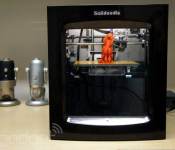
In a show full of 3D printers, Solidoodle sets itself apart in one key area: affordability. The company has offered up a series of sub-$1,000 models, including, most recently, the Solidoodle 4, introduced a few months ago.

Samsung’s budget Galaxy Note 3 Neo reportedly caught on camera

Remember that talk of a lower-cost Galaxy Note 3? You may be looking at the phone right now. SamMobile claims to have photos of the rumored Galaxy Note 3 Neo (aka Lite), and they show what you’d expect — a slightly smaller, less advanced version of Samsung’s pen-toting flagship. The leak also includes benchmarks that back up rumors of an 8-megapixel camera, a 720p screen and a hexa-core processor with performance between that of the Galaxy S 4 and the full-size Note 3. There’s no guarantee that the photos or the specs reflect a shipping product, but there are murmurs of a possible Neo launch at Mobile World Congress in late February; we may not have to wait long to learn more.
Filed under: Cellphones, Mobile, Samsung
Source: SamMobile

Apple Wins Another Legal Battle with Google’s Motorola Unit Involving Push Notifications [iOS Blog]
 The U.S. Court of Appeals for the Federal Circuit today issued a decision (PDF) upholding a previous ruling by the International Trade Commission (ITC) that Apple did not infringe upon a patent held by Google’s Motorola unit. The ITC had ruled in Apple’s favor last May, but Google/Motorola appealed that decision to the federal courts.
The item in question, Claim 12 of Patent Number 6.272,333, addresses methods for communication between wireless devices and fixed data networks. The specific disagreement between Apple and Motorola centered around whether the deletion of applications capable of receiving of push notifications, thus requiring a status update be sent to the fixed network in order to halt sending of notifications, is covered by the patent. The ITC ruled that such action as implemented by Apple is not covered by the patent, and the appeals court has affirmed that decision today.
Put simply, the change in accessibility of deletion is not the change in accessibility that is communicated to the fixed portion of the network. Rather, what is communicated to the fixed portion of the network is a message indicating that push notifications for the application should be cancelled. This message only indicates that push notifications have been cancelled for the application; it does not inform the fixed portion of the network that the application has been deleted.
The court also ruled that Motorola failed to satisfy a requirement that it demonstrate a technical example of the claimed invention with its Droid 2 handset. According to the court, the Droid 2 and Apple’s devices do use the same relevant features with respect to registering and unregistering for push notifications, but in line with the previous rationale those devices do not implement the exact invention described in the patent.
Apple has faced off with a number of Android device manufacturers in patent battles over the last several years, most notably Samsung, but for the most part Google and Apple have avoided directly targeting each other. But Google became directly involved in the disputes when it acquired Motorola Mobility and its patents in 2011, thereby inheriting existing lawsuits between Apple and Motorola.
| |
Samsung Galaxy Note 3 Neo specs and photos surface
This week gave way to both hardware specifications and a leaked photo for a Samsung Galaxy Note 3 Neo. Once rumored as a Samsung Galaxy Note 3 “Lite”, it’s the stripped down version of the popular big-screen experience.
Given the unconfirmed specs, it appears the Note 3 Neo is actually more akin to the Note 2. Nevertheless, it’s still a respectable device and should find a decent following when it arrives. The Samsung Galaxy Note 3 Neo reportedly features a 5.55-inch 720p Super AMOLED display, an 8-megapixel camera, and a 3100 mAh battery.
Samsung GALAXY Note 3 Neo (SM-N750/5) pic.twitter.com/jF7UP1QhsT
— SamMobile (@SamMobiles) January 10, 2014
Powering the smartphone is a 1.7GHz dual + 1.3GHz quad-core (Hexa) processor, 2GB RAM and 16GB internal storage. It will be interesting to see how this first of its kind processor performs as compared to Qualcomm’s Snapdragon series. According to SamMobile, it should fall somewhere in the area of a Snapdragon 600 CPU.
There’s no indication yet as to which markets are going to carry the Galaxy Note 3 Neo; it’s possible it won’t come anywhere near the United States.
Mobile World Congress takes place at the end of February where we should look for an Unpacked event or press announcement out of Samsung.
The post Samsung Galaxy Note 3 Neo specs and photos surface appeared first on AndroidGuys.

Nintendo boasts ‘record-setting’ 16 million 3DS game sales in 2013

Nintendo’s handheld business is booming right now, and the company has the stats to prove it. In its annual overview released today, the company says it sold a record-breaking 16 million 3DS games in 2013, which translates to a 45 percent increase over last year. US consumers played a big part in Nintendo’s bumper year, accounting for 11.5 million of Nintendo’s 35 million 2DS and 3DS lifetime sales. Despite its precarious financial situation and a recent ruling requiring it to share some of its 3DS sales revenue, Nintendo reckons it has plenty more left in the tank: “We’re not slowing down in 2014,” says Scott Moffitt, Nintendo’s EVP of Sales, “the best days of Nintendo 3DS are still to come.”
Source: Nintendo (BusinessWire)

Testing Reebok’s Checklight head impact monitor with a human punching bag

Last year Reebok showed up to CES with the Checklight, a head impact sensor developed in collaboration with mc10. Problem was, the company didn’t really have way to demo the preproduction version of its G-force sensor. They simply slipped it into a black skull cap and let the press take photos. But, in the interim, it’s come to market, offering protection to athletes young and old, for a reasonably affordable $149. This year, the companies came fully prepared with a pair of boxing gloves and some head gear. Naturally, being the masochist I am, I invited anyone who was interested to join me at the Reebok booth on the show floor where they would get to punch me in the face. The response was alarmingly enthusiastic.
Not wanting to disappoint, I dutifully donned the black skull-cap, with the sensor’s blinking display hanging behind my head. Then it was just a matter of removing the glasses, putting on the foam headgear and accepting that I’d brought this on myself. To the Checklight’s testament, it appears to work quite well. After taking a surprisingly strong blow from one of the many editors lined up to take a swing, the rotational and directional sensors inside triggered an alert that perhaps my coworker had gotten a little too enthusiastic. The light at the back flashed yellow to indicate that I absorbed a moderate impact. After ensuring everyone that I ok, we continued with the demonstration. But, had the light flashed red, the hands-on (fists-on?) would have been quickly called to a close. While red doesn’t mean you have a concussion, it does indicate that you’ve taken a particularly hard hit and should get checked out. For more of this Engadget editor getting punched in the head, check out the video after the break.

Filed under: Wearables

Apple Taps UK Engineer for New Optical Image Stabilization System for iOS Device Cameras
In line with yesterday’s report claiming that the iPhone 6 will retain an 8-megapixel rear camera while focusing on other aspects such as image stabilization to improve performance, the U.S. Patent and Trademark Office yesterday published an Apple patent application (via Unwired View) outlining a system for implementing optical image stabilization (OIS) with improve autofocus (AF) capabilities in miniature camera such as those found on iOS devices.
Apple’s iPhone 5s introduced last September includes software-based image stabilization, a system that involves taking four photos in quick succession and then combining the best parts of each to produce a final image minimizing noise, subject motion, and hand shake. Optical image stabilization, found in some smartphones and many standalone cameras, allows the actual camera lens to move slightly, buffering against hand shake and other small movements.

The newly published patent application from Apple describes a method for integrating optical image stabilization into the voice coil motor (VCM) actuators used for autofocus in miniature cameras.
An embodiment of the invention is an actuator module suitable for use in a camera, more specifically, a miniature camera. The actuator module may include a mechanism to provide an AF function and a mechanism to provide an OIS function. […]
The combination of the AF mechanism and OIS mechanism within a single actuator module allows the actuator module to modify the position of the lens relative to the image sensor along five different axes (i.e., 5 degrees of freedom (DOF)). Representatively, the lens may be shifted or translated along at least three different axes and rotated about at least two different axes.

Apple’s patent application, filed in October 2012 and based on a provisional patent application filed in July of that year, credits a sole inventor, Richard Topliss. According to his LinkedIn profile, Topliss joined Apple as a senior camera technology specialist in January 2012 after spending over a decade as chief technical officer of Cambridge Mechatronics in the UK. That company currently focuses on OIS actuators for smartphones, and today’s patent application makes clear that Topliss immediately brought that expertise to bear at Apple.
Cambridge Mechatronics began sampling its latest OIS actuators to customers last August, with the modules expected to begin appearing in smartphones early this year. It is unclear whether Apple is working directly with Cambridge Mechatronics on lens module projects, but the two companies are clearly working on very similar technology and have a natural connection through Topliss.
| |
 AIVAnet