



T-Mobile ‘Get out of Jail Free Card’ pays contract cutters up to $650 per line
T-Mobile will reimburse entire amount of customers’ early termination fees when they switch from AT&T, Sprint or Verizon
 T-Mobile just took the wrapper off its latest Uncarrier initiative, introducing us to its boldest moves yet. As previously rumored, the wireless provider will pay off early termination fees for anyone leaving their current provider. Should you leave either Verizon, AT&T, or Sprint then you could earn yourself up to $650 for jumping early. Called the ‘Get Out of Jail Free Card’ it’s a combination of eligible phone trade-ins and ETF credits.
Up to a $300 trade-in credit comes from each eligible device and up to $350 more comes once the customer sends their final bill (ETF fees). This is per line! We cannot help but imagine this could lead to even more growth for T-Mobile. What’s more, it could come at the expense of other carriers. As to when this all takes effect, customers can head to a T-Mobile store tomorrow.
Carriers like to make you think you’re just signing up for two years with their family plans, but with staggered expiration dates and early termination fees, they’re really locking you in forever,” said Mike Sievert, chief marketing officer for T-Mobile. “Now, families are free to switch without worrying about early termination fees. And by switching to T-Mobile, a family of four can save $1,880 over two years compared to an AT&T shared family plan.”
Note that customers must trade-in their old phone, purchase a new T-Mobile phone and port their phone number to T-Mobile to qualify.
The post T-Mobile ‘Get out of Jail Free Card’ pays contract cutters up to $650 per line appeared first on AndroidGuys.
PlayStation Now streaming game service coming this summer
Sony has just taken the veil off PlayStation Now streaming service which will allow you to stream popular and classic games from their PS3 library. This will initially only be available for the PS3 and PS4, however it will soon come to the PS Vita as well.
You will be allowed to rent specific games or submit to a subscription service to explore many other games. PS Now will also sync across devices, which will allow you to pick up where you left off. The service is also coming to the 2014 Sony BRAVIA lineup and to other Internet-connected devices soon.
PS Now will begin a Beta program in the US at the end of January with an expected full roll-out in the US this summer.
Source: Sony
The post PlayStation Now streaming game service coming this summer appeared first on AndroidGuys.

Live from the Engadget CES Stage: Fitbit CEO James Park

Fitness hardware is once again set to be all the rage at this year’s CES, and Fitbit’s wrist-worn wearables continue to lead the pack. Join us as we speak with the company’s co-founder James Park about the ways consumer technology is helping get us in shape.
January 8, 2014 4:00:00 PM EST
Follow all the latest CES 2014 news at our event hub, and check out our full stage schedule here.
HPLEmbed.load({ targetId: ‘HPLContent’, app: ‘hplive_player’, width: ‘630px’, height: ‘355px’, streamType: ‘live’, autoPlay: ‘false’, thumbnail: ‘http://www.blogsmithmedia.com/www.engadget.com/media/ENGADGET_CES_720.png’, sources: { ‘video/hds’: ‘http://aolhdshls-lh.akamaihd.net/z/CES2014_1@114455/manifest.f4m’, ‘video/hls’: ‘http://aolhdshls-lh.akamaihd.net/i/CES2014_1@114455/master.m3u8’ } , freewheel: { plugin_freewheel: ‘http://adm.fwmrm.net/p/aol_osmf_live/OsmfPlugin.swf’, freewheel_namespace: ‘http://www.freewheel.tv/config’, freewheel_adManagerUrl: ‘http://adm.fwmrm.net/p/aol_prod/AdManager.swf’, src_namespace: ‘http://www.freewheel.tv/config’, src_adManagerUrl: ‘http://adm.fwmrm.net/p/aol_prod/AdManager.swf’, src_networkId: ‘174938’, src_playerProfile: ‘10886:aol_as3_prod’, src_serverUrl: ‘http://2a86.v.fwmrm.net’, src_siteSectionId: ‘151098’, src_sitSectionIdType: 0, src_videoAssetAutoPlay: true, src_videoAssetDuration: 5000, src_videoAssetId: ‘52101264’, src_videoAssetIdType: 0, src_videoAssetNetworkId: ‘10886’, src_siteSectionNetworkId: ‘10886’ }, comScore: { c4: ‘us.engadget’ } , AMAConfig:’http://ma180-r.analytics.edgesuite.net/config/beacon-3967.xml’ });
Filed under: Wearables

T-Mobile has best quarter in 8 years, added 1.6 million net customers in Q4

In the last quarter of 2012, things were looking down for T-Mobile. The network lost over 500,000 postpaid customers, and had lost well over 2 million customers for the year overall. Now, things are starting to turn around: at CES the company revealed that Q4 2013 was its best quarter in over eight years, and it grew by more than 1.6 million new customers in that time period. Company CEO John Legere didn’t specifically say how many of these customers came from the competition but did call out Sprint has the carrier it ported the most numbers from, followed closely by AT&T and distantly by Verizon. In all, the company gained 4.4 million net customers for the year, an enormous turnaround from its 2012 losses. Naturally, Legere points to the company’s Uncarrier initiative as the secret to its success. “There will never be contracts in our business! 12.2 million customers have come to simple choice.”
Hungry for more mumblings from the magenta network? Check out our CES 2014 Liveblog right here!
Filed under: Cellphones, T-Mobile

OnTheGo Platforms is bringing gesture recognition to Google Glass apps (video)

Google Glass can hold its own when it comes to voice recognition and touch, but its current software doesn’t account for gesture controls. OnTheGo Platforms, however, is looking to fix that. The folks at the Portland, Ore.-based company are baking up an SDK for developers to integrate gesture recognition in apps made for Glass and other Android-based smart glasses, such as the Vuzix M100. We went hands-on with a demo photo-snapping and gallery app to put the software through its paces.
In its current form, the solution recognizes swipes from the left and right, a closed fist and an open hand. A fist aimed at Glass’ camera will fire off a countdown for a snapshot or take you to the app’s home, depending on the current screen. Waving a hand in either direction cycles through pictures in the gallery. This editor was tempted to swipe his hand across the camera’s view quickly, but the software is tuned to pick up slower, more deliberate motions about a foot or so away. The detection was often hit or miss, but the developers say they’re in the process of refining the recognition and that they’ve recently eliminated many false positives.
The sample application displayed lower-resolution video than we’ve come to expect from Google’s wearable, but that won’t be the norm with the team’s development kit, as what we’re glimpsing is just the footage that the software analyzes. In fact, a live video feed doesn’t have to be displayed on Glass’ prism for apps to take advantage of the code. The SDK still needs refining to live up to its full potential, but you can help the devs polish it by contacting them for access to a limited alpha. If you’d rather wait for a beta release, expect to lay hands on it in roughly three months.
Filed under: Wearables

Live from the Engadget CES Stage: Oculus founder Palmer Luckey

The future of wearing things on your face is here. Oculus founder Palmer Luckey will be joining us on-stage to discuss the company’s latest Rift prototype, internal game development and bringing his long-awaited peripheral to an eager audience of gamers.
HPLEmbed.load({ targetId: ‘HPLContent’, app: ‘hplive_player’, width: ‘630px’, height: ‘355px’, streamType: ‘live’, autoPlay: ‘false’, thumbnail: ‘http://www.blogsmithmedia.com/www.engadget.com/media/ENGADGET_CES_720.png’, sources: { ‘video/hds’: ‘http://aolhdshls-lh.akamaihd.net/z/CES2014_1@114455/manifest.f4m’, ‘video/hls’: ‘http://aolhdshls-lh.akamaihd.net/i/CES2014_1@114455/master.m3u8’ } , freewheel: { plugin_freewheel: ‘http://adm.fwmrm.net/p/aol_osmf_live/OsmfPlugin.swf’, freewheel_namespace: ‘http://www.freewheel.tv/config’, freewheel_adManagerUrl: ‘http://adm.fwmrm.net/p/aol_prod/AdManager.swf’, src_namespace: ‘http://www.freewheel.tv/config’, src_adManagerUrl: ‘http://adm.fwmrm.net/p/aol_prod/AdManager.swf’, src_networkId: ‘174938’, src_playerProfile: ‘10886:aol_as3_prod’, src_serverUrl: ‘http://2a86.v.fwmrm.net’, src_siteSectionId: ‘151098’, src_sitSectionIdType: 0, src_videoAssetAutoPlay: true, src_videoAssetDuration: 5000, src_videoAssetId: ‘52101264’, src_videoAssetIdType: 0, src_videoAssetNetworkId: ‘10886’, src_siteSectionNetworkId: ‘10886’ }, comScore: { c4: ‘us.engadget’ } , AMAConfig:’http://ma180-r.analytics.edgesuite.net/config/beacon-3967.xml’ });

Live from the Engadget CES Stage: Nest founder Matt Rogers

Home-automation company Nest, co-founded by Apple expats, is rethinking the staid world of home appliances, from thermostats to smoke detectors and beyond. VP of Engineering Matt Rogers will join us to discuss his company’s vision for a more connected home.
HPLEmbed.load({ targetId: ‘HPLContent’, app: ‘hplive_player’, width: ‘630px’, height: ‘355px’, streamType: ‘live’, autoPlay: ‘false’, thumbnail: ‘http://www.blogsmithmedia.com/www.engadget.com/media/ENGADGET_CES_720.png’, sources: { ‘video/hds’: ‘http://aolhdshls-lh.akamaihd.net/z/CES2014_1@114455/manifest.f4m’, ‘video/hls’: ‘http://aolhdshls-lh.akamaihd.net/i/CES2014_1@114455/master.m3u8’ } , freewheel: { plugin_freewheel: ‘http://adm.fwmrm.net/p/aol_osmf_live/OsmfPlugin.swf’, freewheel_namespace: ‘http://www.freewheel.tv/config’, freewheel_adManagerUrl: ‘http://adm.fwmrm.net/p/aol_prod/AdManager.swf’, src_namespace: ‘http://www.freewheel.tv/config’, src_adManagerUrl: ‘http://adm.fwmrm.net/p/aol_prod/AdManager.swf’, src_networkId: ‘174938’, src_playerProfile: ‘10886:aol_as3_prod’, src_serverUrl: ‘http://2a86.v.fwmrm.net’, src_siteSectionId: ‘151098’, src_sitSectionIdType: 0, src_videoAssetAutoPlay: true, src_videoAssetDuration: 5000, src_videoAssetId: ‘52101264’, src_videoAssetIdType: 0, src_videoAssetNetworkId: ‘10886’, src_siteSectionNetworkId: ‘10886’ }, comScore: { c4: ‘us.engadget’ } , AMAConfig:’http://ma180-r.analytics.edgesuite.net/config/beacon-3967.xml’ });
Filed under: Household

Here’s Sharp’s 85-inch 8K TV with glasses-free 3D

It’s so big and bright that it wasn’t hard to find inside Sharp’s booth, even when surrounded by a sea of other televisions from the manufacturer. What you see above, folks, is an 85-inch, 8K glasses-free 3D TV from Sharp. This behemoth, ultra-high-res display is rather similar to the one from CES 2013, save for the fact you can enjoy three-dimensional content without any eye hardware. While everything about this LED TV is indeed interesting, we can’t say we were too impressed by the glasses-free 3D. It is pretty easy for your eyes to get tired of the effect quickly, and at times some frames pass through so fast that it ends up making the content seem blurry — we’re not the only ones who feel this way, apparently. Aside from those things, the image is incredibly sharp; the TV was showing scenes from Life of Pi and Frozen, both of which looked stunning on the big screen.
Obviously, Sharp’s 85-inch, 8K 3D TV is still in the early stages, and thus it wouldn’t be fair to judge it based on first impressions. Chances are it’ll improve tremendously as the company continues to work on it. For now, it is a very dazzling thing to look at and we can’t wait to see it down the road. Check out the pictures we took of it after the break, or, if you’re here at the LVCC, stop by the Sharp booth to experience it yourself. Let us know what you think in the comments below.
Filed under: Displays, Home Entertainment, HD

LG’s Pocket Photo 2 can handle your selfie prints in 60 seconds (hands-on)

From time to time, you snap a picture while on the go that deserves a bit more than just social media posting. For those more elegant snapshots, LG’s Pocket Photo 2 can output 30 photos before needing a recharge and refill the requisite paper. We took one for a spin at CES in order to observe the results. Once the LG G2 being used for the demo was paired via NFC/Bluetooth, we were off to capture an image. From there, you can use LG’s app to edit — which includes adding filters, captions, QR codes, borders and more. When our tweaks were complete, we just laid the G2 on top of the small printer and let the wireless connections transfer the file. In about 60 seconds, the task was complete and our portrait has been preserved in physical form.
The Pocket Photo 2 has slimmed down a bit from the previous model, and the difference is noticeable. A button to open up the casing is situated on the bottom edge, allowing access to swap out the paper stack. Around to the right side, there’s a power toggle switch alongside the charging port. On the front, LED indicators for power, battery and low paper levels are located on the right side and silver circles for the opening hinge are up top on both sides. As far as the prints go, the final product is a 3 x 2-inch rectangle that’s a little smaller than a business card and the quality is on par with what we’d expect for a device like this. It’s OK for really quick prints, but that’s about it. When the device arrives, pink, yellow and white color options will be yours for the taking. There’s no word on pricing just yet, but the Pocket Photo 2 is set to make its debut in Korea later this month. For now, jump down to the gallery below for a closer look.
Filed under: Misc, Peripherals
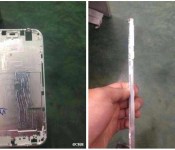
‘iPhone 6 Frame’ Shown in New Photos Unlikely to Be Genuine [iOS Blog]
Earlier today, Chinese site C Technology posted a pair of photos of what was claimed to be an internal frame for Apple’s next-generation iPhone, a device said to be carrying a display measuring at least 4.7 inches, significantly larger than the current 4-inch standard for Apple’s most recent iPhones. The photos were picked up by GizChina.com and have since made their way to increasingly prominent sites expressing varying degrees of skepticism about their authenticity.
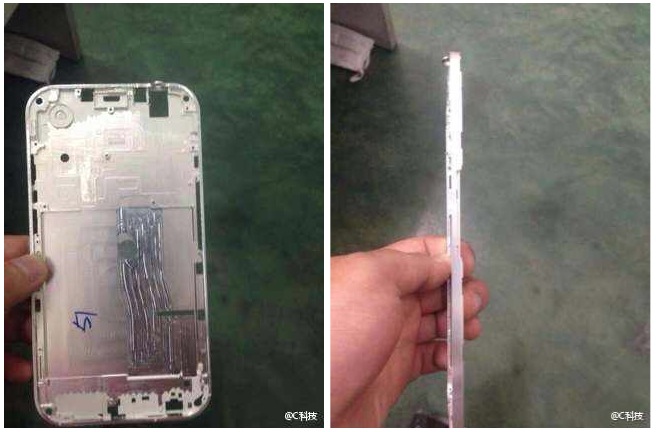
While we had initially decided to refrain from posting the images due to their extremely dubious nature, their increasing visibility today bears addressing. For a number of reasons, including several outlined here, we believe that the part shown in these images is not legitimate.
– The part appears to be a midframe such as that found in earlier iPhone models, allowing components to be attached to both sides of the part before being enclosed in the device’s shell. Apple did away with midframe components as of the iPhone 5, opting for a unibody rear shell design that allows components to be mounted directly to the shell, yielding a thinner design. A return to a design requiring a midframe part would seem unlikely given Apple’s emphasis on thinness.
– The frame seems to show accommodation for a headphone jack at the same end of the device where a circular feature presumably corresponding to the device’s rear camera is positioned, undoubtedly the top end. With the shift to the narrower Lightning connector in the iPhone 5, Apple shifted the location of the iPhone’s headphone jack to the bottom edge of the device, matching the position seen on the iPod touch since its launch and allowing the headphone cable to naturally fall so as to not interfere with viewing of the device’s screen. Moving the headphone jack back to the top edge of the device for the iPhone 6 appears unlikely, though not impossible.
In the face of those apparent inconsistencies with Apple’s design direction, there is essentially no evidence in favor of this part being from an iPhone, leaving only the original poster’s claim as support. The part is rather unremarkable with what appears to be fairly poor finish quality, meaning that it could be from one of any number of devices in the Asian supply chain.
     |
 AIVAnet
