


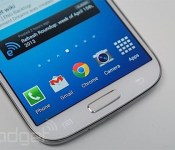
Samsung promises a ‘back to basics’ rethink for the Galaxy S5

Samsung has admitted that the public didn’t see much difference between the Galaxy S III and S4 smartphones and said the S5 would likely pack a substantially different design. Exec Lee Young Hee told Bloomberg that the new flagship will go “back to basics,” adding that “mostly, it’s about the display and the feel of the cover.” It’ll also arrive with a brand new version of the Galaxy Gear smartwatch, which itself will have “more advanced functions” and an improvement to what she called “the bulky design.” Other revelations include a possible eye-scanner in the handset for greater security, though that’s still being studied.
Farther down the road, Samsung said that it’s looking at significant changes for the Galaxy Note 3‘s successor in order to target it at professionals who are “willing to pay more for handsets.” As such, it may pack a three-sided display, like the so-called Youm prototype we saw last year at CES 2013, allowing users to read messages from oblique angles. Finally, Lee revealed that the Galaxy S5 will arrive in March or April after Mobile World Congress in Barcelona. Considering we saw the Galaxy S III and S4 around the same period in previous years, however, that’s not a big shocker.
Filed under: Cellphones, Wearables, Samsung
Source: Bloomberg
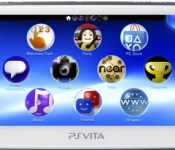
Amazon offers another chance to pick up a white PlayStation Vita

Fancy a limited edition Crystal White PS Vita bundled with Assassin’s Creed III Liberation for just $180? Well, sorry old bean, but you’re too late. That particular deal ended ages ago and the Liberation bundle is now selling for ludicrously high prices (oh, the cruelty of it). But here’s something we didn’t expect: the rare white version of the handheld has just reappeared at Amazon as a not-so-limited standalone product priced at $200, i.e., the same money as the common black option. Aside from the color scheme, this is a traditional unit with an OLED display, rather than the Japanese LCD version that has better battery life. However, it’ll look great during these icy winter months and, by summer, it’ll bask in the warmth of Sony’s exciting new game streaming service, PlayStation Now.
Filed under: Gaming, Handhelds, Sony
Via: Joystiq
Source: Amazon.com
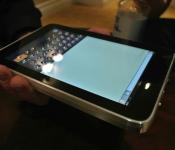
Tactus Technology Shows Us Their New Keyboard Tech [CES 2014]
 One particular piece of technology caught my attention at least year’s CES which was a creation from Tactus Technology. Tactus has managed to address a gripe that many of us had when switching from feature phones to smartphones; the loss of tactile feedback while typing on a touchscreen keyboard. Through the magic of science, Tactus places a film on top of the existing touchscreen and then when a keyboard function is detected, a physical keyboard will rise up from the screen to provide tactile feedback for typing purposes; that much was show at CES 2013. At CES 2014 though, it looks like Tactus has taken their creation to the next level.
 Tactility of the home, menu and back keys are generally not an issue for phones which have soft keys that are separate to the screen. However, many manufacturers, such as LG, have begun to adopt onscreen soft keys which can make pressing those keys a little less tactile than desired and have the added danger of bumping and activating the soft keys. What Tactus has implemented, which is shown in the above photo, are not only tactile keys for the soft function key, but the ability to program a ‘long press’ threshold that defines how long (or short) the button needs to be pressed before a press is registered.
 Their next experiment provides a rather unorthodox method of providing tactile feedback; instead of working out different ways of creating raised keys, the concept pictured above is of Tactus new concept keyboard which raises the space between the keys to create grooved and trenched keys. While this is unintuitive at first glance, trying to use the keyboard in this format was actually remarkably easy, both using the standard two thumb typing as well as Swype-ing. These trenched keys act not dissimilarly to the frets of a guitar, guiding your finger to the correct location and Tactus has observed that accuracy and typing speed is actually slightly increased using this concept rather than their original concept.
 Tactus had one last concept to show us which was very much in the prototype stage which involved a hardware add-on that allowed the user to control when the raised keys would appear. The kit would simply include the additional layer to be placed on the screen and the add on which would be added to the side of the device in question. The sale of this implementation of the Tactus technology will be handled by a third-party and is expected to be released sometime after mid 2014. That’s pretty exciting news to hear that this futuristic technology is going to be available so soon, and while Tactus was reluctant to name any specific devices that would be supported by this add-on, it would be a safe bet to think that there will be at least one Android device in there somewhere.
For more information about Tactus Technology, visit their website at www.tactustechnology.com
Note: stay tuned to see our video of the Tactus keyboards in action. To be added soon…

UK travellers set to get 3G and LTE services inside the Channel Tunnel

For more than a year, the Channel Tunnel (a 32-mile mile underwater tunnel connecting England and France) was regarded as French territory, as far as the mobile industry was concerned. Three major French carriers had signed deals with EuroTunnel to offer access on its networks, leaving British travellers without access. That’s set to change, however, after UK providers EE and Vodafone announced they will supply 2G and 3G access to customers journeying to France from March. Both companies say 4G services are coming, but will arrive a little later down the line. While neither company has detailed the data speeds you can expect to receive as you pass under the world’s busiest seaway, EE suggests you’ll still be able to prepare for meetings, check your emails and watch streamed movies when its LTE service goes live in the summer.
[Image Credit: cunaldo, Flickr]
Filed under: Cellphones, Wireless, Mobile
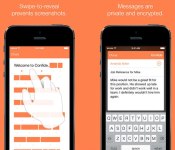
Confide is like Snapchat for business, but without pictures

The written word has a nasty habit of sticking around, surfacing in hacked email accounts, accidental forwards and the on untrustworthy lips of your peers. That’s why former AOL executive Jon Brod created Confide, an iOS texting app that erases sensitive messages as soon as their read. It’s designed to make private texts as fleeting as whispered secret, retained only in the memory of the person you confided in; hence the name. To protect itself against the iPhone’s screenshot function, the app only reveals a few words at a time, blocking the rest out with an orange sensor bar until the user’s finger glides across the screen. Unlike Snapchat, however, the app doesn’t seem to support picture sharing. The app is live on the App Store now, you know, in case you needed a fresh way to share office gossip.
Filed under: Cellphones
Via: Forbes
Source: iTunes
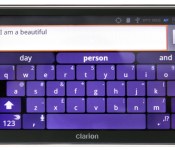
SwiftKey’s predictive text input makes its way into your car stereo

It’s no secret that we’re pretty big fans of SwiftKey ’round these parts, but even we couldn’t have predicted where it’d wind up next. Today, the keyboard app announced that its adaptive text-entry will be integrated with Clarion’s forthcoming AX1 head unit. It might seem odd at first, but since Clarion’s kit has native apps for email and web browsing, predictive text (compared to a standard keyboard) ought to make the device easier to use. As SwiftKey tells it, the company is taking everything it’s learned from the mobile environment, and applying it to other areas where it makes sense. In other words, this likely isn’t the last time we’ll see the third-party keyboard somewhere other than a phone or tablet. The AX1 is expected to release sometime this quarter for $800, and if you’re feeling antsy you can pre-order one right now.
Filed under: Transportation, Mobile
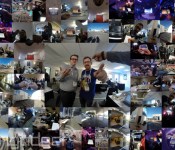
CES 2014, Day 3: The trade show highlights they don’t want you to see!

While the White House was busy extending the lifespan of the International Space Station, we were pounding the CES 2014 show floor. Sure, the Las Vegas Convention Center is packed with home automation demos, arm-bound muscle sensors and prototype smartwatches, but there’s more to a trade show than just the exhibition hall — there are celebrity cameos, killer interviews and WWE programming announcements, too. Take a step back from the CES crowds and join Engadget for a look at the show from another perspective.
And the nominees are…

Our daily roundups are one way to look at the show, but if you want to know what’s really cooking at CES, there’s no better place than the official Best of CES awards. We’ve handpicked more than 40 products across 13 categories, representing the most exciting technology to come out of the show. Of course, it’s not just our judges who are picking from the litter: We’ve also built a special People’s Choice category, just to make sure you get a say. So take a breather, check out the finalists and pick a favorite — you’ve got until 6PM EST tomorrow, January 9th, to declare a winner.
Legere, Live

There may be a formula to hosting a CES keynote, but sometimes, all you need is a quirky character. T-Mobile’s John Legere certainly fits the bill. After sneaking into, and rapidly being kicked out of competitor AT&T’s CES party earlier this week, Legere hosted an event of his own. “The biggest evil in this industry is the family plan,” he says, and T-Mobile wants to take it down. How? Well, by paying the early termination fees of customers switching from competitor family plans to the Uncarrier network, up to $350 per line. It’s a pretty bold promise, but it seems to be working out: The company did just have its most successful quarter in more than eight years.
Beyond Ultra High-Definition

While Samsung and LG are busy fighting over who can make a better curved television, Sharp is focusing on resolution. Apparently, the 4K standard that defines what the industry calls an Ultra HD set isn’t good enough for the firm — it’s upped the ante to 8K. Sharp’s 85-inch 8K glasses-free 3D TV is truly a sight to behold, even if its stereoscopic trick can come off a bit blurry at times. It’s still too early to judge this prototype, but it’s a surefire marker of how fast the display industry is moving. The vibrant behemoth might not be an award winner, but we can’t wait to see the fruit its technology bears.
Highly automated drifting

There’s putting faith in technology, and then there’s putting your life in the hands of BMW’s highly automated robot driving system. Suffice to say, we survived and we also had a blast. BMW’s automated M235i drifted Engadget’s editors through the curves of the Las Vegas Motor Speedway, automatically and without human assistance. Although the car was following a pre-defined path, its ability to react to slick road conditions was stunning. BMW doesn’t expect robots to be driving us to work until about 2020, but that doesn’t make this CES presentation any less thrilling.
A day in the life

It’s one thing to read a tech blog’s explorations of CES 2014, but it’s another to see it happen. We strapped a GoPro and a FuelBand to one of Engadget’s busiest bodies and let the tech record 24 hours of trade show trailblazing. Follow Michael Gorman as he braves the CES crowds, shoots hands-on photos, conducts interviews, attends press conferences and tells the world about it all on national TV. If you’re not exhausted vicariously, drop us a line. We could use someone with your stamina.
Filed under: Misc

Magellan’s Echo is a remote control for your smartphone

Magellan is a company known for its GPS products, so it might surprise you to learn that its latest smartwatch doesn’t contain any mapping hardware whatsoever. Instead, the Magellan Echo works more like a remote display for your phone, streaming data from apps like Wahoo Fitness, Strava and MapMyRun. Once inside an app, not only can you customize what information is available on your wrist, but you can also assign buttons to control specific features on the phone – like your music player. Considering that it looks as unthreatening as an old-school fashion watch, we imagine there’s plenty of scope for this to catch on.
Nicole Lee contributed to this report.
Filed under: Wearables

Samsung’s 105-inch curved UHD TV and 85-inch bendable screen hit retail this year

If you dug the 105-inch curved Ultra HD TV and bendable 85-inch UHD screen (above) Samsung debuted this week, we have good news. They’ll both hit retail sometime in the second half of this year, according to the tech giant. If you were expecting pricing info, well, you’re going to have to wait a little longer because we don’t have that just yet. However, it’s going to be at least six months before these sets hit stores, so we suggest you start saving your pennies right about now — unlike other options, we have a hunch that these beauties won’t be cheap.
Filed under: Home Entertainment, HD, Samsung
Source: MarketWatch

Gemini Planet Imager photographs alien worlds in just a minute

Although it has been possible to take direct photos of exoplanets for a few years, the technology involved has been low-resolution and slow — it can take up to an hour to get a crude shot of a dimly-lit world. It’s much easier with the recently launched Gemini Planet Imager (GPI), though. Scientists have released early images from the Chile-based instrument that took a mere minute to capture, and reveal more detail than ever before. Researchers have already spotted a full dust ring (seen at left) and the spectrum of a young planet. The imager’s secret ingredient is a deformable, etched silicon mirror that can correct for atmospheric distortion much more effectively than traditional glass. GPI is still relatively untested, but it should ultimately let astrophysicists focus on quality over quantity when studying alien worlds.
Via: Space.com
 AIVAnet