


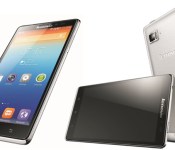
Lenovo launches LTE-flavored Vibe Z and affordable A859 worldwide

Sometimes Lenovo is ahead of the curve: It was first to market with Intel’s mobile chips for two years in a row. When it comes to LTE, though, the company has been sadly trailing; it’s only just getting around to releasing its first 4G device. But you know what they say — better late than never, right? Lenovo’s LTE-capable Vibe Z is finally reaching markets outside China, and though it won’t win any awards for timeliness, it at least arrives on the scene with some solid specs. What we have here is a 5.5-inch handset with a 1080p IPS display, a pixel density of 400 ppi and a thin, 7.9mm-thick build. Inside, it’s powered by a quad-core Snapdragon 800 chip (not Intel this time), along with 2GB of RAM, up to 16GB of internal storage and an 802.11ac WiFi radio. Imaging-wise, you get both a 13-megapixel f/1.3 camera along with a 5MP webcam up front. Lenovo also threw in some custom camera software allowing you to add special effects, if that’s your sort of thing.
What’s interesting is that although this is Lenovo’s most advanced phone to date, it has generally the same industrial design as Lenovo’s other recent mobile devices, including the Vibe X and the doomed Yoga Tablet. All of which is to say, it has a textured plastic back, which in the past has stood up well to scratches and fingerprints, even if it doesn’t look premium, per se. It also appears to run the same heavily skinned version of Android (version 4.3, in this case). That means some oversized icons, for starters, and also a missing app drawer. As it happens, though, heavily skinned phones are fairly common in the Asian market, which is precisely where the Vibe Z is headed: Lenovo says it will arrive in February in Indonesia, Malaysia, Thailand, Saudi Arabia, United Arab Emirates and the Philippines, with an unlocked price of $549.
Additionally, Lenovo is bringing three other phones — none of which have LTE, unfortunately — outside Greater China. Working our way down the line, there’s the new A859, a 5-inch phone with a 720p IPS display, dual SIM slots, 8MP/1.6MP cameras, a quad-core MediaTek processor, 1GB of RAM and 8GB of built-in storage (expandable via a microSD slot). Unlike the Vibe Z, it’s a little thicker (9.2mm) and runs an older version of Android (4.2.2 Jelly Bean, to be precise). Meanwhile, the S930 actually has basically the same specs, except it has a bigger 6-inch screen (and a lower pixel density). Finally, we have the S650, a 4.7-inch device with 8MP/0.3MP cameras and a lower-res 960 x 540 screen. Those differences, aside, it otherwise has the same specs as the other two, including the same processor and dual SIM slots. All of the above are available now “in countries where Lenovo smartphones are sold” (read: mostly Asian countries), priced at $219 for the A859, $319 for the S930 and $229 for the S650.
Filed under: Cellphones, Mobile, Lenovo
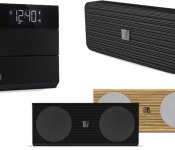
Soundfreaq unveils its range of Bluetooth speakers for 2014

Soundfreaq may not have bothered with a spell-check, but the company clearly made some effort creating its latest gear with a pair of Bluetooth speakers and a refreshed version of its alarm clock. The Jambox-class Pocket Kick retails for $100, packing a 10-hour battery and speakerphone, while the $120 Double Spot looks to be squaring off against the Big Jambox. Rounding out the set is the revamped $70 Sound Rise, which sees the digital display moved to the top of the hardware and loses the lower docking plinth. Naturally, all three come with Bluetooth 4.0, USB and 3.5mm line-in ports as standard, and will arrive in June, June and April, respectively.
Filed under: Home Entertainment, Portable Audio/Video
Lenovo debuts four new smartphones, including LTE-ready Vibe Z
Lenovo gets the year going with four new Android smartphones
Lenovo on Thursday introduced its new line of Android-powered smartphones, including their first LTE-equipped handset.
In addition to LTE support, the Vibe Z is a razor thin (7.9mm) and features a quad-core Snapdragon 800 processor. Additionally, the device boasts a 5.5-inch 1080p HD display, 2GB RAM, a 13-megapixel rear camera, and 16GB internal storage.
Moving down the line, the S930 is a super-sized (6-inch, 720p) experience with a 1.3GHz quad-core Mediatek processor, 1GB RAM, and 8GB internal storage. Powered by Android 4.2 Jelly Bean, it’s a solid mid-range device across the board. The S650 features nearly identical specifications; however, it has a 4.7-inch display.
An entry level A859 rounds things out with a 5-inch display, 1GB RAM, 8GB internal storage, and an 8-megapixel rear camera. Like the S series of handsets, this guy also comes in dual-SIM options.
In terms of availability, these Lenovo models will be offered in the same markets that current handsets are sold. Unfortunately, it doesn’t look like we’ll get any of these smartphones in the United States, unless through unlocked and direct capacities.
The Vibe Z starts at $549 and is available starting in February in Indonesia, Malaysia, Thailand, Saudi Arabia, United Arab Emirates and the Philippines.The S930 and S650 start at $319 and $229, respectively. They are available beginning immediately in countries where Lenovo smartphones are sold. The A859 starts at $219 and is available starting immediately in countries where Lenovo smartphones are sold.
Lenovo Launches Its First LTE Smartphone with Vibe Z
Expands Smartphone Lineup with Four New Devices
- Blazing-fast Vibe Z blends LTE, beautiful design and advanced technologies into premium package
- New S Series smartphones offer versatility with supersized or pocket-sized options
- A Series all-rounder offers high performance in affordable device
RESEARCH TRIANGLE PARK, NC – January 2, 2014: Lenovo (HKSE: 992) (ADR: LNVGY) today introduced its first
LTE smartphone, the Lenovo Vibe Z, a gorgeous razor-thin, blazing-fast device equipped with gesture controls, photo enhancement software and other premium technologies. To complement the Vibe Z, Lenovo also launched a trio of smartphones, starting with the S930, a supersized 6-in device primed for media addicts, the S650, a 4.7-in compact and stylish workhorse, and the “tweener” A859, a 5-in high performance all-rounder.
These four new devices complement Lenovo’s existing portfolio of phones ranging from feature phones to premium
smartphones across multiple price points. Lenovo, currently the #3 smart connected device maker worldwide, has
expanded aggressively into the global smartphone market, introducing smartphones in 18 countries in the past two years.
“We created the new Vibe Z with its elegant design, high performance and custom software so that people can truly have the best smartphone experience now at the speed of LTE,” said Liu Jun, senior vice president, Lenovo Business Group, Lenovo. “Along with the Vibe Z, our new S and A Series smartphones offer consumers choices of screen size and features so they can pick the Lenovo smartphone that’s right for them.”
Vibe Z Wraps LTE, Style and Top Technologies into One Incredible Device
As Lenovo’s first smartphone featuring LTE capabilities, the Vibe Z offers true mobile freedom with super-fast data upload at up to 50 Mbit/s1and downloading at up to 150 Mbit/s1 to satisfy the most data hungry of individuals. The Vibe Z operates on GSM/UMTS networks up to 2100 and also comes with 802.11ac WiFi and Bluetooth 4.0.
The svelte Vibe Z comes encased in a thin 7.9mm silver or titanium body weighing just 147 grams. Users will appreciate its laser-etched, fabric-feel rear cover that is comfortable to hold and its 5.5-in full high definition (1920×1080) IPS wide angle viewing touchscreen display. Images appear pin sharp leveraging the Vibe Z’s 20/20 Vision display with a pixel density of 400 pixels per inch. While beautiful on the outside, the Vibe Z packs in superior performance technologiesinside starting with its Qualcomm Snapdragon™ 800 Quad-core 2.2GHz processor to deliver extreme performance for watching movies, capturing and editing photos, multitasking among apps, playing games and video chatting. Loaded with 2 GB of memory, up to 16 GB of internal storage and running Android 4.3, the Vibe Z offers plenty of space for thousands of favorite photos dozens of videos.
With its custom imaging software and high resolution cameras, the Vibe Z surpasses the shutterbug features of other
smartphones. It has a 13 MP rear camera with a large f1.8 aperture lens to defy low light situations and capture
breathtaking photos and a 5 MP front camera that’s equipped with an 84° lens for wide-angle shots. Lenovo’s Super
Camera and Super Gallery apps let users add fun effects to their photos easily. Additionally Vibe Z offers Lenovo-specific software supporting motion and gestures for better one-handed usage on large screen devices.
“We are proud to collaborate with Lenovo to enable the company’s first LTE smartphone,” said Raj Talluri, senior vice
president of product management, Qualcomm Technologies, Inc. “The new Vibe Z utilizes the Qualcomm Snapdragon 800 processor with integrated LTE technology to deliver superfast web browsing and unmatched multimedia features for an outstanding user experience.”
S Series Smartphones Offer Supersized or Pocket-Sized Mobile Media
The S930 perfectly satisfies the most voracious of media mavens with its high definition and audio enhanced movie and gaming experience while the S650 offers a powerful pocket-sized media device. Both smartphones adopt the Vibe Z’s silver body and laser-etched fabric-feel rear cover, the S930 supersizes the available screen real estate with its 6-in high definition 1280×720 touchscreen while the S650 sports a compact 4.7-in gHD 960×540 display with IPS wide angle viewing. The S930 provides an immersive and rich audio experience with its twin speakers and Dolby® Digital Plus and even has directional sensors to move characters in 3D.
Powered by a MediaTek Quad Core processor and running Android 4.2 at just 8.7mm thin, both the S930 and S650
smartphones have valuable technologies to help users get the most out of their device including a dual SIM card allowing for two numbers in one device. They come with an 8 MP rear camera with flash, a capable front camera, Lenovo’s Super Camera and Super Gallery apps to add effects to photos and 8 GB of storage. Both smartphones include gesture-based controls and the latest Lenovo launcher customizations.
A859 All Around Performance Model
Designed for great all around performance, the A859 smartphone combines several in-demand features for a rewarding experience. Available in white or black, it measures 9.2mm thin with a 5-in high definition (1280×720) IPS screen with 178° wide angle viewing. Like the S Series, it has a dual SIM card, runs on a MediaTek 6582 processor and Android 4.2, has an 8 MP rear camera, a front camera and 8 GB of storage.
Pricing and Availability
The Vibe Z starts at $549 and is available starting in February in Indonesia, Malaysia, Thailand, Saudi Arabia, United Arab Emirates and the Philippines.
The S930 and S650 start at $319 and $229, respectively. They are available beginning immediately in countries where Lenovo smartphones are sold.
The A859 starts at $219 and is available starting immediately in countries where Lenovo smartphones are sold.
For the latest Lenovo news, subscribe to Lenovo RSS feeds or follow Lenovo on Twitter and Facebook. The press kit is available at: http://news.lenovo.com/CES2014.
About Lenovo
Lenovo (HKSE: 992) (ADR: LNVGY) is a US$34 billion personal technology company – the largest PC maker worldwide and an emerging PC Plus leader – serving customers in more than 160 countries. Dedicated to exceptionally engineered PCs and mobile internet devices, Lenovo’s business is built on product innovation, a highly-efficient global supply chain and strong strategic execution. Formed by Lenovo Group’s acquisition of the former IBM Personal Computing Division, the Company develops, manufactures and markets reliable, high-quality, secure and easy-to-use technology products and services. Its product lines include legendary Think-branded commercial PCs and Idea-branded consumer PCs, as well as servers, workstations, and a family of mobile internet devices, including tablets and smart phones. Lenovo, a global Fortune 500 company, has major research centers in Yamato, Japan; Beijing, Shanghai and Shenzhen, China; and Raleigh, North Carolina. For more information see http://www.lenovo.com.
The post Lenovo debuts four new smartphones, including LTE-ready Vibe Z appeared first on AndroidGuys.

ASUS user manual confirms VivoTab Note 8 Windows tablet

ASUS has just verified that a VivoTab Note 8 slate is imminent after it published the manual on its own site. According to leaks we saw earlier at the FCC and elsewhere, the Windows 8.1 device will be powered by an Intel Atom Z3740 quad-core CPU and have 2GB of RAM, up to 64GB of storage, a 1,280 x 800 touchscreen (which may include Wacom digitizer support), a dedicated stylus, front and rear cameras and a microSD slot. Though the reported specs and $300 price position it closely to the Dell Venue 8 Pro, the VivoTab seems to include the pen, unlike its competitor. All that’s left now is a formal launch with availability and final pricing, which is probably set for a certain little Vegas show.
Via: Laptoping
Source: ASUS

‘Lucky Bags’ Go on Sale at Japanese Apple Stores, Big-Ticket Items Included
Apple Stores across Japan have today begun selling different configurations of the Fukubukro, or “lucky bag”, giving customers the chance to purchase a random assortment of products sold at a steep discount, reports Japanese blog Mac Otakara [Google Translate].
This year’s lucky bags, which sell for 36,000 yen, or $345, come in four different configurations with certain items appearing in every bag, including a t-shirt commemorating the event, an Incase City Collection Compact Backpack in a special red color, and a Mophie Juice Pack PowerStation Mini with a design to match the grab bag.
 MacBook Air Lucky Bag (Source: App Bank, Google Translate)
Different items between the bundles however differ greatly, with one configuration of the bag offering a 11-inch MacBook Air with a Power Support Air Jacket, an Apple Magic Mouse, and a Beats by Dre Pill Bluetooth speaker, and another variant of the bag offering a Wi-Fi only iPad Air with Smart Cover, Nike+ FuelBand SE, Phillips Hue Starter Kit, and Square Reader.
 iPad Nano Lucky Bag (Source: App Bank, Google Translate)
The other two versions of the lucky bags are highlighted by the inclusion of either a non-Retina iPad Mini or 7th generation iPad nano, with items such as the Jaybirds BlueBuds X Bluetooth headphones, the IZON View remote camera, and Logitech’s Ultimate Ears Mobile Boombox appearing among other items as well.
 iPad mini Lucky Bag (Source: Mac Otakara)
Apple’s grab bags are sold as is, and returns are not accepted unless a product is found to be defective. Still, the bags have been quick sellers on previous occasions, with many people lining up the night before to get their hands on a bag.
As with past years, Apple’s Lucky Bag promotion is limited to Japanese customers, though other countries, like China, may see the same traditional Apple Store sales during the new year.
     |

Leak shows LG’s radical new interface for its webOS Smart TVs

LG’s rumored webOS Smart TV is tipped to arrive at CES in the coming days, but that hasn’t stopped intrepid leaker @evleaks from giving us what could be an early preview of its next connected set. In what appears to be a significant departure from the smartphone-like UI utilized in its current Smart TVs, the leaked render shows off LG’s modern interpretation of the Cards interface we first saw in Palm’s webOS-powered smartphones and tablets. LG chiefs have already indicated that the company has thrown its weight behind the Enyo open-source JavaScript development framework, which it acquired from HP as part of the webOS project, in the hope it will encourage third parties to create apps and services for its next-gen TVs. If the leaked image is real, YouTube, Facebook, Twitter and Skype apps will likely be available at launch, but we’re set to find out for sure when CES 2014 commences next week.
Filed under: Home Entertainment, Software, HD, LG
Source: Evleaks (Twitter)
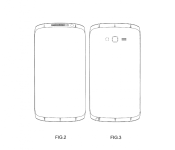
Galaxy S5 and Galaxy Note 4 Design Patent Images Hint at their Designs

The Galaxy S5 and Galaxy Note 4 are the two flagship devices that will be on the top of many tech enthusiasts list for 2014. There have been numerous rumors that Samsung is finally going to step away from their traditional plastic shells, and switch over to aluminum cases. Now it seems that Samsung has submitted some design patents in December, and the images on this post might be what the new phones will look like.


To me, the design reminds me of the HTC One S, but a lot bigger of course. Super thin, and has a sexy curve design to it. Nothing has been confirmed yet, on if these designs will be used, but it is nice to see what we might expect for the Galaxy S5 and Galaxy Note 4. Let us know what you think of the images.
Source: SamMobile

Ford’s C-MAX Solar Energi Concept is powered by a roof panel, rolls to CES next week

The tech inside green vehicles continues to improve, Ford has just announced a concept looks to push it even further. The US auto maker has outed the C-MAX Solar Energi Concept: a vehicle that packs in all of the perks of a plug-in hybrid, but doesn’t require that tether to recharge. As the name suggests, a roof-mounted solar panel collects a day’s worth of energy needed to churn out the same performance as the C-MAX Energi Hybrid; however, the new Solar Energi model seeks to do so without relying on the ol’ power grid. The panel itself houses “a special solar concentrator lens” that acts like a magnifying glass, directing those requisite rays on the rooftop. After rolling around the lot of the LVCC at CES next week, the concept vehicle will be tested by researchers from Ford and Georgia Tech — who helped develop the panel system — to see if the C-MAX Solar Energi is indeed viable for production. For now, we’ll have to wait to grab a closer look in a few days.
Filed under: Transportation
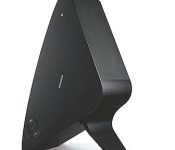
Samsung reveals new wireless streaming speaker, home theater system, portable stereo and two TV soundbars

Clearly Sonos, Samsung’s been peeking at your Play:1 playbook. After introducing the Shape wireless streaming audio system and the M7 speaker mere months ago, the Korean company is now ready to reveal a new, smaller member of the family, the M5, at CES. This new model has only three drivers (down from the five inside the larger M7), but still packs the same wireless audio tech as its elder — meaning it’s controlled by the Shape mobile app, connects to your local network through a Shape hub wired to your router and automagically fits into your existing system, whether it’s a multi-room or multi-channel setup. Additionally, Samsung’s cooked up a connect box that hooks up with old school analog speakers and loops them into the Shape system so they can be wirelessly controlled too.
Plus, Samsung’s crafted a pair of Shape-compatible soundbars, the HW-H750 and the HW-H600. The H750 soundbar pumps out 320W of sound and is built to sit beneath the largest of TV’s (curved or otherwise), while the H600 sound stand is designed so that smaller 32-55 inch TV’s sit directly on top of it while it pumps out multi-directional 4.2 channel audio.

Alongside those offerings, Samsung will be showing off a new HT-H7730WM home entertainment system at CES as well. The system comes with six speakers, one subwoofer, a Blu-ray player capable of upscaling to UHD (4K) resolution and an amplifier packing both analog vacuum tubes and digital amps. Additionally, despite having 6.1 speakers, the system delivers up to 9.1 channels of sound using the new DTS Neo: Fusion II codec.

Lastly, Samsung’s latest GIGA system will make its debut in the Nevada desert, the MX-HS8500. With 2,500W of power and twin 15-inch subs at its disposal, it’s got enough thump to wake the neighbors, but it’s not meant for home use as it’s been built to travel. That’s right, this GIGA’s got wheels and a retractable handle, so you can more easily take it with you to your next tailgate party. Plus, it still has the same visual flair as previous GIGA systems, meaning it has fifteen different lighting effects settings to please partygoers’ eyeballs. And, the HS8500 utilizes Samsung’s Bluetooth Hi-Fi wireless audio streaming tech to stream sound from the company’s compatible TVs. Of course, audio gear must be heard to in order to be fully appreciated, so rest assured we’ll be listening to all of Sammy’s new audio offerings at CES next week. Stay tuned.
Filed under: Home Entertainment, HD, Samsung

Watch an ultrasonic array move objects in 3D space (video)

Ultrasonic levitation has been possible for awhile, but it’s not very practical when objects must typically hover along a single axis. University of Tokyo researchers Yoichi Ochiai, Takayuki Hoshi and Jun Rekimoto have cleared this hurdle with an ultrasonic array that can push items around in 3D space. The machine creates a focal point from a three-dimensional standing wave; users just have to alter the wave’s properties to move whatever is caught inside that point. The technique can manipulate a wide range of materials, and it’s safe to disrupt with your hands. While the array will need to scale up before it lifts objects much larger than matchsticks or screws, it already shows that we don’t need exotic technologies like tractor beams to float things through the air.
Source: Yoichi Ochiai
 AIVAnet