USPTO stays busy in 2014, Samsung awarded 4925 patents for the year

IBM, Samsung, and even Google made it onto the top 10 list for patents awarded by the U.S. Patent and Trademark Office (USPTO). While IBM and Samsung take the top two spots (IBM dominated Samsung with 7534 patents awarded), Google comes in on the leader board at number 8, which is the first time the Mountain View search giant has appeared in the top 10.
The past few years have been a total pain for Samsung when it’s come to patents. In a near-constant state of being bogged down by infringement lawsuits, Samsung may be attempting to prevent such legal actions in the future by dutifully applying for as many patents as it can. Compared to 2013, Samsung’s patent awards increased 5.9% in 2014.
Google’s increase from 2013 to 2014 was 38.6%. One of the reasons behind this increase may have to do with all of the robotics and smart home technologies Google gobbled up in recent years. Not to mention, Google’s brief acquisition of Motorola was a way for them to get their hands on Project Ara. The company’s work on developing Project Ara, a prototype smartphone that utilizes a modular design similar to your home computer, probably comes with a slew of technology that Google needed to get patents for.
As has been the case for the past couple of years, Apple and Facebook did not appear on the list; however, Facebook did have a 120% increase in patents awarded compared to 2013.
Source: IFI CLAIMS
Come comment on this article: USPTO stays busy in 2014, Samsung awarded 4925 patents for the year
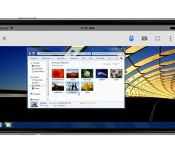
Use your iPhone to access Google’s Chrome Remote Desktop

Google said it would allow both iOS and Android users to leverage its Chrome Remote Desktop feature on-the-go, but Apple faithful have yet to get the chance… until today. Once you’ve installed the desktop app from the Chrome Web Store, access to that machine with an iPhone or iPad is a few taps away. The Android version rolled out last April, and despite a lengthy wait, those who prefer iOS can now make use of the tool. Looking to take it for a spin? The app is available for download at iTunes.
Filed under: Software, Mobile, Google
Source: Google Chrome (Google+), iTunes
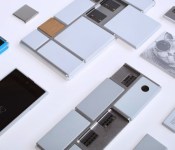
New MDK for Project Ara released ahead of second developer conference

Google has just released the second version of their Module Developers Kit (MDK .2) for Project Ara, which expands on how developers should go about creating new modules. We weren’t planning to see anything regarding the new MDK from Google until their next developer conference, which will be held on January 14th in Mountain View, California. Google will definitely expand on the MDK during the conference, but for now, we get a sneak peek at what’s to come in a few days.
One addition to the Project Ara undertaking is a new contactless connection system between the modules and exoskeleton that save space, reduce overall cost and will increase the overall durability of the device. What’s more, the team also introduced a new software protocol called Greybus which will better handle the communication between modules and the exoskeleton. In a future update, Ara owners will be able to manage the functions of the modules using a dedicated Ara Manager app on their devices. The app will also give users more advanced module details, and will allow users to swap the modules whenever they’d like.
We’re also getting a bigger overview on the Ara Module Marketplace, the online shop where Ara users will go to buy new modules directly from developers. Like we’ve reported in the past, the Ara Module Marketplace will be controlled by Google when it comes to payment processing. Google will also ensure all modules are safe to use for the public.
We’ll be sure to update you if we hear any new information before the conference on the 14th.
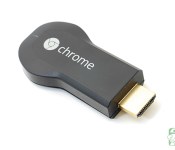
Best Buy offering the Chromecast for $30, throwing in $20 of Google Play credit

Google’s Chromecast is already insanely cheap, being sold for around $35 most places. Best Buy currently has a sale going on that reduces the price and throws in some extra goodies. You can grab a Chromecast through BestBuy.com for only $30 ($5 off), and it comes with $20 of Google Play Store credit. Once you purchase your Chromecast, you’ll receive a unique code via email that will allow you to redeem your $20 through Google Play. Most Chromecast users spend money through Google Play anyway, so if you think about it, you’re getting a Chromecast for only $10. If you’d like to take advantage of this deal, head here and place your order before January 31st.
Every once in awhile, Google gives out promotions and offers through the Chromecast website. Right now, you can get two months of free Hulu Plus along with 90 days of free Google Play Music All Access. They’ll even throw in a free copy of X-Men to sweeten the deal. Suffice it to say, if you’ve been waiting to pick up a Chromecast, now is probably the right time to do so. Once you have your Chromecast, head to this website to claim your free Hulu Plus and Google Play Music promotions!

Making sense of the latest Android security updates scare

Some of the world’s biggest publications including the Wall Street Journal and Forbes are running a story about how Google is no longer fixing security bugs in older versions of Android. The prize for the most sensationalist headline probably goes to Forbes for “Google Under Fire For Quietly Killing Critical Android Security Updates For Nearly One Billion.”
A headline about critical security updates that aren’t going to be available for nearly one billion devices is enough to worry even the most non-technical of people. With publications like the WSJ and Forbes pushing out this story, I think we can officially call this a “scare.”
It all started with a post by Tod Beardsley on the Metasploit blog. Metasploit is a tool that security experts use to test different computers and devices to see if they are susceptible to security vulnerabilities. The Metasploit tool has a large following in the security world and it garners a huge amount of respect. Tod Beardsley himself is a respected engineer with years of experience working in the security industry. He has often been a speaker at security conferences and is a member of the IEEE.
The whole business of distributing patches downstream is a whole other problem that needs to be addressed.
Tod wrote a blog post about how Google is no longer accepting security related patches for the WebView component of Android prior to Android 4.4. The WebView component is a core part of Android. It allows any app to create a mini web browser within the app itself. This can be useful for displaying simple static HTML, like help or instructions, or it can be used to build an entire app using HTML5 and Javascript. If any of these apps actually connect to the web to download content or to visit a site then the potential exists for a hacker to trick a user into opening a web site that exploits bugs in the WebView. Once exploited the hackers can take control of the device and install malicious software.
For example, if you use a RSS reader that relies on using WebView as a way to read the full story from an item listed in an RSS feed, then it would be possible for an attacker to get a story published that takes users to a malicious site. The mini web browser in the RSS reader could then be exploited, if it is vulnerable.
Beardsley does some maths and demonstrates that some 930 million Android devices are no longer receiving any security patches from Google. Everything that Beardsley has written is factually correct and the threat is real. “Without openly warning any of the 939 million affected, Google has decided to stop pushing out security updates for the WebView tool within Android to those on Android 4.3 or below,” wrote Thomas Fox-Brewster for Forbes.

But the situation isn’t as black and white as Beardsley and Fox-Brewster are suggesting. Ask yourself this question, when was the last time that Samsung, or HTC, or LG posted an update for devices running Android 4.1, 4.2 or 4.3? Obvioulsy, I am unable to keep track of every update pushed out by every company in the world, so I am sure there will be some exceptions to this, but the answer is – rarely.
Even if Google does continue support, would the devices even get it?
So even if Google fixed the source code in Android 4.3, the chances of it arriving on a actual handset are quite small. One of the first comments on Beardsley’s post was by dr.dinosaur who wrote, “Even if Google does continue support, would the devices even get it? As you mentioned, getting updates on these old devices is not an easy process as it has to get approved by the manufacturer, approved by the carrier, pushed to the device itself, and downloaded and installed by the user.”
Tod acknowledges this with a follow-up reply, “The whole business of distributing patches downstream is a whole other problem that needs to be addressed. That said, if the handset manufacturers or the carriers weren’t picking up Google-sourced patches before, I somehow doubt they’ll be faster to pick up patches from Some Guy On The Internet…”
What is really broken with Android is not if and when Google supplies patches for Android, but the ‘whole business of distributing patches downstream.’
And his point is valid in that OEMs are unlikely to pick-up security fixes to AOSP that have been published by random people on the Internet. But he also points out that the handset manufacturers weren’t picking up Google-sourced patches anyway. What is really broken with Android is not if and when Google supplies patches for Android, but the “whole business of distributing patches downstream.”

Google has done a lot to address this problem over recent years. Firstly it started de-coupling various components and services from the main Android build and offering them as updates via the Play Store. For Android 5.0 Lollipop, Google has also unbundle the WebView component and is offering that as an automatic update from the Play Store. That should stop the current situation with Android 4.3 occurring in the future.
If you are using Android 4.x then you should consider installing a browser like Chrome or Firefox to do you main mobile browser
Second, Google has various programs like the Nexus range and Android One, which allow people to buy handsets which get updates directly from Google. The result is that the downstream update model is slowly changing. It isn’t perfect by a long way, and while the OEMs and carriers remain slow in updating devices then the potential for this kind of problem still exists.
It is also worth mentioning that alternative firmwares, like Cyanogenmod, probably pick up the fixes from Google quicker than the OEMs. So technically anyone running CyanogenMod 10.x will no longer get any security updates unless a non-Google engineer patches the the AOSP or Cyanogenmod code for known vulnerabilities.
If you are using Android 4.x then you should consider installing a browser like Chrome or Firefox to do your main mobile browsing, rather than using the built-in browser. This will at least ensure that you are protected from known vulnerabilities when surfing the web, regardless of what patches are available for your version of Android. If you use an app that opens up a WebView to connect to the Internet then you should consider finding an alternative, unless the app only accesses some limited hard-coded URLs.
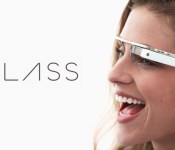
Patent Reveals the Past (and Future?) of Google Glass
 A patent recently published on the USPTO’s website filed by Google in 2011 shows the idea that Google may have had for Google Glass. One of the diagrams, shown below, shows Google’s idea for the shape of the glasses, the positioning of the camera, and the location of the processor and projector of the glasses.
 The glasses are less of the minimalist style we’ve seen recently and more along the lines of protective goggles, which could be a useful feature: if you’ve discovered something awesome enough to video from your head, there’s a good chance you could get hurt doing it. The camera is positioned in the center of the glasses, which makes them look ungainly in the sketches (which, according to most consumers’ thoughts about the current design, doesn’t differ much from the current design.
Something else very interesting about the diagrams is the projection capabilities. The processor is found on one of the glasses’ temples, but both lenses are able to relay information due to there being a projector for each one. This design is an improvement over the current one-eye system, and could give you a chance to diversify the information being relayed to you in each eye.
Based on some of the design quirks, and design improvements, it’s reasonable to believe that this prototype illustrated throughout the patent is a hodge-podge of past and future ideas, and we may be able to expect some of these features, like dual-eyed displays, to be included in future models.
What do you think? What’s Google’s next Glass move? Check out the original patent document below and then give us your opinion!
Source: USPTO
Via: Phandroid
Come comment on this article: Patent Reveals the Past (and Future?) of Google Glass

Google Now code hints at spoken notifications and third-party services

As convenient as Google Now may be, it has its limits: you’re limited to Google’s official services, and it’s not very useful when you’re driving or otherwise can’t stare at your phone. A recent Android Police teardown of Android’s search app has revealed that Google is exploring a handful of new features that would let you use Now in more situations. To begin with, there’s preliminary code for spoken notifications. If you’re on the road, you could get your phone to read traffic warnings aloud instead of distracting yourself by looking at the screen. There have been hints of a hands-free mode in Android for a while, but the new code hints that you might not even need to look in many cases.
There are also early signs of Google opening the floodgates to third-party apps and services. The leak reveals icons for sharing info through non-Google social networks such as Facebook, Pinterest and Twitter, and a cryptically titled “third_party_welcome” view suggests that non-standard apps may eventually post their own Now cards. However, “may” is the operative word for many of these discoveries. Google frequently includes pre-release code in its search software, but you can never be completely sure that this work will see the light of day. If nothing else, though, it’s apparent that Google still has plenty of upgrades in mind for its most important mobile app.
Filed under: Cellphones, Internet, Mobile, Google
Source: Android Police
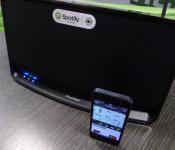
In favor of Spotify Connect, Spotify says no to Google Cast

Cult of Android has reported that Spotify’s service will not support Google Cast.
If you haven’t heard of Google Cast, it was released earlier at CES on January 5. Cast essentially is an Apple AirPlay competitor that allows the user to stream audio from apps to Cast-compatible speakers.
Instead, Spotify has chosen to focus on Spotify Connect, which is quite similar to Cast and AirPlay. However, it has the added benefit of continuing to work even when the streaming device, such as a PC, is turned off.
Undoubtedly, the company believes Spotify Connect can compete with the others. It told Pocket-lint that Connect, “[L]ets who haven’t invested in new hardware control their existing devices. For example, by using a mobile to control their laptop or tablet.” Cast (and AirPlay) cannot do this.
Regardless, many manufacturers at CES stated that their Cast-compatible speakers would support AirPlay and Spotify Connect as well. If you’re a Spotify user who is also interested in Cast, then it should not be difficult to find speakers that support both.
Source: Cult of Android
FEATURED POSTS


The post In favor of Spotify Connect, Spotify says no to Google Cast appeared first on AndroidGuys.
Google App 4.1 update disables cards and features for some users
 A couple of days ago, the Google App received its version 4.1 update, bringing with it a host of new Google Now cards, languages and tweaks. However, it seems that the update has ended up disabling Google Now features for users in some locations, instead displaying that the service is “not available in your country”.
Reports state that Google Now cards, such as sports updates or news stories, and reminders are no longer functioning after updating to version 4.1. The problem seems to be predominantly afflicting those in and around the Latin and South American region, with plenty of negative reviews appearing on the Play Store since the update. The service has always had some restrictions in place depending on the region, but what isn’t clear is why features that previously worked for many users now appear to be completely disabled across such a large area.
A workaround from XDA user kevindeoz has helped sidestep the issue for some Spanish speakers. Simply changing the language setting to “Spanish (United States)” appears to re-enable the missing Google App features, which makes the cause seem even stranger.
Google has not yet clarified the reason for the issue, but we will hopefully hear something from official channels soon.

Google Compare seeking to bring auto insurance comparisons to U.S.

It goes without saying that Google has its hands in many different ventures, from Fiber to Android, but the Google search engine is still their crowning achievement. For some time now, Google has been quietly working on dedicated price comparison searches, falling under the service of Google Compare (formerly called Google Advisor).
Our friends across the pond have had Google Compare more front-and-center than those of us in the U.S. If you were to type www.google.com/compare/ in the U.S., you’re taken to a page that only offers credit card comparisons; however, if you type in www.google.co.uk/compare, you can see a much larger service being built. There are comparisons and quotes for travel insurance, mortgages, banking, and auto insurance.
Google has been offering car insurance quotes in the U.K. for several years now. Seemingly testing out the waters there, it’s been discovered that Google has been quietly getting permission in many states here in the U.S. to sell auto insurance policies on behalf of such companies like MetLife.
There are two comparison services that Google does offer here in the U.S. that I frequent often, but are not listed under Google Compare, are flight searches and hotel finder. Getting to either of these is not very intuitive and you have to hunt down the options on the Google search results page. (Alternatively you can type in www.google.com/flights and www.google.com/hotels.)
The reason as to why Google has seemingly buried its own services has not been clear. Google gets quite a bit of ad revenue from companies like Orbitz and Kayak, so it may be finding itself in a similar position it did when it had acquired Motorola, namely it doesn’t want to find itself competing with its allies.
So why is Google getting involved with auto insurance in the first place? Perhaps Google is getting situated for the day that its driver-less cars begin to hit the market.
Source: Wall Street Journal
Come comment on this article: Google Compare seeking to bring auto insurance comparisons to U.S.